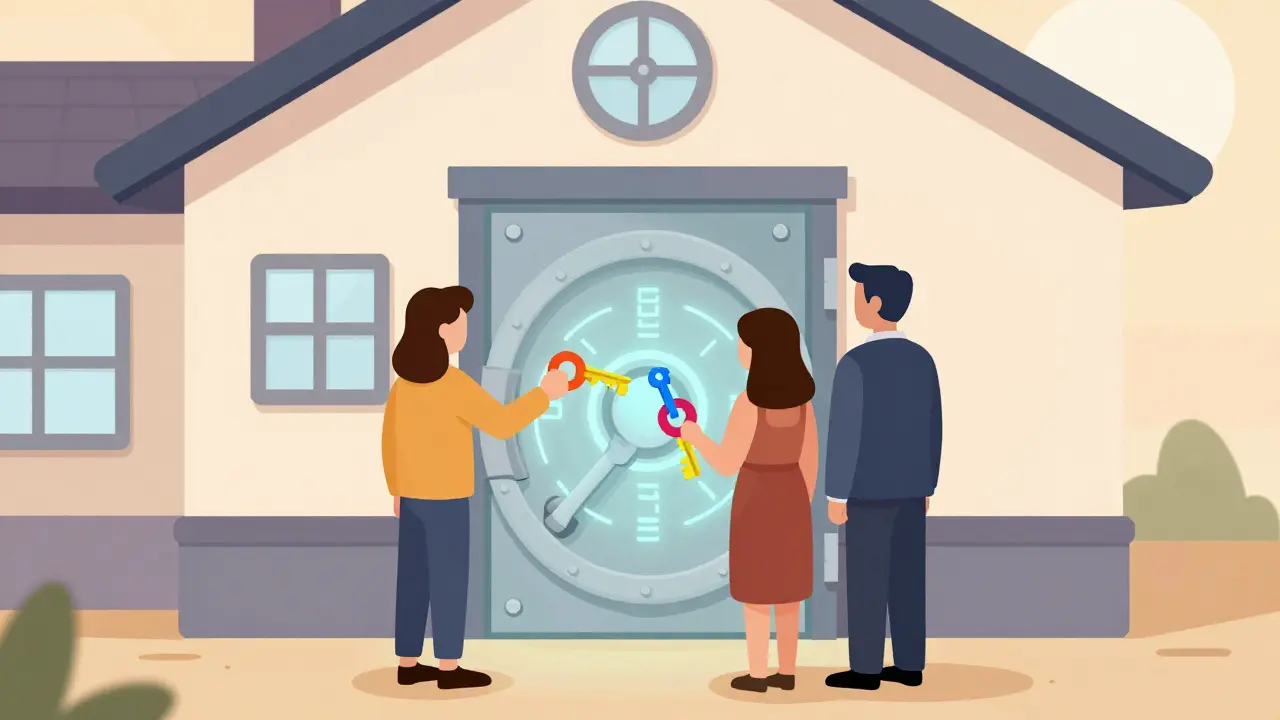
Imagine handing over the keys to your house. Now imagine giving those same keys to a friend, a neighbor, and your lawyer. To get inside, two of you must show up with your keys at the same time. This isn't just paranoia; it is the fundamental logic behind multi-signature wallets, which are cryptocurrency security protocols that require multiple private keys to authorize transactions. In the world of digital assets, where losing access means losing everything forever, this shared control model transforms how we protect value.
For years, single-signature wallets were the norm. One key, one owner, one point of failure. If that key was stolen, lost, or compromised, the funds were gone. Multi-sig technology changes the game by distributing trust. It eliminates the single point of failure that has plagued individual holders and institutions alike for over a decade. Whether you are running a decentralized autonomous organization (DAO), managing a business treasury, or simply want peace of mind for your personal savings, understanding multi-sig is no longer optional-it is essential.
How Multi-Signature Wallets Actually Work
At its core, a multi-sig wallet operates on an "M-of-N" configuration scheme. The "N" represents the total number of people or devices holding private keys, while "M" is the minimum number of signatures required to approve a transaction. This setup creates a flexible security grid tailored to your specific risk tolerance and operational needs.
The most common configuration is the 2-of-3 setup. Here, three distinct keys are generated and stored in separate locations-perhaps one on a hardware wallet in a safe, one on a phone, and one with a trusted family member or lawyer. To move funds, any two of these three parties must sign off. If a thief steals one key, they cannot access the funds because they lack the second signature. If you lose one key, you still have two remaining, allowing you to recover your assets without starting from scratch.
| Configuration | Use Case | Security Level | Convenience |
|---|---|---|---|
| 2-of-3 | Personal savings, small businesses | High | Medium |
| 3-of-5 | Corporate treasuries, DAOs | Very High | Low |
| 1-of-2 | Backup redundancy only | Low | High |
| 3-of-3 | High-value joint accounts | Maximum | Very Low |
Technically, these wallets rely on smart contracts or script-based rules embedded in the blockchain. On Bitcoin, this often involves Pay-to-Script-Hash (P2SH) addresses or, more recently, Taproot-enabled scripts. These scripts enforce the rule: "Do not release funds unless M signatures are present." The complexity lies not in the concept, but in the coordination. Unlike sending an email, moving crypto requires active participation from multiple signers, which introduces latency but drastically increases security.
Why Single-Signature Wallets Are Risky
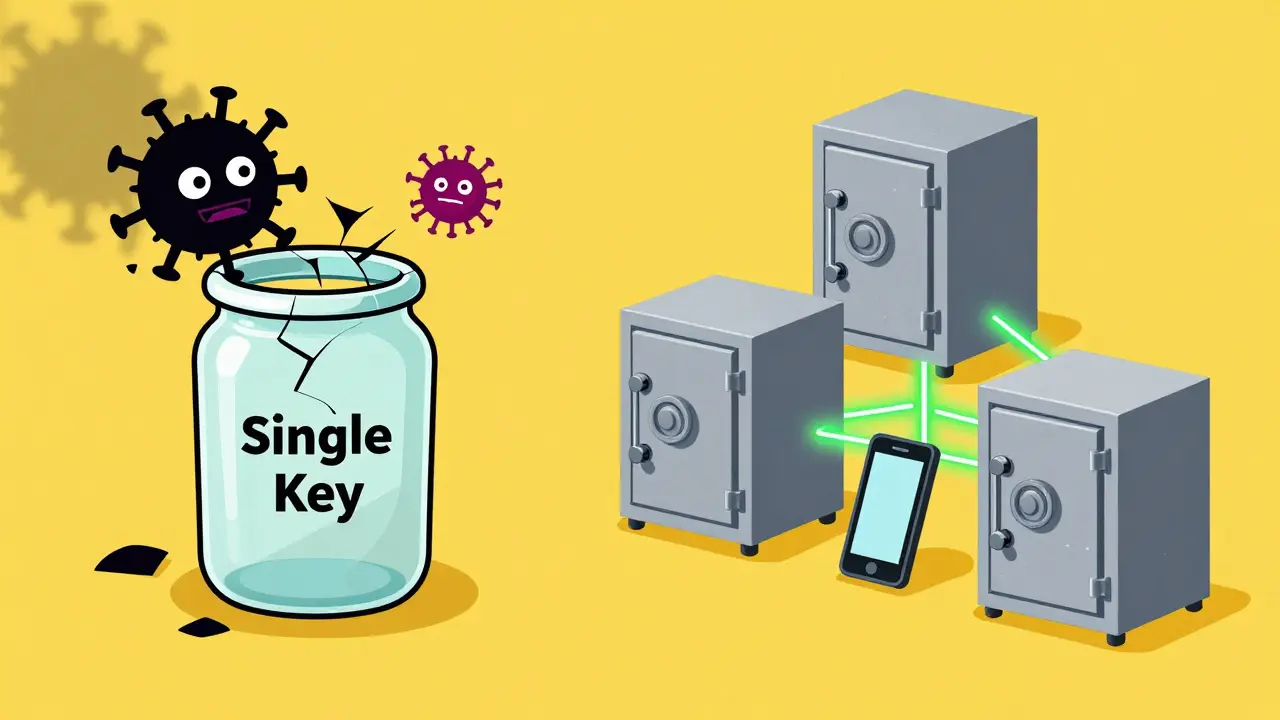
To appreciate multi-sig, you need to understand what you are protecting against. Single-signature wallets have a 100% single point of failure rate. If your device is infected with malware, if you accidentally delete your seed phrase, or if you are coerced into revealing your password, your entire balance is vulnerable. There is no backup plan built into the protocol itself.
Consider the difference in risk exposure. In a properly configured 2-of-3 multi-sig wallet, compromising one key reduces your risk to 33.3%. Compromising two keys simultaneously is statistically improbable for most attackers. According to BitGo's institutional security reports, multi-sig implementations reduce unauthorized access risk by over 97% compared to single-key solutions when set up correctly. This isn't just theoretical; it is the standard for institutions holding billions in assets.
However, convenience comes at a cost. Multi-sig transactions are larger in size because they contain more data-the public keys and signatures of multiple parties. On networks like Bitcoin, this can mean transaction fees that are 25-35% higher than standard transfers. For high-frequency traders executing hundreds of trades daily, this overhead is unacceptable. But for long-term holders or treasury managers, paying a few extra dollars for security is a trivial trade-off.
Who Needs Multi-Signature Wallets?
Not everyone needs a multi-sig setup. If you are buying $50 worth of meme coins to spend next week, a simple mobile wallet is sufficient. Multi-sig shines when the stakes are higher and the consequences of loss are catastrophic. Here are the primary groups benefiting from this technology:
- Decentralized Autonomous Organizations (DAOs): DAOs manage collective treasuries. Using multi-sig ensures that no single developer or admin can drain the funds. A 6-of-11 setup, for example, requires broad consensus before large expenditures are made.
- Businesses and Enterprises: Companies holding cryptocurrency as part of their balance sheet need internal controls. Multi-sig acts as a check-and-balance system, similar to requiring two signatures on a corporate bank check.
- High-Net-Worth Individuals: For those holding significant wealth, multi-sig provides insurance against theft and loss. It allows for geographic distribution of keys, ensuring that a fire, flood, or local crime doesn't result in total asset loss.
- Estate Planning: Parents can set up multi-sig wallets with heirs as co-signers. This ensures that digital assets are not lost upon death but are accessible to designated beneficiaries after verification.
Messari's 2023 Digital Asset Management Report noted that 89% of cryptocurrency hedge funds and 76% of DAOs use multi-sig as their primary custody mechanism. This dominance in institutional circles highlights its role as the baseline for serious asset management.
Setting Up Your First Multi-Sig Wallet
Getting started with multi-sig is less about coding and more about careful planning. You do not need to be a developer, but you do need to be meticulous. The process typically takes 8-12 hours for initial setup, including backups and testing.
- Choose Your Platform: Select a reputable multi-sig wallet provider. Options include Specter Desktop (open-source, self-hosted), Unchained Capital (user-friendly interface), or integrated solutions like Coinbase Wallet and Trezor Suite. For beginners, Unchained Capital offers guided setup wizards that simplify the technical jargon.
- Determine Your Configuration: Decide on your M-of-N structure. For personal use, 2-of-3 is recommended. For teams, consider 3-of-5 or higher depending on team size and trust dynamics.
- Generate Keys Separately: Create each private key on a different device. Never generate all keys on the same computer or network. Use hardware wallets for cold storage keys to maximize security.
- Back Up Everything: Write down recovery phrases for each key. Store them in physically secure, separate locations. Losing two out of three keys in a 2-of-3 setup means permanent loss of funds.
- Test with Small Amounts: Before moving significant value, send a small test transaction. Verify that the signing process works smoothly and that all signers receive notifications correctly.
A critical mistake many users make is storing all keys in the same location. If you keep all three keys in your home safe, you haven't gained much protection against burglary or fire. True security comes from geographic and physical separation of keys.

Challenges and Limitations to Consider
Multi-sig is not a magic bullet. It introduces complexity that can frustrate users unfamiliar with the process. The biggest complaint among new users is the delay in transaction execution. If one signer is traveling, sick, or unresponsive, funds may be temporarily locked. This is why choosing reliable co-signers is crucial.
Another challenge is the learning curve. According to a Consensys Academy survey, 67% of users needed at least three practice transactions before feeling confident. Documentation quality varies significantly between providers. Coinbase Wallet scores highly for clarity, while some open-source tools assume advanced technical knowledge.
There is also the risk of improper configuration. Trail of Bits found that 78% of poorly configured multi-sig wallets actually decreased security by creating false confidence. For instance, using weak passwords for the software interface or failing to update firmware on hardware wallets can undermine the cryptographic strength of the multi-sig setup itself.
Additionally, multi-sig is not ideal for privacy-focused users. Because multiple public keys are involved, the transaction graph can become more complex, potentially making it easier for analysts to link identities through clustering techniques. While this is a minor concern for most, privacy advocates should weigh this trade-off carefully.
The Future of Multi-Signature Technology
As blockchain technology evolves, so does multi-sig. Bitcoin's Taproot upgrade, activated in November 2021, brought Schnorr signatures to the network. This improvement reduced the size of multi-sig transactions by 25%, lowering fees and enhancing privacy. Future upgrades aim to further optimize efficiency, making multi-sig more accessible to everyday users.
We are also seeing innovations in social recovery features. Providers like Coinbase are integrating mechanisms that allow trusted contacts to help recover access if a user loses their keys, bridging the gap between security and usability. Meanwhile, enterprise solutions from companies like Fireblocks are expanding to support dozens of signers with customizable approval workflows, catering to large financial institutions.
Looking ahead, threshold signature schemes (TSS) may supplement traditional multi-sig. TSS allows signatures to be split mathematically rather than relying on distinct keys, offering potential improvements in speed and scalability. However, for the foreseeable future, multi-sig remains the gold standard for digital asset custody. Its proven track record, combined with continuous improvements, ensures it will stay relevant for decades to come.
Is multi-sig better than a hardware wallet?
It depends on your needs. Hardware wallets provide excellent security for single users by keeping keys offline. Multi-sig adds an extra layer by requiring multiple approvals, eliminating single points of failure. For high-value holdings, combining both-a multi-sig setup using hardware wallets as signers-is the most secure approach.
What happens if I lose one key in a 2-of-3 multi-sig wallet?
You remain secure. Since you only need two signatures to transact, losing one key does not lock your funds. You can continue operating normally. However, you should replace the lost key as soon as possible to restore full redundancy.
Are multi-sig wallets expensive to use?
They involve slightly higher transaction fees due to increased data size. On Bitcoin, expect fees to be 25-35% higher than standard transactions. However, for large transfers, this difference is negligible compared to the security benefits.
Can anyone steal my funds if I use multi-sig?
Only if they compromise enough keys to meet the threshold. In a 2-of-3 setup, stealing one key is useless. They would need to breach two separate, geographically distributed systems simultaneously, which is extremely difficult for attackers.
Which multi-sig wallet is best for beginners?
Unchained Capital and Specter Desktop are popular choices. Unchained offers a more guided experience with clear instructions, while Specter is powerful but requires more technical know-how. For non-technical users, starting with Unchained is recommended.