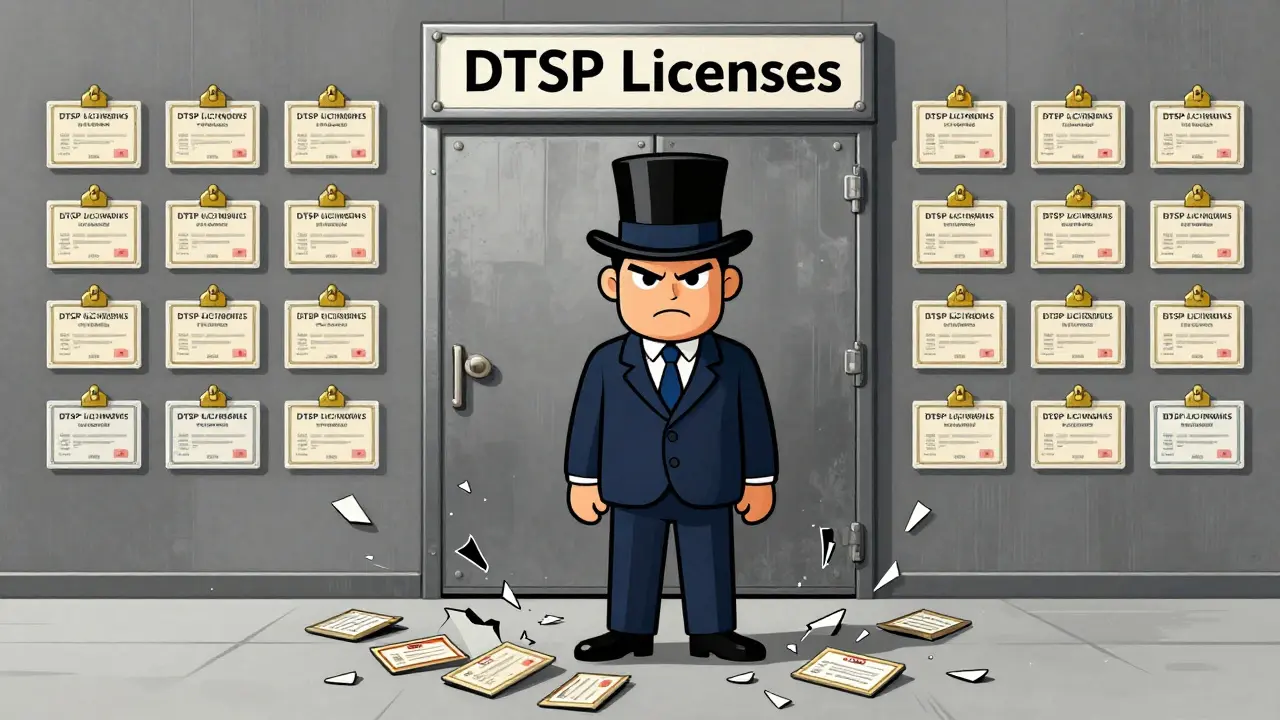
On June 30, 2025, Singapore’s crypto scene changed forever. The Monetary Authority of Singapore (MAS) stopped issuing new licenses for digital token service providers - and didn’t give anyone a second chance. If your company wasn’t fully compliant by that date, you were shut down. No extensions. No grace period. Just a hard stop.
This wasn’t a tweak. It was a full reset. MAS didn’t just tighten rules - it rewrote the entire game. What used to be one of Asia’s most open crypto hubs is now one of the strictest in the world. And the reason isn’t about cracking down on scams. It’s about protecting Singapore’s reputation as a global financial center.
Why MAS Changed Everything
Singapore used to welcome crypto firms with open arms. Many companies set up offices there not because they wanted to serve Singaporeans, but because they wanted the stamp of approval that came with a Singapore license. They’d use MAS’s credibility to attract international customers - while operating under far looser rules in other countries.
MAS saw this. And they didn’t like it. They called it regulatory arbitrage. In plain terms: using Singapore’s name to look legit while avoiding real responsibility.
That’s why, in June 2025, MAS made it clear: “We will generally not issue a licence.” The message wasn’t subtle. They weren’t trying to regulate crypto. They were trying to remove it from their jurisdiction - unless you could prove you were one of the few who could meet their impossible standards.
What It Takes to Get a License Now
Getting a Digital Token Service Provider (DTSP) license under MAS’s new rules isn’t hard - it’s nearly impossible for most.
- You need a minimum capital reserve of SGD 5 million (about USD 3.7 million).
- You must hire a full-time, Singapore-based compliance officer. Not a consultant. Not a remote worker. Someone physically located in Singapore, with a proven track record in AML/CFT. Salaries for these roles? Between SGD 150,000 and SGD 250,000 per year.
- Your systems must handle the Travel Rule: collect and share names, ID numbers, and account details for every transaction over SGD 1,500. That means integrating with specialized software - and the cost? Between SGD 50,000 and SGD 200,000 depending on volume.
- You need annual independent audits by a MAS-approved firm.
- Your cybersecurity controls must meet international standards - and you have to prove it every year.
And here’s the kicker: even if you’re a foreign company serving only overseas clients, if you’re operating from Singapore, MAS still has full authority over you. Section 137 of the Financial Services and Markets Act 2022 makes that crystal clear. There’s no loophole. No “we’re not targeting locals” excuse.
Consumer Protection: No More Easy Crypto Buys
It’s not just about business compliance. MAS also cracked down on how regular people can buy crypto.
Since September 2024, all platforms must:
- Do a suitability check before letting someone trade - asking questions about their experience, income, and risk tolerance.
- Clearly warn users about the risks - no sugarcoating.
- Block credit card purchases of cryptocurrencies. No more impulse buys with a Visa card.
These rules are designed to protect retail investors - but they also make it harder for platforms to grow quickly. If you can’t let people buy crypto with a card, your customer acquisition costs go up. Your conversion rates drop. Your margins shrink.

The Cost of Non-Compliance
Breaking the rules isn’t a fine. It’s a career-ending move.
Fines can reach up to SGD 200,000 (USD 147,000). Executives can face jail time. And the company? Forced to shut down immediately. No warning. No appeal process. MAS doesn’t negotiate.
And there’s no “we didn’t know” defense. The deadline was public. The rules were published months in advance. If you missed it, you were negligent.
By late 2025, the number of active DTSP license holders dropped from around 200 to just 15-20. The rest either left Singapore, shut down, or got absorbed into bigger firms that could afford the compliance overhead.
What’s Happening in the Industry
The impact has been brutal.
Job postings for crypto roles in Singapore fell 37% in Q1 2025 compared to the previous quarter, according to LinkedIn data. Startups that once raised millions in venture capital are now laying off teams. Office spaces once filled with crypto engineers are sitting empty.
Some firms tried to adapt. They moved their core operations to Dubai or Switzerland - places that still issue licenses. But they kept a small Singapore office just to stay on the right side of MAS law. That’s the new reality: you don’t operate from Singapore. You just have a legal shell there.
Even the big players aren’t immune. One major exchange that had a Singapore office spent over SGD 2 million on compliance upgrades - only to realize they couldn’t justify the cost. They pulled out entirely.
How Singapore Compares to Other Hubs
Singapore’s approach stands in sharp contrast to other regions.
In Switzerland, crypto firms can get licenses with clear, predictable requirements. In the UAE, especially Dubai, regulators actively court crypto companies with tax incentives and fast-track approvals. Even Japan - known for being strict - still allows dozens of licensed exchanges to operate.
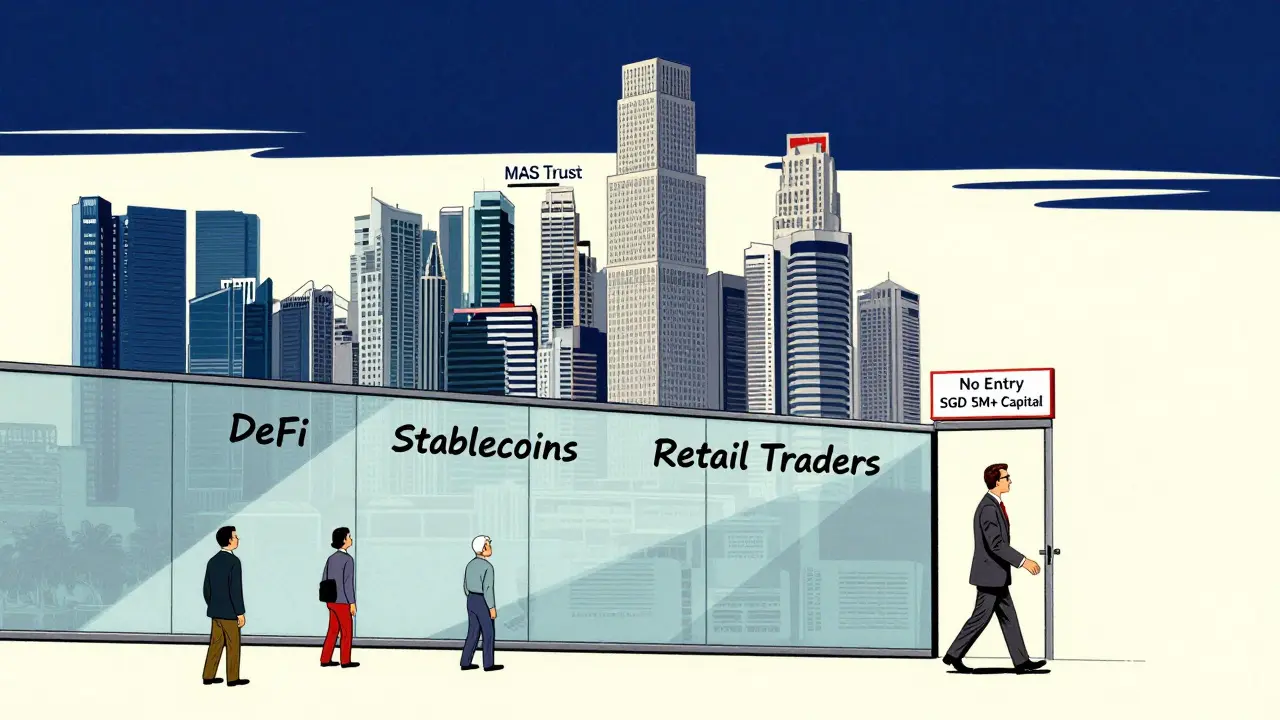
Singapore isn’t trying to be a crypto hub anymore. It’s trying to be a clean financial hub. That means fewer players. Fewer risks. Fewer headlines about crypto frauds tied to Singapore.
But experts warn: this could backfire. Dr. Jane Lim of the Asian Fintech Institute says, “Overly restrictive regulation could permanently diminish Singapore’s role in the global crypto ecosystem.”
MAS’s response? “A smaller, higher-quality industry better serves Singapore’s long-term interests.”
What’s Next for Singapore Crypto
MAS hasn’t closed the door completely. They’ve just made it extremely narrow.
Expect more guidance on DeFi protocols and stablecoins by late 2025. Stablecoins - digital coins pegged to fiat currencies - are getting their own rules to ensure they’re “a high degree of value stability.” That means issuers will need to hold reserves in approved assets and undergo regular audits.
But don’t expect any loosening. MAS has signaled that their priority isn’t innovation. It’s control.
For now, the only companies thriving in Singapore’s crypto space are the ones that never needed to rely on retail users. Institutional firms. Private trading desks. Blockchain infrastructure providers with deep pockets and legal teams.
If you’re a startup, a retail platform, or someone hoping to build a crypto business in Singapore - you’re out of luck. The window slammed shut on June 30, 2025. And MAS isn’t opening it again.
What This Means for You
If you’re a trader in Singapore: your options are limited. Stick to licensed platforms. Avoid anything that lets you buy crypto with a credit card. Know the risks. And don’t assume a Singapore-based platform is safer - because now, only a handful even exist.
If you’re a business owner: don’t bother applying for a DTSP license unless you have over SGD 5 million in capital, a full-time compliance officer on the ground, and a legal team that lives and breathes MAS regulations. The cost isn’t worth it unless you’re already a global player.
If you’re an investor: don’t assume Singapore’s crypto rules are a sign of weakness. They’re a sign of strength - in a different way. Singapore is betting that trust matters more than volume. And in finance, trust is everything.
Can I still trade crypto in Singapore?
Yes, but only through platforms that hold a valid DTSP license from MAS. As of 2026, only about 15-20 firms remain licensed. Most international exchanges have exited the market. Always check MAS’s official list of licensed providers before trading.
Can I use a credit card to buy crypto in Singapore?
No. MAS banned credit card purchases of cryptocurrencies in September 2024. You can only buy using bank transfers or other non-credit payment methods. This rule applies to all licensed platforms operating in Singapore.
Is it legal to run a crypto business from Singapore for overseas clients?
Only if you hold a DTSP license from MAS - and even then, it’s nearly impossible to get one. Section 137 of the Financial Services and Markets Act 2022 gives MAS authority over any company operating from Singapore, regardless of where its customers are. Without a license, it’s illegal.
What happens if I don’t comply with MAS rules?
You face fines up to SGD 200,000, potential imprisonment for executives, and immediate shutdown of operations. There is no grace period or appeal process after the June 30, 2025 deadline. MAS enforces compliance strictly and without warning.
Are stablecoins allowed in Singapore?
Yes, but only if they meet MAS’s strict stability requirements. Issuers must hold reserves in approved assets (like cash or government bonds), undergo regular audits, and provide full transparency. Stablecoin projects without these safeguards are not permitted to operate in Singapore.
Why did MAS shut down so many crypto firms?
MAS wasn’t targeting bad actors - it was targeting reputational risk. Many firms used Singapore’s financial reputation to attract global customers while avoiding real oversight elsewhere. MAS decided that protecting Singapore’s status as a trusted financial hub was more important than growing the crypto industry.
5 Comments
MAS didn't just tighten rules they erased the entire sandbox. This isn't regulation it's architectural demolition. You think you're building a crypto business? Nah you're just a tenant in a building MAS decided to level because the neighbors complained about the noise. The 5M capital requirement? That's not a barrier it's a moat with crocodiles. And don't get me started on the compliance officer salary - you're paying more for one human than most startups raise in seed rounds. Singapore's not a hub anymore it's a mausoleum for crypto ambition.
Actually this is one of the most responsible moves I've seen from a financial regulator in years. The credit card ban? Brilliant. So many people lost everything buying Dogecoin on a whim. And the Travel Rule implementation? Long overdue. Yes it's expensive but if you're serious about serving institutional clients or building real blockchain infrastructure this is the price of legitimacy. The firms that left? They weren't innovators they were speedrunners. Real builders welcome clarity over chaos.
I... I just wanted to buy some Bitcoin with my debit card... I didn't know it was so complicated... I'm just a normal person... I don't understand all these regulations... I'm scared now...
They're not protecting the financial system they're protecting the elite. MAS is just a puppet of the old banking cartel. The real crypto revolution was always about decentralization but now they've turned Singapore into a walled garden where only billionaires with Swiss lawyers get to play. They banned credit cards not to protect you but to keep the masses out. The stablecoin rules? That's just central bank digital currency in disguise. They're preparing for total financial control. And the fact that you're all celebrating this? That's the real tragedy.
Bro this is actually 🔥🔥🔥 MAS went full Elon mode - no mercy no exceptions. I know a guy who ran a crypto exchange in SG - spent 2M on compliance then got a call from MAS saying ‘you’re not one of the 15’ and got shut down overnight. Now he’s in Dubai with a beachfront office and a better life. Singapore’s not dead it’s just evolved. If you’re building something real you’ll adapt. If you’re just here for the hype? You got ghosted 💀