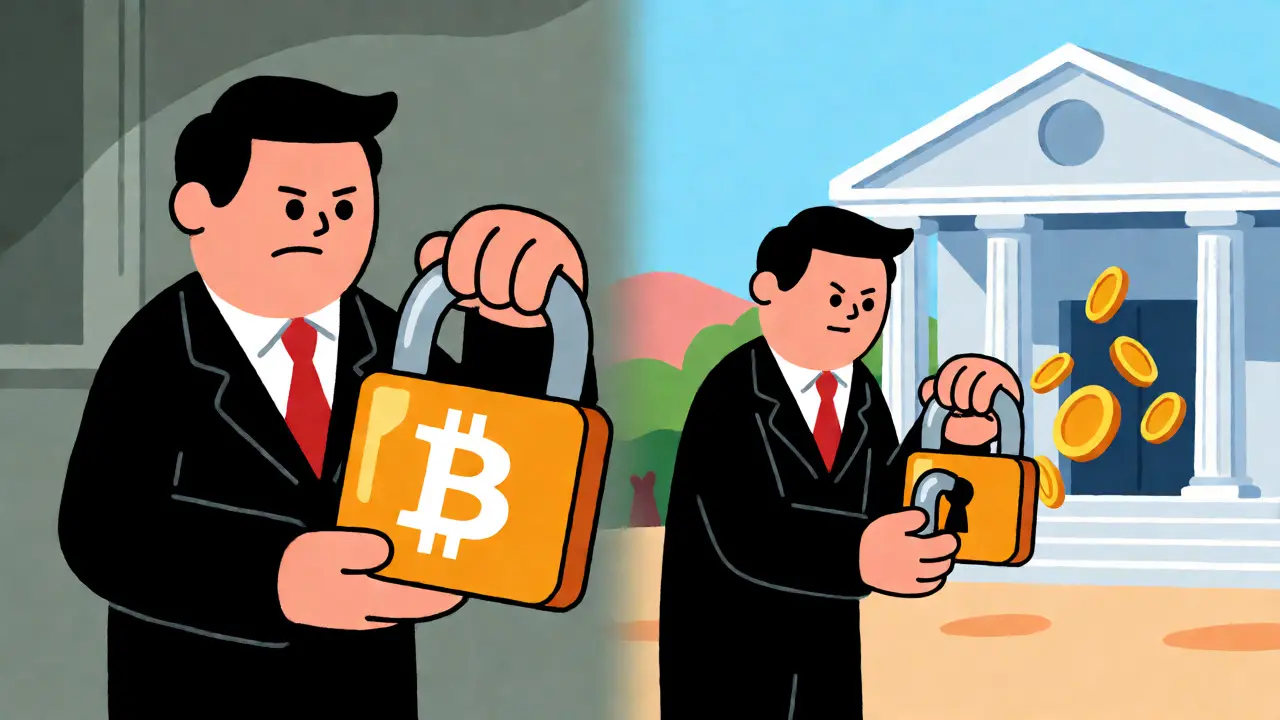
Imagine buying a coffee with Bitcoin in La Paz and getting hit with a fine. For years, that was the reality in Bolivia, where cryptocurrencies were strictly banned. But things have changed dramatically since June 2024. If you are wondering about the legal penalties for crypto trading in Bolivia, the answer isn't a simple "yes" or "no" anymore. It depends entirely on how you trade and who you trade through.
The old days of blanket prohibition are gone, but a new era of strict compliance has taken its place. You can now legally own and trade digital assets, but stepping outside the authorized banking channels can still land you in trouble with regulators. This guide breaks down exactly what is legal, what triggers penalties, and how to stay on the right side of Bolivian law as of late 2026.
From Ban to Regulation: The Big Shift
To understand the current penalties, you need to know where we came from. In 2014, the Central Bank of Bolivia (BCB) slapped a total ban on cryptocurrencies. The goal was to protect the national currency, the boliviano, and prevent financial instability. During that decade-long freeze, any crypto activity was technically illegal, though specific fines were rarely publicized because the focus was on stopping adoption rather than punishing individuals.
That all changed in June 2024. The BCB issued Board Resolution N°082/2024, effectively repealing the ban. This wasn't just a relaxation; it was a complete restructuring. The resolution introduced Electronic Payment Instruments (EPI) for virtual assets and mandated that all transactions flow through licensed banks. The impact was immediate. Transaction values skyrocketed from $46.5 million in early 2024 to $294 million by mid-2025. That's a 630% increase in less than two years. People were desperate to use crypto, and the government responded by creating a regulated lane for them to do so.
What Is Actually Legal Now?
Under the current framework, owning cryptocurrency is legal. Trading is also legal, but with major caveats. Cryptocurrencies are not legal tender. You cannot walk into a shop and pay for goods directly with Bitcoin or Ethereum unless the business uses an authorized channel. The only assets explicitly recognized for broader utility are stablecoins like USDC and Tether (USDT), which can be used for settling invoices and payroll, but again, only through licensed institutions.
Individual traders make up 86% of all crypto transfers in Bolivia. Most use platforms like Binance, focusing heavily on stablecoins. If you are holding crypto in a personal wallet and moving it through a bank that reports to the Financial System Supervisory Authority (ASFI), you are generally safe. The danger lies in off-exchange transfers-peer-to-peer deals that bypass the banking system.
Who Watches the Watchmen? Regulatory Bodies Involved
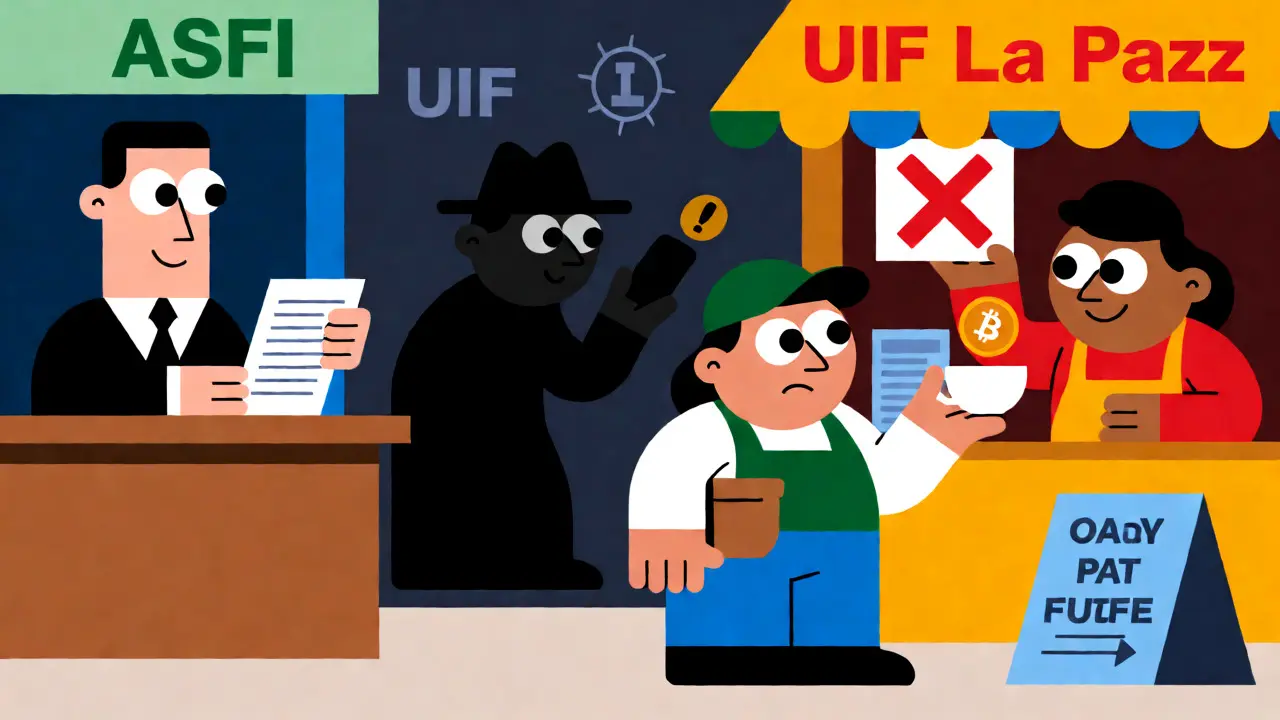
You aren't just dealing with one regulator. Three main bodies oversee the crypto landscape in Bolivia, each with a specific role:
- Central Bank of Bolivia (BCB): The primary authority. They set the rules, issue resolutions, and define what constitutes a valid electronic payment instrument.
- Financial System Supervisory Authority (ASFI): Provides oversight of the financial system. They ensure banks comply with reporting requirements and monitor market stability.
- Financial Investigations Unit (UIF): Focuses on anti-money laundering (AML). They track suspicious transactions and cross-reference them against international sanctions lists.
Banks are required to report crypto transactions daily. If your transaction looks odd or involves a sanctioned entity, the UIF will flag it. This level of scrutiny means that while you won't get fined for simply holding Bitcoin, you will face serious questions if you try to move large sums without proper documentation.
Specific Penalties and Enforcement Risks
So, what happens if you break the rules? Unlike some countries with fixed fines for minor infractions, Bolivia’s approach is more nuanced. There is no publicly listed flat fee for, say, failing to register an exchange. Instead, penalties are determined on a case-by-case basis through regulatory review. However, the risk factors are clear.
Non-compliance usually stems from three areas:
- Unauthorized Channels: Using unlicensed exchanges or peer-to-peer platforms that don't integrate with Bolivian banks. This is the most common violation.
- Business Payments: Accepting direct crypto payments for goods or services without converting them through a licensed institution. Since crypto isn't legal tender, this violates commercial code provisions.
- Tax Evasion: While individual capital gains are currently tax-free, businesses paying salaries or settling debts with crypto must report these as corporate income. Failure to do so triggers standard tax penalties.
For businesses, the stakes are higher. A company caught paying employees in USDT without going through a bank could face operational suspensions or heavy administrative fines. The government has emphasized consumer protection over punitive measures for small retail users, but they haven't hesitated to crack down on entities that look like they are circumventing the financial system.
Tax Implications: Where the Money Goes
One of the biggest draws for crypto traders in Bolivia is the tax structure. As of 2026, there is no specific capital gains tax on cryptocurrency for individual traders. If you buy Bitcoin at $30,000 and sell it at $60,000, you keep the profit without owing a separate crypto tax. This is a significant advantage compared to neighbors like Argentina or Brazil, which have complex reporting requirements.
However, don't let this fool you into thinking you are invisible. If you are running a mining operation or staking service, you are considered a business. Profits from these activities are subject to the standard 25% Corporate Income Tax (CIT). Additionally, if you use crypto to settle business expenses, those transactions must be recorded in your accounting books. The distinction between personal trading and commercial activity is sharp. Cross that line without registering, and you expose yourself to back-taxes and interest charges.
Practical Examples: Safe vs. Risky Behavior
Let's look at real-world scenarios to clarify the risks.
| Activity | Status | Risk Level | Why? |
|---|---|---|---|
| Holding USDT in a personal Binance account | Legal | Low | Personal ownership is allowed; funds remain offshore until transferred. |
| Selling USDT via P2P to a local buyer | Gray Area | Medium | If cash changes hands without bank transfer, it may violate AML rules. |
| Paying a supplier in BTC directly | Illegal | High | Crypto is not legal tender; must convert to Bolivianos via bank first. |
| Mining Bitcoin and selling profits | Legal (Taxable) | Medium | Requires business registration and 25% CIT on profits. |
| Using Banco Bisa custody for USDT | Legal | Very Low | Uses authorized channel; fully compliant with BCB guidelines. |
The safest path today is using established banks like Banco Bisa, which launched stablecoin custody services in October 2024. By keeping your assets within their ecosystem, you automatically comply with reporting standards. If you insist on using global exchanges like Binance, ensure your withdrawals go to a Bolivian bank account, not to a friend's wallet.
Future Outlook and International Cooperation
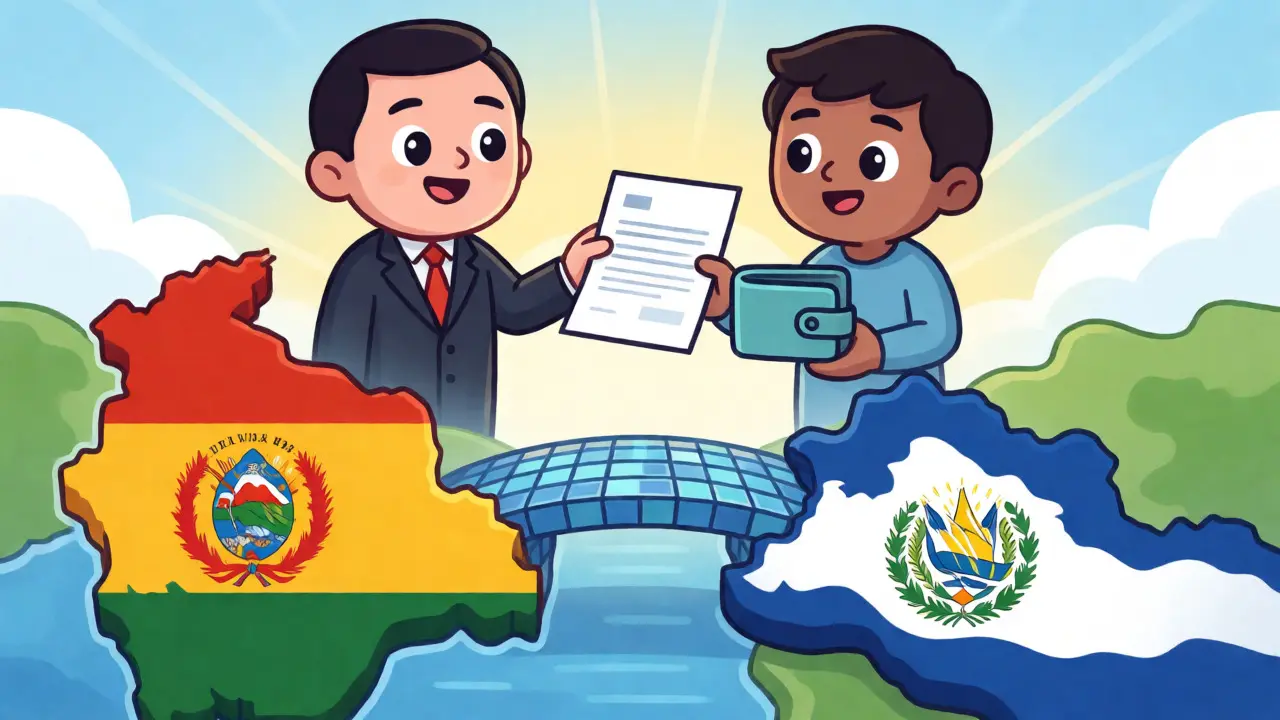
Bolivia isn't developing its rules in isolation. The country signed a Memorandum of Understanding with El Salvador’s National Commission for Digital Assets (CNAD). This partnership aims to share regulatory expertise and improve oversight mechanisms. El Salvador has been a crypto pioneer, and Bolivia is learning from their mistakes and successes.
This cooperation suggests that future penalties might become more standardized. We could see clearer definitions of "authorized channels" and potentially fixed fines for minor infractions. For now, the emphasis remains on education. The government runs public awareness campaigns to warn citizens about scams, indicating they prefer preventing issues over punishing them. But as adoption grows, enforcement will likely tighten.
Is it illegal to own Bitcoin in Bolivia?
No, owning Bitcoin is legal. The ban on ownership was lifted in June 2024. However, you cannot use it as legal tender for direct payments in stores without converting it through a licensed financial institution.
Do I pay taxes on crypto profits in Bolivia?
Individual traders currently pay no capital gains tax on crypto profits. However, businesses involved in mining, staking, or commercial crypto operations must pay the standard 25% Corporate Income Tax on their earnings.
Can I pay my employees in USDT?
Yes, but only through licensed banks. You cannot hand out cash equivalent or send directly to personal wallets without bank intermediation. The transaction must be recorded as a formal salary payment converted from stablecoins.
What happens if I use an unregulated exchange?
You risk having your funds frozen or facing regulatory scrutiny. Banks are required to block transactions from unauthorized providers. If you receive money from such an exchange, the bank may reject the deposit or report it to the Financial Investigations Unit.
Are peer-to-peer crypto trades penalized?
Not necessarily penalized, but they carry higher risk. If the P2P trade doesn't involve a bank transfer, it lacks the audit trail required by AML laws. Large volumes of undocumented P2P trades can trigger investigations for money laundering.
5 Comments
they say its legal now but i bet the banks are still freezing accounts for no reason just to keep control over us
i dont trust any of this govt talk they probably have secret clauses buried in those resolutions that let them seize your btc whenever they feel like it its always about control never freedom
and who decides what an authorized channel is exactly some buddy of the president probably owns the bank so if you use anyone else good luck keeping your money safe
this whole thing smells like a trap designed to lure people in with promises of legality and then slap them with fines later when nobody is watching properly
oh great another country pretending to understand crypto while their central bank runs the show like it's 1995
you can own bitcoin but only if you beg permission from three different agencies that hate each other sounds like a fun way to spend your retirement savings
if you think p2p is safe you're either naive or lying to yourself because without a bank trail you're basically invisible until they decide you matter
enjoy your gray area where every transaction is technically illegal until proven otherwise by a bureaucrat on his lunch break
It is truly fascinating how Bolivia has managed to implement such a sophisticated regulatory framework which stands in stark contrast to the chaotic and often backward financial systems found in many developing nations including my own beloved India 🇮🇳
We Indians have always been pioneers in adopting new technologies yet our government continues to impose ridiculous taxes and restrictions that stifle innovation whereas Bolivia seems to have finally awakened to the potential of digital assets
The distinction between personal trading and commercial activity is crucial and shows a level of nuance that I rarely see in Western regulations which tend to be overly simplistic and heavy-handed
I must say the partnership with El Salvador is a brilliant strategic move as it allows Bolivia to leverage the experience of a true leader in the space rather than trying to reinvent the wheel themselves
This approach demonstrates that even smaller economies can lead the world in financial innovation if they are willing to listen to experts and adapt quickly
While Argentina and Brazil struggle with complex reporting requirements Bolivia offers a refreshing simplicity that should attract serious investors from around the globe 🌍
The fact that individual capital gains are tax-free is a massive incentive that will undoubtedly drive adoption among the younger generation who are tired of being taxed into oblivion
However one must remain vigilant about the AML checks as the Financial Investigations Unit is known to be quite thorough in their scrutiny of suspicious transactions
Using Banco Bisa for custody seems like the wisest choice for those who prioritize security over decentralization although purists might argue against centralized storage
Overall this is a commendable step forward for Latin America and sets a precedent that other countries would do well to follow immediately
its so sad really that people are still getting hurt by these confusing rules when all they want is to buy groceries without worrying about fines
the government says its regulated but does it really protect the little guy or just the big banks that profit from every transfer
we have to remember that behind every transaction is a family trying to survive and make ends meet in a tough economy
when you fine someone for using p2p you are punishing them for not having access to expensive banking services
its morally wrong to create a system where compliance costs more than the actual benefit of using crypto
why should ordinary citizens bear the burden of anti-money laundering checks when the real criminals operate through huge corporations anyway
the emotional toll of constantly worrying about whether your next trade is legal is too high for normal people
we need compassion in regulation not just cold hard numbers and penalties
until then we are just gambling with our livelihoods based on interpretations that change overnight
please think about the human cost before celebrating these technical victories
the moral responsibility here lies with the user to ensure full transparency regardless of the lack of specific capital gains tax
hiding profits in offshore wallets while living off the local infrastructure feels ethically questionable to me
if you benefit from the state you should contribute to it even if the law currently lets you slide
tax evasion isn't just a legal issue it's a social contract violation that hurts everyone else
businesses paying salaries in USDT without proper recording are essentially cheating their employees out of clear wage histories
we must uphold higher standards than the minimum legal requirement demands
integrity means doing the right thing even when no one is watching
relying on gray areas is a slippery slope toward corruption
let's not celebrate loopholes but rather seek genuine fairness in taxation
accountability starts with the individual trader choosing to be honest
the current system rewards opacity which is detrimental to societal trust
we should aim for clarity and contribution not just avoidance
every dollar saved in tax is a dollar taken from public services
think of the schools and hospitals that could be built with that revenue
be better than the law requires
your conscience should guide your trades
don't let greed cloud your judgment
fairness matters more than convenience
stand up for ethical finance
do the right thing