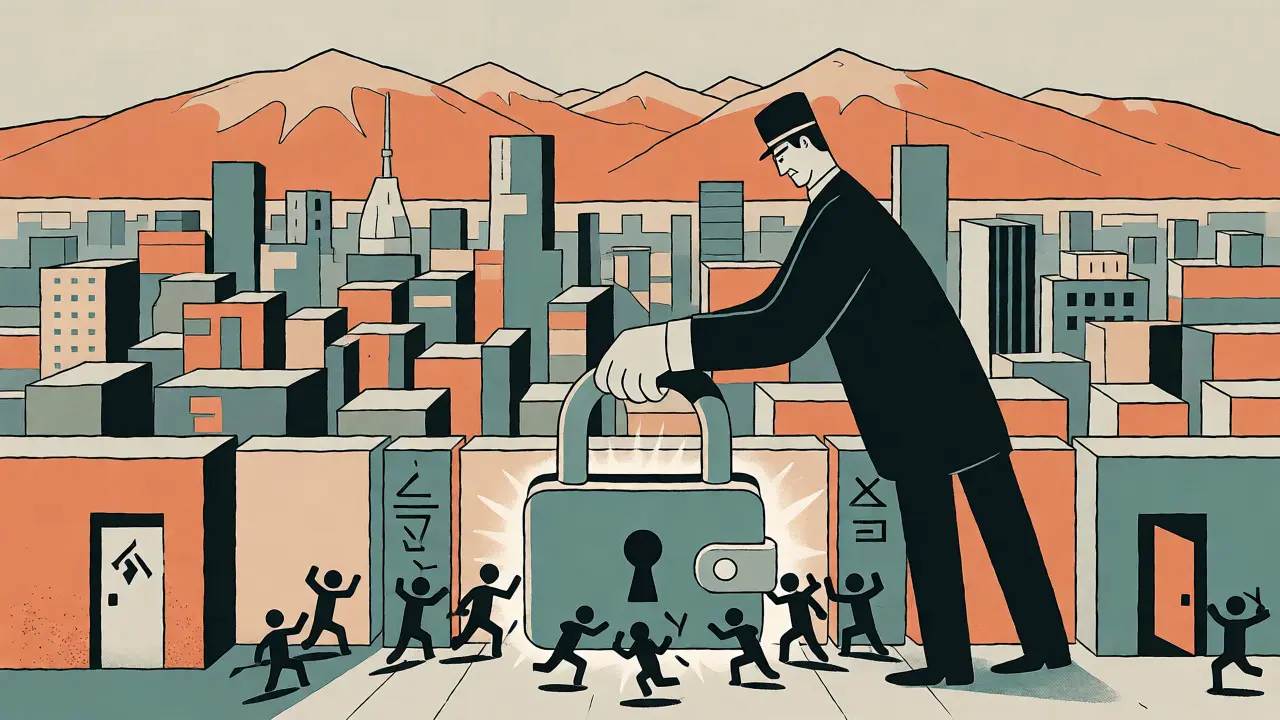
You might think that if you can buy a coffee with Bitcoin in El Salvador, the same freedom applies everywhere. But try buying a digital asset in Tehran, and you’ll hit a wall of bureaucratic red tape thicker than the Alborz mountains. As of late 2026, cryptocurrency regulation in Iran is not just a legal gray area-it’s a tightly controlled, high-surveillance environment where the state holds the keys to your digital wallet. If you are an investor, a trader, or just curious about how sanctions shape finance, understanding this landscape is critical. It’s not simply about whether it’s "legal"; it’s about who controls the flow, how much you’re allowed to hold, and why your transaction might get flagged by a government algorithm before it even hits the blockchain.
The Big Shift: From Wild West to State Control
For years, Iran was a paradox. On one hand, it had one of the highest adoption rates for cryptocurrency in the Middle East, driven by citizens trying to escape inflation. On the other, the government banned domestic transactions using foreign coins like Bitcoin. That tension exploded in late 2024 and early 2025. In December 2024, the Central Bank of Iran (CBI) blocked all direct payment channels between cryptocurrencies and the rial. This wasn’t a gentle nudge; it was a hard stop. By January 2025, President Masoud Pezeshkian formalized this crackdown, making the CBI the sole authority for everything crypto-related.
What does this mean for you? It means the era of anonymous, peer-to-peer trading on local platforms is effectively over for compliant users. Every platform must now operate through government-controlled gateways. The goal isn’t to kill crypto entirely-miners still produce billions in value-but to ensure every transaction leaves a digital fingerprint that the state can read. TRM Labs called this "unprecedented state surveillance capabilities," and they weren’t exaggerating. If you’re trading in Iran today, you aren’t just trading assets; you’re submitting data.
The $10,000 Ceiling: Stablecoin Restrictions
If you thought holding USDT was safe, think again. In September 2025, the CBI imposed strict caps on stablecoins. Individuals and businesses are now limited to purchasing no more than $5,000 worth of stablecoins annually, with a maximum holding balance of $10,000. Why such low numbers? It’s a defensive move against capital flight. When the rial drops, Iranians rush to buy dollars or dollar-pegged tokens to protect their savings. By capping holdings, the government forces people to keep money within the national banking system rather than letting it drift into decentralized wallets.
This policy created immediate chaos. Many traders found themselves forced to sell off excess holdings or face penalties. More importantly, it triggered a shift in which stablecoin people use. After Tether froze dozens of Iranian-linked addresses in July 2025 due to sanctions compliance fears, many users switched to DAI. Unlike USDT, DAI is decentralized and harder for a single entity to freeze. Market data shows DAI’s share among Iranian users jumped from 35% to nearly 65% as people sought assets that couldn’t be easily seized by international regulators acting on behalf of Western sanctions.
Mining: The Energy Crisis Double-Edged Sword
Iran has some of the cheapest electricity in the world, largely because the government subsidizes energy. For a long time, this made Iran a haven for Bitcoin miners. But cheap power also meant blackouts for regular households. To fix this, the government cracked down hard on unauthorized mining. Today, if you want to mine legally, you need a license from the CBI, and here’s the catch: you must sell your mined Bitcoin directly to the Central Bank at a fixed rate.
This rule kills the speculative upside for miners. You can’t hold onto your BTC hoping it doubles in price; you have to cash out immediately. Furthermore, licensed operations pay significantly higher energy tariffs than residential users. This has pushed a large portion of mining underground. Estimates suggest that while official mining continues, a significant shadow market operates illegally, often hiding rigs in industrial zones or rural areas to avoid detection. The state tolerates this to some extent because it brings in foreign currency, but the risk of having your equipment confiscated remains high.
Taxation and Sanctions: The Invisible Hand
In August 2025, Iran enacted the Law on Taxation of Speculation and Profiteering. For the first time, cryptocurrency trading was subject to capital gains tax. This aligned crypto with other speculative assets like gold and real estate. If you make a profit trading digital assets, the Ministry of Economic Affairs and Finance expects its cut. Failure to report these gains can lead to fines that dwarf the profits themselves.
Then there’s the geopolitical elephant in the room: sanctions. Because Iran is under heavy international sanctions, its banks are cut off from SWIFT. Cryptocurrency became a workaround for trade settlement. However, this makes Iranian exchanges targets for scrutiny. When the UN reinstated snapback mechanisms in late 2025, the CBI tightened rules further to prevent Iranian entities from being blacklisted globally. Economist Mohammad Sadegh Alhosseini warned that if Iranian wallets become too identifiable, the entire financial sector could face secondary sanctions. So, the regulation isn’t just about control; it’s about survival in a hostile global financial ecosystem.
| Regulatory Area | Current Rule | Impact on User |
|---|---|---|
| Stablecoin Holdings | Max $10,000 balance; $5,000 annual purchase limit. | Limits hedging against inflation; forces diversification into non-stable assets. |
| Trading Channels | Must use CBI-approved gateways; direct P2P restricted. | Higher fees (3-5%); slower transaction times; mandatory KYC. |
| Mining | Licensed miners must sell BTC to CBI; high energy tariffs. | Reduces profitability; drives illegal mining underground. |
| Advertising | Total ban on physical and digital crypto ads. | Harder to discover new platforms; reliance on word-of-mouth. |
| Taxation | Capital gains tax applied to trading profits. | Requires detailed record-keeping; increases cost of active trading. |
How Iranians Still Trade: Workarounds and Realities
Despite the bans, daily trading volume in Iran hovers around $143 million. How? Two main ways. First, the "official" route. Platforms like Nobitex remain popular because they offer liquidity and integration with local banks. Yes, they charge fees, and yes, they report to the government, but they are reliable. Second, the "shadow" route. About 60% of trading volume happens via VPNs accessing foreign exchanges like Binance or KuCoin. These users accept the risk of account freezes in exchange for better prices and access to altcoins not listed locally.
User reports from late 2025 highlight a growing frustration with the official route. One trader noted that while the new system prevents arbitrary account freezes seen in previous years, the $10,000 stablecoin cap makes it impossible to hedge properly during rial volatility spikes. Consequently, many sophisticated users treat local exchanges as mere on-ramps/off-ramps, moving funds quickly to self-custody wallets or decentralized protocols to maintain privacy and control.
Future Outlook: Digital Rial vs. Decentralization
Looking ahead to 2027, the Central Bank plans to expand its own digital currency, the "Rial Currency." This isn’t Bitcoin; it’s a centralized electronic version of the paper banknote. The CBI wants to push this into retail transactions to compete with private stablecoins. If successful, this could marginalize foreign stablecoins further, giving the state total control over digital payments. However, history suggests Iranians prefer assets they can’t easily confiscate. Unless the digital Rial offers anonymity-which centralized ledgers rarely do-adoption may lag behind enforcement.
The trajectory depends heavily on US-Iran relations. If nuclear deal negotiations resume and sanctions ease, the pressure to use crypto for trade circumvention drops, potentially loosening regulations. But given the current geopolitical climate, expect tightening. The state views crypto as both a threat to monetary sovereignty and a necessary tool for economic survival. Navigating this requires more than just technical knowledge; it demands a keen awareness of political winds.
Is Bitcoin legal to own in Iran?
Yes, owning Bitcoin is legal. However, using it for domestic transactions (like buying groceries) is prohibited. You can hold it, trade it on licensed exchanges, or mine it, but you cannot spend it directly in the local economy without converting it to rials through approved channels.
What are the stablecoin limits in Iran?
As of 2026, individuals are capped at holding $10,000 worth of stablecoins (like USDT or DAI) at any given time. Additionally, there is an annual purchase limit of $5,000 per person. Exceeding these limits can result in fines or forced liquidation of excess assets.
Can I use foreign exchanges like Binance in Iran?
Technically, yes, but it requires workarounds. Most users access foreign exchanges via VPNs. While not explicitly illegal to access, funding these accounts can be difficult due to banking restrictions. Many users deposit via third-party services or P2P transfers, accepting the risk that their foreign account might be frozen if linked to sanctioned Iranian entities.
Do I have to pay taxes on crypto profits in Iran?
Yes. Since August 2025, capital gains tax applies to cryptocurrency trading profits. This law treats crypto similarly to gold or forex speculation. Traders must report their gains and pay taxes accordingly, adding a layer of complexity to active trading strategies.
Why did Tether freeze Iranian addresses?
Tether froze several Iranian-linked addresses in July 2025 to comply with international sanctions. This action highlighted the vulnerability of centralized stablecoins for Iranian users, prompting many to switch to decentralized alternatives like DAI, which are less susceptible to unilateral freezing by corporate issuers.