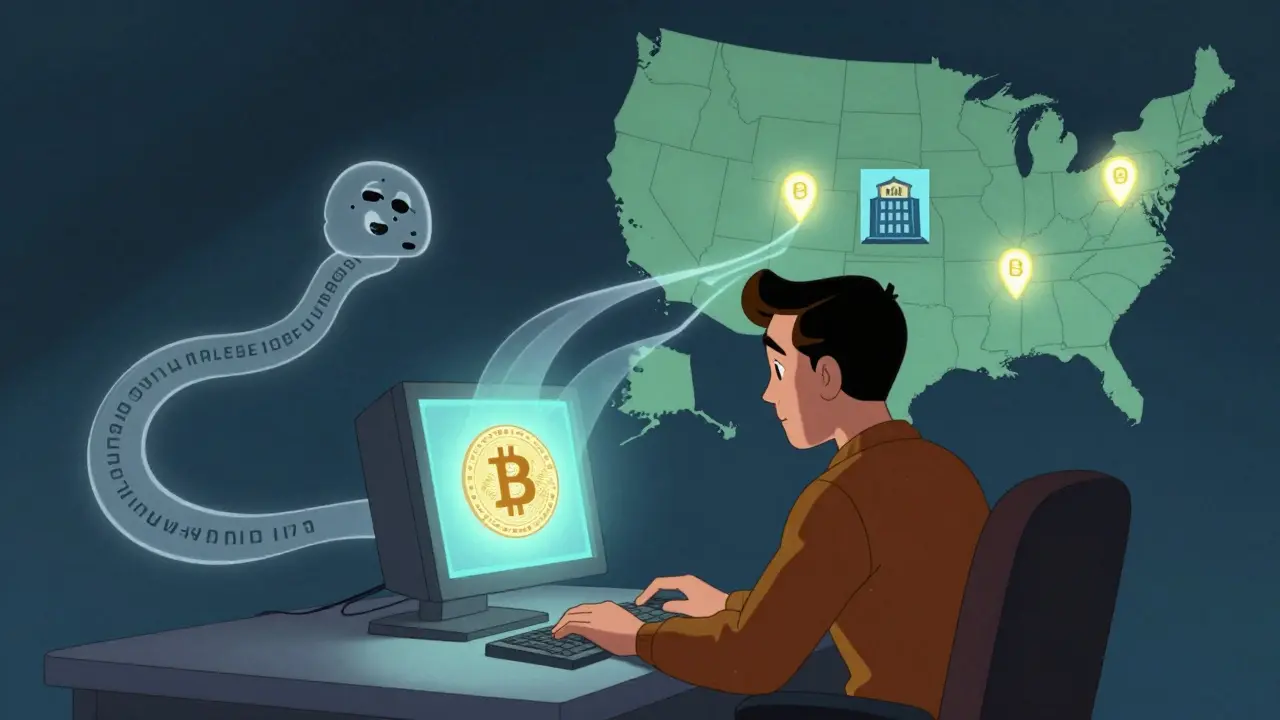
When you send Bitcoin or any other cryptocurrency, you might think you’re anonymous. After all, no name is attached to your wallet address. But here’s the truth: IP address tracking can link your digital transactions to your real-world location - and law enforcement, exchanges, and private firms are already doing it.
How Your IP Address Exposes Your Crypto Activity
Every time you broadcast a transaction on the Bitcoin network, your device sends it to nearby nodes. These nodes are just other computers running Bitcoin software, and they relay your transaction across the network. But here’s the catch: those nodes can log your IP address. You don’t need to be hacked or targeted. Just using a regular Bitcoin wallet app or desktop client means your IP is visible to anyone monitoring the network. Researchers at the University of Cambridge and others have shown that with as few as 100 monitoring nodes, it’s possible to link over 60% of Bitcoin transactions to their originating IP addresses. This isn’t science fiction - it’s been proven since 2018. Tools like the naive Bayes classifier analyze the timing and spread of transaction data to guess which IP sent it. And once they have your IP, they can find your city, ISP, and sometimes even your street.Why Geolocation Matters in Crypto
Knowing where a transaction came from isn’t just about curiosity. It’s a key tool in fighting crime. If someone uses Bitcoin to pay ransomware, buy illegal goods, or evade taxes, investigators use geolocation to narrow the field. A wallet sending funds from a known darknet marketplace in Eastern Europe, then moving to a wallet linked to a U.S.-based exchange that requires KYC? That’s a trail. And it’s not hard to follow. Exchanges like Coinbase and Binance now require users to verify their location. If your IP shows you’re in a restricted country but your ID says you’re in the U.S., your account gets flagged - or frozen. Even if you’re just trying to send crypto to a friend overseas, mismatched geolocation data can trigger compliance alerts.Bitcoin vs. Privacy Coins: Who’s Really Anonymous?
Not all cryptocurrencies are created equal when it comes to hiding your tracks. Bitcoin is the most trackable. Every transaction is public. Every address has a history. And every time you connect to the network, your IP can be logged. Even if you never use your real name, your behavior - when you send money, how much, how often - becomes a fingerprint. Zcash promises privacy with shielded addresses (z-addresses), but here’s the problem: in 2023, fewer than 15% of Zcash transactions used them. Most users accidentally sent funds to transparent addresses (t-addresses), which work just like Bitcoin - fully visible. Even when users try to use shielded addresses, mistakes like reusing them or mixing them with public ones leak data. Monero is designed to be untraceable. It hides sender, receiver, and amount by default. But that’s also why it’s been delisted from major exchanges. If you’re using Monero, you’re already in a high-risk group. Law enforcement doesn’t track Monero the same way as Bitcoin - they just watch where it ends up. If your Monero ends up on a known exchange that requires ID, you’re back on the grid.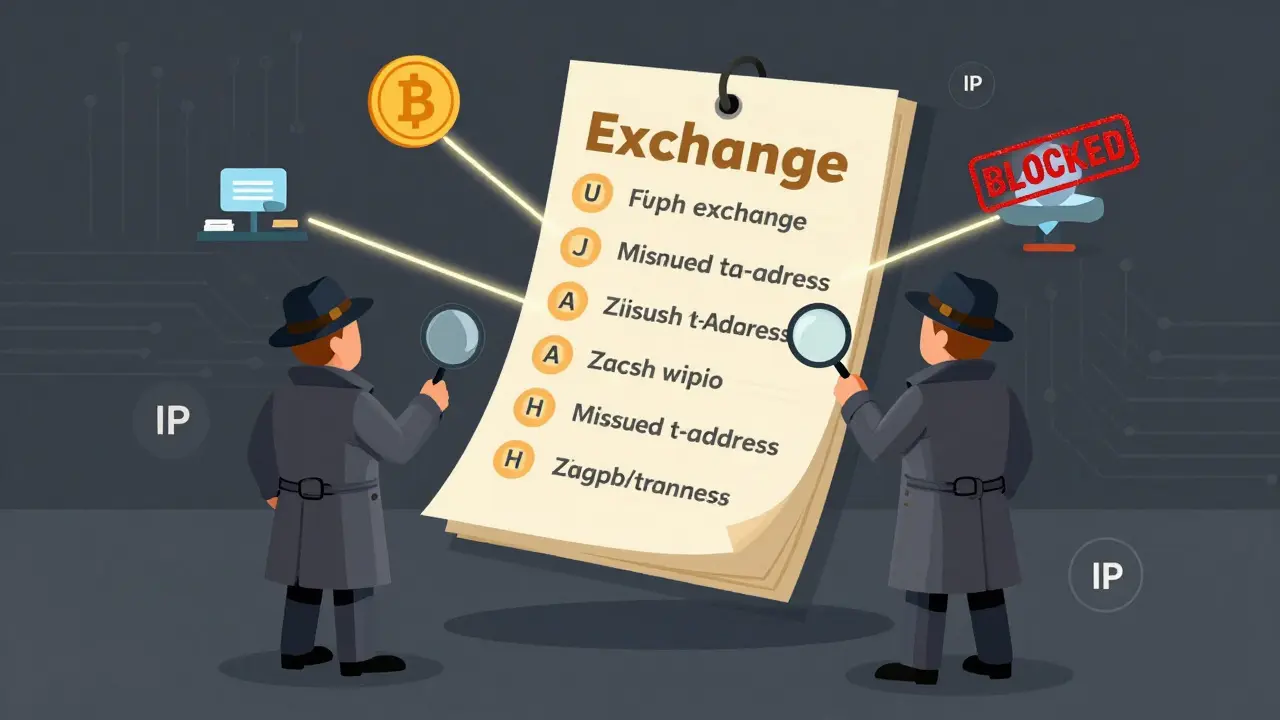
How People Try (and Fail) to Hide Their IP
Most crypto users who care about privacy turn to VPNs or Tor. But these aren’t magic shields. VPNs hide your real IP by routing traffic through a server. But if the VPN provider logs your activity - and many do - you’ve just traded one tracker for another. Worse, some VPNs are blocked by exchanges entirely. If your crypto wallet suddenly stops working after switching to a new VPN, it’s not a glitch - it’s a blocklist. Tor is better. It bounces your traffic through multiple encrypted layers, making it much harder to trace. But Tor isn’t foolproof. In 2020, researchers found that connecting to the Bitcoin network through Tor still left traces. If you run a Bitcoin node over Tor, your node’s behavior can be fingerprinted. And if you use a wallet app that doesn’t support Tor properly, your real IP can leak. Mixing services (also called tumblers) claim to break the link between your input and output addresses. But they’re risky. Many have been shut down by regulators. Some are scams. And for large amounts - over $10,000 - mixers often fail because the pattern becomes obvious. Plus, in the U.S. and EU, using a mixer can itself be considered suspicious activity under anti-money laundering rules.What Law Enforcement Actually Uses
You won’t find police officers sitting at laptops tracing Bitcoin like in the movies. Real investigations use tools like Chainalysis, Elliptic, and Blockquiry. These platforms don’t hack wallets. They analyze the blockchain like a giant spreadsheet. They look at:- Which addresses send money to known exchange wallets
- When transactions occur - matching them to public events or social media posts
- How much money moves between wallets - patterns that match known criminal behavior
- Geolocation data tied to IPs that connect to those wallets
What You Can Do to Protect Yourself
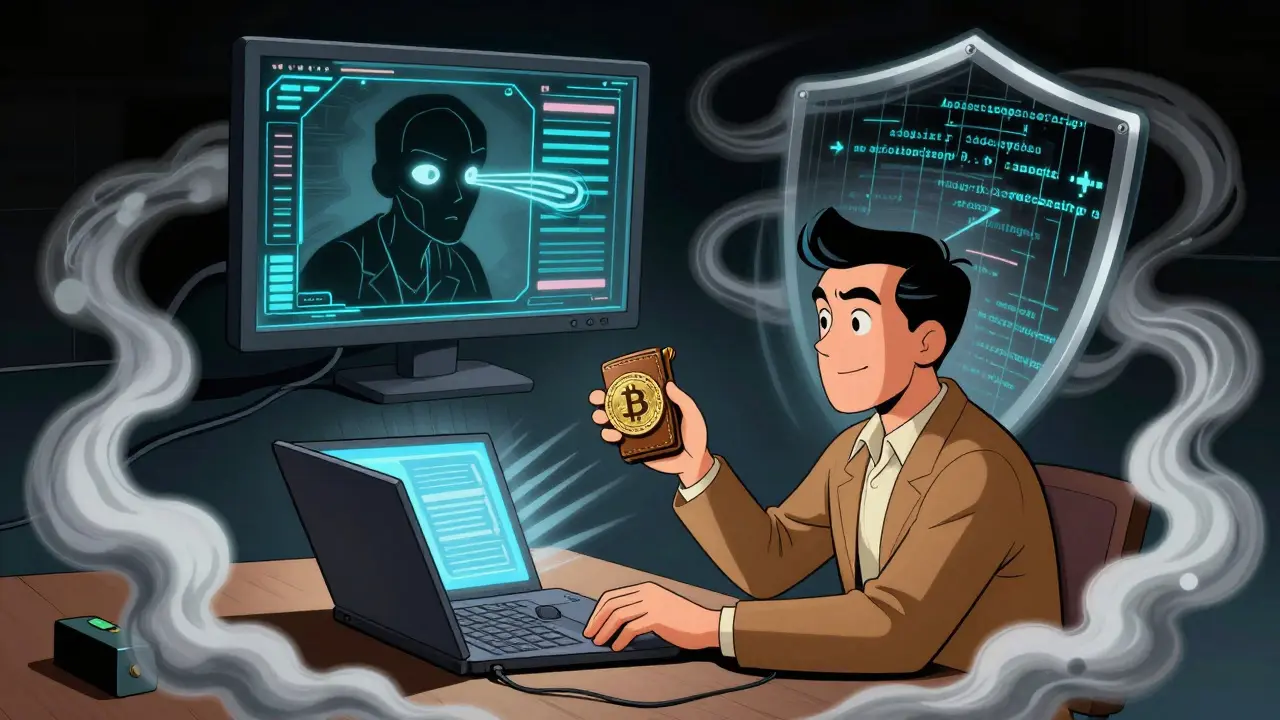
You don’t have to give up crypto to protect your privacy. Here’s what works:- Use Tor with a trusted wallet - Electrum and Wasabi Wallet support Tor. Configure it properly. Don’t just install the app - go into settings and enable Tor.
- Avoid reusing addresses - Every time you receive crypto, generate a new address. Reusing one makes it easier to track your total holdings.
- Don’t link your wallet to personal info - Never post your Bitcoin address on social media, forums, or public blogs. Even if you think it’s “just a donation,” someone can trace every transaction you’ve ever made.
- Use privacy coins wisely - If you use Monero or Zcash, learn how to use shielded addresses correctly. Don’t mix them with regular ones. And never send them to exchanges that don’t support them.
- Consider a hardware wallet + offline signing - Sign transactions on an air-gapped device, then broadcast them through a public Tor node. This removes your IP from the equation entirely.
The Future Is a Race - and You’re Already Behind
The crypto world is in a silent arms race. On one side, investigators are building AI models that can predict wallet ownership from transaction timing alone. On the other, developers are trying to make privacy tools faster, cheaper, and easier to use. But right now, the advantage is with the trackers. Most users still think they’re safe because they don’t use their real name. They’re wrong. Your IP address, your transaction patterns, your timing - these are your real identifiers in crypto. The best protection isn’t hiding. It’s understanding how you’re being seen - and changing your behavior before it’s too late.Can the government track my Bitcoin transactions?
Yes. Even if you never use your real name, government agencies can link your Bitcoin wallet to your IP address, exchange account, or physical location using blockchain analysis tools. If you’ve ever used a KYC exchange like Coinbase or Binance, your identity is already tied to your wallet history.
Is using a VPN enough to hide my crypto activity?
Not really. Many VPNs log your activity, and some are blocked by exchanges. Even if your IP is hidden, your transaction patterns can still be traced. A VPN hides your location from your ISP - not from blockchain analysts. For real privacy, combine a no-log VPN with Tor and privacy-focused wallets.
Why are privacy coins like Monero being delisted from exchanges?
Because they make it nearly impossible for exchanges to comply with anti-money laundering (AML) rules. Exchanges must know who their users are and where funds come from. Monero hides sender, receiver, and amount - so exchanges can’t verify compliance. That’s why most major platforms removed it - not because it’s illegal, but because it breaks their legal obligations.
Can I use Zcash safely without being tracked?
Only if you use shielded (z-) addresses 100% of the time and never mix them with transparent (t-) addresses. But most wallets default to t-addresses, and many users don’t realize they’re leaking data. In 2023, less than 15% of Zcash transactions were fully shielded - meaning over 85% were as traceable as Bitcoin.
Do I need to stop using Bitcoin for privacy reasons?
No - but you need to change how you use it. Bitcoin isn’t private by design, but you can reduce exposure: use Tor, avoid address reuse, don’t link your wallet to personal info, and consider using privacy tools like Wasabi Wallet for mixing. You can still use Bitcoin - just treat it like a public ledger you’re trying to minimize.
8 Comments
Really appreciate this breakdown. I’ve been using Wasabi with Tor for months now and honestly feel way more at ease. No need to panic, just be smart.
Blockchain analytics is just KYC on steroids. We’re not anonymous, we’re just in a compliance theater where everyone pretends not to see the elephant.
VPNs don’t work. Tor’s slow. Monero’s dead. Bitcoin’s public. We’re all just waiting for the axe to drop.
It’s not about hiding… it’s about realizing you were never really in control to begin with
You’re all missing the point. If you’re using crypto for anything beyond gambling or tax evasion, you’re already the problem.
While the article correctly identifies IP tracking as a vulnerability, it grossly underestimates the sophistication of behavioral fingerprinting. Recent studies from MIT’s Crypto Lab (2024) demonstrate that transaction timing, UTXO selection patterns, and fee structures can identify users with 89% accuracy even when Tor is used. The notion that ‘using a new address each time’ mitigates risk is outdated - clustering algorithms now correlate wallet behavior across millions of addresses to infer ownership with high confidence. Furthermore, the claim that hardware wallets eliminate IP exposure is misleading; broadcasting via public Tor nodes still leaves metadata trails in node relay logs. The only truly effective method is offline transaction creation with subsequent broadcast through a decentralized, non-persistent relay network - which remains impractical for 99% of users. This isn’t a privacy issue - it’s an existential design flaw of public blockchains.
Collin’s right - the real solution isn’t tech, it’s habits. I used to reuse addresses like crazy. Then I started using Wasabi with Tor and only sending small amounts at a time. No drama, no panic. Just quiet, consistent caution. You don’t need to be a hacker. Just be consistent.
The fundamental paradox of cryptocurrency is that it promises autonomy while demanding compliance. One cannot simultaneously embrace decentralization and expect to remain unobserved within a system that is inherently transparent. The state does not need to hack your wallet - it merely needs to observe your patterns, correlate your behavior, and invoke regulatory authority. Privacy is not a technical challenge; it is a sociopolitical contradiction.