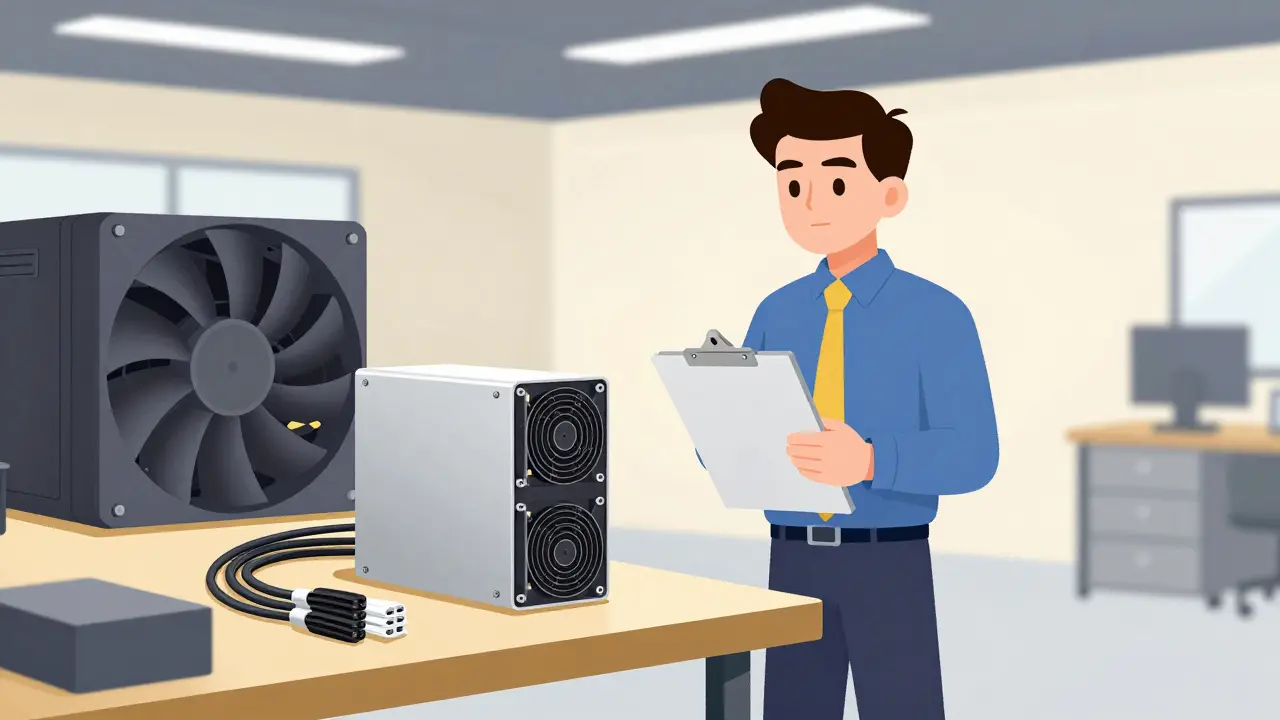
Setting up a crypto mining operation in 2026 is no longer about plugging a graphics card into your laptop and hoping for the best. The landscape has shifted dramatically since the early days of Bitcoin. Today, it is a capital-intensive industrial process that demands serious upfront investment, precise technical configuration, and a keen understanding of energy economics. If you are looking to enter this space, you need to treat it like starting a small business, not a side hobby.
The barrier to entry has risen significantly. According to recent industry analyses, setting up a basic home Bitcoin mining operation can cost anywhere from $2,630 to over $23,000, depending on the scale and efficiency of your hardware. This isn't just about buying the machine; it’s about building an ecosystem that includes power management, cooling systems, and robust network infrastructure. Before you spend a dime, you need to understand exactly what goes into a viable mining rig and whether your local conditions support profitability.
Choosing the Right Hardware: ASICs vs. GPUs
The first decision you face is selecting the right computing power. In 2026, there are two main categories of hardware: Application-Specific Integrated Circuits (ASICs) and Graphics Processing Units (GPUs). For Bitcoin mining, ASICs are the only realistic option. These machines are designed for one single purpose: solving the SHA-256 algorithm used by Bitcoin. They offer vastly superior efficiency compared to general-purpose computers.
Popular models like the Antminer S21 Pro or the Whatsminer M66S range in price from $2,000 to $17,000. When evaluating these units, look closely at the joules per terahash (J/TH) metric. This number tells you how much electricity the miner consumes to perform a specific amount of work. A lower J/TH rating means better efficiency, which directly impacts your profit margins. If you plan to mine alternative cryptocurrencies (altcoins), GPUs might still be viable due to their flexibility, but they cannot compete with ASICs in terms of raw hashing power for major networks like Bitcoin.
Don’t forget the supporting infrastructure. You’ll need high-quality Power Supply Units (PSUs). Experts recommend choosing PSUs with at least 20% more wattage capacity than the miner’s actual draw to ensure stable operation and prevent burnout. Quality PSUs typically cost between $50 and $300. Cheap components here can lead to expensive failures later.
Calculating True Operational Costs
Hardware is just the entry ticket. The real killer for most miners is electricity. Your profitability hinges entirely on your local energy rates. If you pay residential rates above $0.10 per kWh, solo mining Bitcoin is likely unprofitable unless you have access to free renewable energy sources. Industrial miners often secure contracts below $0.05 per kWh, giving them a massive advantage.
You must also factor in cooling and noise mitigation. ASICs run hot-often exceeding 80°C internally-and they sound like jet engines. Basic cooling fans cost $50-$500, but if you’re running multiple units, you may need advanced solutions like immersion cooling tanks, which can exceed $10,000. Additionally, consider soundproofing materials ($100-$1,000) or external structures ($500-$5,000) if you plan to house these machines near living spaces. Network infrastructure, including high-quality routers and Ethernet cables, adds another $50-$300 to ensure uninterrupted connectivity.
| Component | Low-End Estimate | High-End Estimate | Notes |
|---|---|---|---|
| ASIC Miner | $2,000 | $17,000+ | Depends on hash rate and efficiency |
| Power Supply Unit | $50 | $300 | Aim for 20% overhead capacity |
| Cooling System | $50 | $10,000+ | Fans vs. Immersion Cooling |
| Noise Control | $100 | $5,000 | Soundproofing or external housing |
| Network & Misc. | $50 | $300 | Routers, cables, surge protectors |
Software Configuration and Operating Systems
Once your hardware is assembled, you need software to connect it to the blockchain. While many beginners start with Windows 10 due to its user-friendly interface, serious operations often migrate to Linux-based operating systems like HiveOS or RaveOS. These specialized OS platforms offer remote management capabilities, enhanced resource efficiency, and better stability for 24/7 operations.
For mining software itself, options like CGMiner, NiceHash Miner, and Cudo Miner are widely used. CGMiner is lightweight and highly customizable, making it a favorite for experienced users. NiceHash simplifies the process by allowing you to sell your hashing power to others, automatically paying you in Bitcoin regardless of which coin you’re actually mining. Always check the fee structures of these platforms, as they can eat into your margins.
Before configuring anything, set up a secure cryptocurrency wallet. You will need this address to receive your mining rewards. Never store significant amounts of mined coins on exchange wallets; use a hardware wallet or a self-custody solution for security.
Mining Pools vs. Solo Mining
One of the most critical strategic decisions is whether to mine solo or join a mining pool. Solo mining involves competing against the entire global network to solve blocks. With current network difficulty levels, the odds of finding a block alone are astronomically low. It could take years to see a payout, if ever.
Joining a mining pool combines your computational power with thousands of other miners. The pool finds blocks more frequently, and rewards are distributed among participants based on their contributed hash rate. This provides consistent, smaller payouts rather than rare, large ones. Reputable pools include F2Pool, Antpool, and ViaBTC. When choosing a pool, look for low fees (typically 1-2%), reliable uptime statistics, and transparent payment histories. Configure your worker names and pool addresses carefully in your mining software to ensure proper attribution of your work.

Thermal Management and Longevity
Heat is the enemy of mining hardware. Without proper thermal management, your ASICs will throttle performance to protect themselves, reducing your earnings. Worse, excessive heat can permanently damage components, leading to costly replacements. Regular maintenance is non-negotiable. Dust buildup insulates components and traps heat. Clean your fans and heatsinks regularly, and monitor temperatures through your mining dashboard.
If you are operating in a warm climate, passive cooling won’t cut it. Consider dedicated ventilation systems or even liquid cooling solutions. The goal is to keep ambient temperatures around your rigs below 25°C (77°F) whenever possible. This extends the lifespan of your equipment and maintains optimal hash rates.
Assessing Profitability and Risk
Before launching, run the numbers using a mining profitability calculator. Input your hardware’s hash rate, power consumption, local electricity cost, and current network difficulty. Remember, difficulty adjusts every two weeks as more miners join the network, so past profits don’t guarantee future returns. Market volatility also plays a huge role; if the price of Bitcoin drops, your revenue drops instantly, while your electricity bills remain fixed.
Be wary of cloud mining scams. Many platforms promise high returns for renting hash power, but many are fraudulent. Stick to physical hardware you control. Also, avoid trying to mine on laptops or phones-it’s impractical, inefficient, and will likely destroy your device without earning a fraction of a cent.
Is Bitcoin mining profitable in 2026?
Profitability depends heavily on your electricity costs and hardware efficiency. If you can secure power below $0.08 per kWh and use modern, efficient ASICs like the Antminer S21 Pro, it can be profitable. However, with rising network difficulty and competition from industrial farms, margins are tight for residential miners.
What is the best ASIC miner for beginners?
The Antminer S21 series and Whatsminer M66S are currently top choices due to their balance of hash rate and energy efficiency. Look for models with low J/TH ratings to maximize long-term profitability.
Do I need a mining pool?
Yes, for almost all individual miners. Solo mining Bitcoin is statistically unlikely to yield rewards due to extreme network difficulty. Mining pools provide consistent, smaller payouts by combining resources with other miners.
Can I mine crypto with my GPU?
You can mine certain altcoins with GPUs, but it is generally not profitable for Bitcoin. GPUs are less efficient than ASICs for SHA-256 mining. GPU mining is better suited for algorithms like Ethash or KawPow, but profitability varies wildly with market conditions.
How much does it cost to start mining?
A basic home setup starts around $2,630, covering a mid-range ASIC, PSU, and basic cooling. Larger setups with multiple high-end miners and advanced cooling can exceed $23,000. Always factor in ongoing electricity and maintenance costs.
5 Comments
It is honestly wild how much the barrier to entry has skyrocketed in just a few years. I remember when you could just grab an old graphics card and start churning out coins without breaking a sweat. Now it feels like you need an industrial degree just to plug something into the wall safely. The point about electricity costs being the real killer is spot on though. If you are paying standard residential rates, you are basically burning money for heat. It makes me wonder if the only people who should be mining are those with access to subsidized or renewable power sources. We really need more transparency on the actual ROI timelines because everyone sells the dream but hides the utility bills.
The J/TH metric is literally the alpha here and most newbies ignore it completely. You can buy the loudest ASIC on the market but if the efficiency is off by even 0.5 joules per terahash you will never recoup your CAPEX in this cycle. Also don't sleep on the PSU overhead recommendation. I blew a $300 unit last year because I tried to run an S21 Pro on a budget supply that was rated exactly at the draw. Always overspec the power delivery layer or you will be buying replacement parts instead of earning sats. Immersion cooling is nice but the capex is too high for small ops unless you have dedicated industrial space.
USA energy prices are a scam :( why pay $0.12 when you can get cheap power elsewhere? This guide is biased towards western consumers who overpay for everything. Real miners know where to look for subsidies and tax breaks. Don't listen to these corporate narratives about 'industrial process'. Just get the hardware and find a way to cut the bill. :)
everyone says immersion cooling is expensive but they forget the maintenance savings on fans and dust filters which add up over time also the noise reduction is worth it if you live in an apartment complex so maybe the high end estimate is actually the smarter long term play despite the upfront cost
i totally agree with the part about not using laptops for mining its such a bad idea and ruins the device so fast. i feel for people who try to do it as a side hobby because the noise alone drives you crazy. my neighbor has a small setup and the humming is constant and its really hard to relax at home. maybe we need better community guidelines for residential mining zones so families dont get stressed out by the noise pollution from their neighbors rigs.