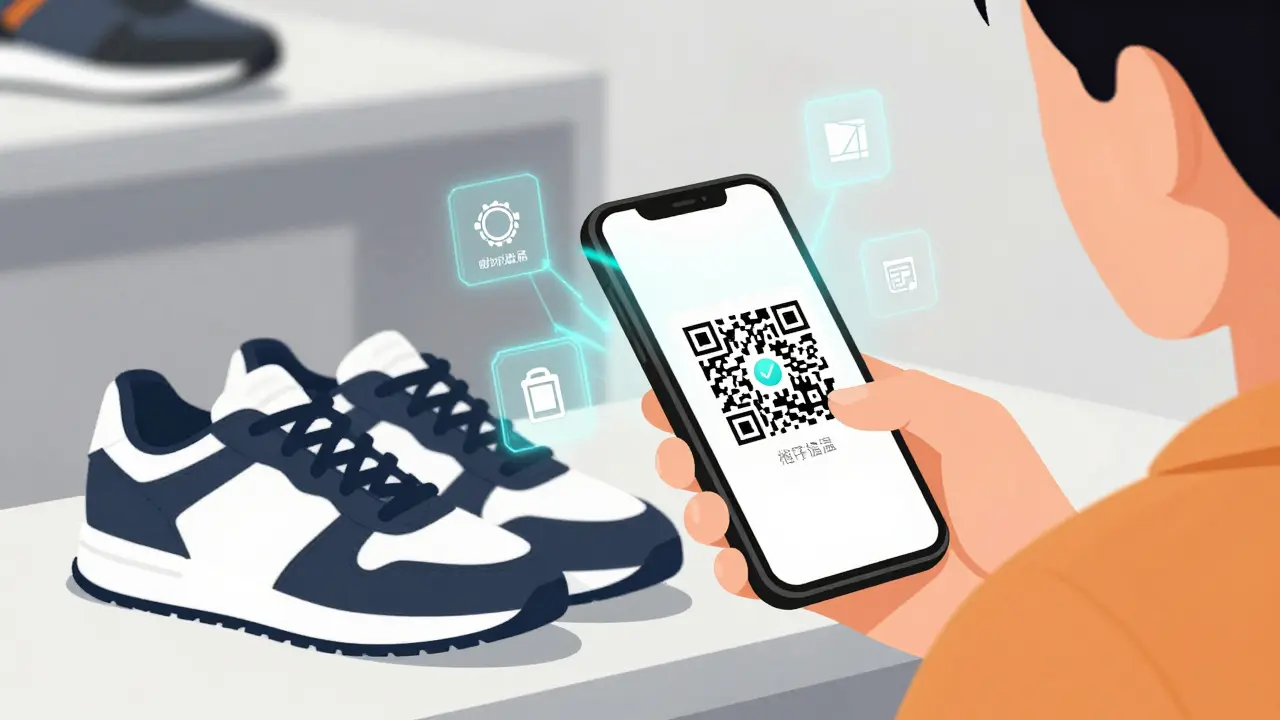
Imagine buying a pair of luxury sneakers or a bag of organic coffee. You scan a QR code on the packaging, and suddenly you see exactly where those materials came from, who stitched them together, and even the temperature at which they were stored during shipping. This isn’t science fiction anymore. It is happening right now through Blockchain NFTs, which are unique digital tokens that serve as immutable certificates of authenticity for physical products in supply chains. For years, we have been told our products are "ethical," "organic," or "fair trade." But how could you ever truly verify those claims? Traditional paper trails are easy to forge. Centralized databases can be hacked or altered by insiders. Now, companies are using Non-Fungible Tokens (NFTs) not for digital art, but as unchangeable digital passports for real-world goods. This shift solves the biggest problem in modern logistics: trust.
The Problem with Traditional Tracking
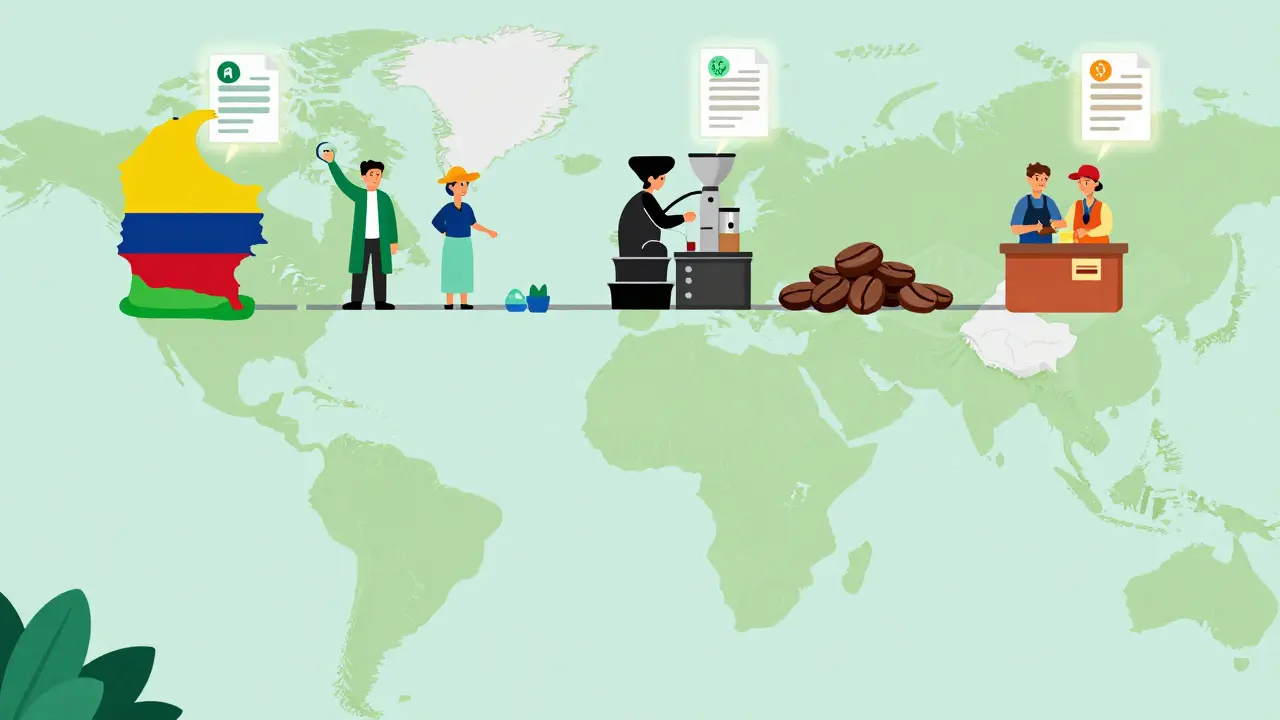
Before we look at the solution, let’s understand why the old way fails. Most supply chains today rely on siloed systems. A farmer records harvest data in one spreadsheet. The processor uses another software system. The retailer has yet another database. These systems rarely talk to each other seamlessly, creating gaps where fraud slips in. Consider the coffee industry. Beans might travel from a small farm in Colombia to a roaster in Italy, then to a distributor in New York. At each step, information gets lost or manipulated. A buyer might claim beans are "shade-grown" when they weren’t, simply because there is no single, shared record that everyone agrees on. Audits happen once a year, giving plenty of time for bad actors to hide unethical practices between checks. This lack of visibility hurts consumers who want to make ethical choices and businesses that play by the rules. If you cannot prove your product is authentic, you lose market share to competitors who lie about their sourcing.
How NFTs Work as Digital Passports
An NFT in this context is not a JPEG of a monkey. Think of it as a unique serial number linked to a specific physical item. When a product is created-say, a batch of pharmaceutical drugs or a diamond-the manufacturer mints an NFT on a blockchain. This token contains metadata: origin, production date, materials used, and certifications. As the product moves through the supply chain, every handoff is recorded on the blockchain. When the factory ships the goods to the wholesaler, a transaction is logged. When the wholesaler sells to the retailer, another log is added. Because blockchains are decentralized and immutable, nobody can go back and change these records without breaking the entire chain-a feat that is computationally nearly impossible. The key here is the link between the physical and digital worlds. Companies use QR codes, RFID tags, or NFC chips attached to the product. Scanning the tag reveals the NFT’s history. Since the data lives on the blockchain, not just on the company’s website, the consumer knows the information hasn’t been doctored after the fact.
Key Technologies Powering This Shift
Several technologies work together to make NFT supply chains viable. Understanding these components helps explain why this approach is more robust than simple barcode scanning.
- Smart Contracts: These are self-executing codes on the blockchain. For example, a smart contract can automatically release payment to a supplier only when the IoT sensor confirms the shipment arrived within the correct temperature range. This removes human error and dispute delays.
- IoT Sensors: Internet of Things devices attach to containers or pallets. They feed real-time data like location, humidity, and shock impact directly into the NFT’s record. This creates a living history of the product’s journey.
- Hashing Algorithms: To protect sensitive business data, companies don’t put raw customer lists on the blockchain. Instead, they hash the data-turning it into a unique string of characters. This verifies the data’s integrity without exposing private details.
- Zero-Knowledge Proofs: An emerging technology that allows one party to prove a statement is true without revealing the underlying data. This helps balance transparency with privacy concerns.
Real-World Applications Across Industries
This technology is already moving beyond pilot programs into full-scale operations. Here is how different sectors are using it:
| Industry | Primary Challenge | NFT Solution Benefit |
|---|---|---|
| Luxury Goods | Counterfeit products flooding the market | Instant authentication via unique NFT ID; resellers can transfer ownership digitally while maintaining provenance. |
| Pharmaceuticals | Fake drugs endangering patient safety | Every pill bottle gets tracked from factory to pharmacy; alerts trigger if a drug deviates from its expected route. |
| Food & Beverage | Slow recall processes during contamination outbreaks | Trace contaminated batches back to the exact farm in minutes, not weeks, saving lives and reducing waste. |
| Electronics | Conflict minerals and unethical labor | Verify that cobalt or gold comes from certified ethical mines, satisfying regulatory compliance. |
In the food sector, speed is critical. During an E. coli outbreak, traditional tracing can take days. With NFT-based tracking, retailers can pinpoint the exact lettuce heads involved and pull them off shelves instantly. In luxury fashion, brands like LVMH have experimented with digital IDs to combat counterfeiting, allowing customers to buy second-hand items with confidence that the originality is verified.
Implementation Challenges and Realities
It is not all smooth sailing. Implementing NFT supply chains requires significant effort. First, there is the "garbage in, garbage out" problem. If a farmer manually enters false data about pesticide use, the blockchain will permanently record that lie. Technology cannot fix human dishonesty at the source point. Solutions involve automated sensors and third-party audits to validate initial data entry. Second, interoperability remains a hurdle. Different companies may use different blockchain platforms-Ethereum, Polygon, Hyperledger Fabric. If these networks cannot communicate, the supply chain breaks. Industry standards are developing, but fragmentation still exists. Finally, cost and complexity. Small suppliers often lack the technical infrastructure to mint and manage NFTs. Larger enterprises lead adoption, forcing smaller partners to adapt or risk being cut out of the supply chain. Training staff to understand blockchain basics is also a non-trivial task that takes months.
The Future of Transparent Commerce
Looking ahead, the integration of AI with NFT supply chains promises smarter logistics. AI can analyze the vast amounts of data stored in NFT histories to predict delays, optimize routes, and identify potential fraud patterns before they become problems. As regulations around sustainability tighten globally, especially in the European Union, having verifiable proof of ethical sourcing will transition from a marketing perk to a legal requirement. Consumers are increasingly savvy. They demand transparency. Brands that embrace NFTs for supply chain visibility will build deeper trust. Those that cling to opaque, paper-based systems will find themselves struggling to prove their value in a world that values truth over tradition.
Are NFTs secure for supply chain data?
Yes, NFTs are highly secure because they reside on blockchains, which are decentralized and encrypted. Once data is written to the NFT, it cannot be altered or deleted without consensus from the network, making tampering virtually impossible.
How do consumers access NFT supply chain info?
Consumers typically scan a QR code or NFC tag on the product packaging using a smartphone app. This action retrieves the NFT’s public data from the blockchain, displaying the product’s journey, certifications, and authenticity status in a user-friendly interface.
What is the difference between standard blockchain and NFTs in supply chains?
Standard blockchain tracks transactions generally, while NFTs represent unique, individual assets. In supply chains, NFTs act as digital twins for specific items or batches, allowing for granular tracking of provenance and ownership history that generic ledger entries cannot provide.
Can NFTs help reduce counterfeit goods?
Absolutely. Counterfeiters cannot replicate the unique cryptographic signature of an NFT. By verifying the NFT against the blockchain, buyers can instantly confirm if a product is genuine or fake, significantly reducing the market for counterfeits.
Is implementing NFT supply chains expensive?
Initial setup costs can be high due to technology integration, smart contract development, and staff training. However, long-term savings come from reduced fraud, faster recalls, lower audit costs, and increased consumer trust leading to higher sales.
10 Comments
Finally someone is talking about the real utility of blockchain instead of just apeing into monkey JPEGs. The supply chain transparency angle is where the actual value lies, especially for industries like pharma and luxury goods where counterfeiting is a massive issue. I work in logistics and seeing how siloed our systems are makes this solution look incredibly robust. If we can actually get the IoT sensors to feed data reliably without human intervention, this could be a game changer.
This is fascinating! It really highlights how technology can bridge the gap between consumer trust and corporate responsibility. The idea that a simple QR code scan can reveal the entire journey of a product, from the farm to the shelf, is incredibly empowering for shoppers who care about ethical sourcing. It gives us the power to vote with our wallets based on verified facts rather than marketing fluff.
looks good but dont forget the garbage in garbage out problem mentioned in the article.. if the farmer lies about the pesticides no amount of blockchain magic fixes it.. also why should we trust these tech bros to fix our food supply? feels like another way for big corp to control everything while making it harder for small players to compete :)
honestly this whole thing seems overhyped and pretentious. people will not bother scanning qrcodes every time they buy coffee or sneakers. its too much effort for most consumers who just want their stuff cheaply. plus the cost of implementation is going to drive up prices which is just annoying. typical tech bro solution looking for a problem that doesnt really exist in the way they think it does.
I have to disagree with the notion that consumers won't use it. Look at how quickly everyone adopted mobile payments and contact tracing apps during the pandemic. Convenience drives adoption, and if scanning a code becomes as easy as tapping your phone, it will stick. The key is integration. If the NFT data feeds directly into a familiar app interface, the friction disappears. We need to focus on user experience rather than dismissing the potential because current implementations might be clunky.
The philosophical implication here is profound. We are moving from a system based on institutional trust to one based on cryptographic verification. This shifts the burden of proof from the authority to the protocol itself. However, one must ask whether this decentralization truly empowers the individual or merely creates a new layer of technical bureaucracy that only the elite can navigate. The digital divide may widen if access to this transparent information requires specific hardware or knowledge.
Oh great, another 'revolutionary' tech that will solve all our problems. Just wait until the first major hack happens or the energy costs become unsustainable. People love to believe in magic bullets for complex logistical nightmares. Spoiler alert: there is no such thing. It is just a fancy database with extra steps and higher fees. Wake up sheeple.
Your analysis lacks depth. You ignore the interoperability standards being developed by consortia like the W3C. While early adopters faced fragmentation, the industry is converging on common protocols. Dismissing the entire concept due to initial growing pains is intellectually lazy. The immutable ledger provides a single source of truth that reduces dispute resolution costs significantly, which is a tangible economic benefit that outweighs the skepticism.
In my experience leading cross-border supply chain initiatives, the semantic interoperability between disparate ERP systems remains the primary bottleneck. Implementing NFT-based provenance requires a robust ontology mapping strategy to ensure that metadata schemas align across jurisdictions. Without standardized ontological frameworks, the digital twin concept fails to scale effectively beyond pilot programs. We need to prioritize API standardization before worrying about the end-user interface.
I am completely blown away by the potential impact on pharmaceutical safety. Imagine saving lives by instantly identifying contaminated batches instead of waiting weeks for recalls. This isn't just about efficiency; it is about human dignity and health. The emotional weight of knowing that your medication hasn't been tampered with or stored incorrectly is priceless. We cannot afford to delay this transition any longer.