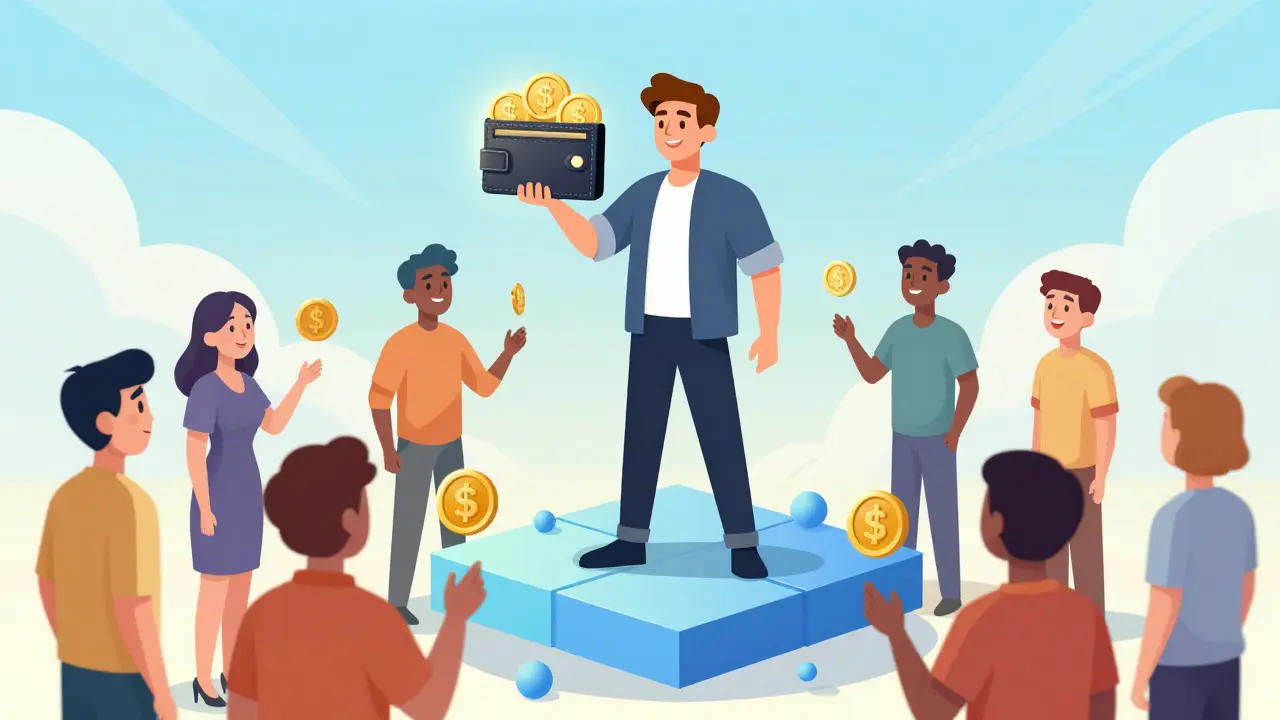
For years, social media creators have been told to post, engage, and grow-while the platforms took 90% of the ad revenue, sold their data, and could delete their accounts overnight. Now, a new wave of social networks is flipping that model entirely. On decentralized social media, creators own their content, their audience, and their income. No middleman. No surprise bans. No hidden algorithms deciding if your post gets seen. Just you, your followers, and a direct way to get paid.
How It’s Different from Traditional Social Media
On platforms like Instagram or TikTok, your content is owned by the company. You don’t own your followers-you’re just a tenant. The platform decides who sees your posts, what ads run alongside them, and whether you get demonetized for breaking a rule you didn’t even know existed. And even if you hit a million followers, you might still make less than minimum wage per hour when you factor in your time. Decentralized social media changes all that. Instead of a single company controlling everything, these networks run on open protocols built on blockchains. That means your profile, your posts, your followers-they’re all tied to your digital wallet, not a corporate server. If one app stops working, you can move to another without losing your audience. And when someone likes, tips, or buys something from you, the money goes straight to you-not a boardroom in San Francisco.How Creators Get Paid
There’s no single way to earn on decentralized social media. Instead, creators use a mix of tools that work together. Here’s how it actually works in practice:- Token tipping: Followers send you small amounts of cryptocurrency-like ETH, USDC, or platform-specific tokens-to show appreciation. On Farcaster, users tip with DEGEN. On Lens Protocol, tips flow through Polygon-based tokens. No fees. No delays. Just instant, global payments.
- Creator coins: Platforms like Diamond App let you create your own token. People buy it, hold it, and trade it like stock. The more you engage, the more your coin rises in value. If someone buys your coin for $5 and it goes up to $10, they profit. You profit too-because every trade charges a small fee that goes back to you.
- NFTs for content: Turn a post, video, or audio clip into a unique digital collectible. Fans buy it, collect it, or resell it. You get a cut every time it changes hands. No need to rely on ads-you’re selling ownership.
- Subscriptions and paywalls: Offer exclusive content behind a paywall. Use smart contracts to automatically release content when someone pays in crypto. No Stripe. No PayPal. Just a simple transaction.
- Transaction fees: Some platforms take a small cut from every interaction. For example, Lens Protocol charges 5% when someone "collects" your post. That 5%? It goes directly to you. Farcaster charges $0.01 per post to fight spam-and that money funds the network while keeping creators in the loop.
These aren’t theoretical ideas. In late 2022, Diamond App had over 130,000 active users. People weren’t just liking posts-they were converting likes into real money. On Mastodon, server admins set up their own tipping systems. On Bluesky, creators use third-party tools to accept crypto payments directly.
Why This Model Works Better
Traditional social media relies on two things: attention and data. The more time you spend scrolling, the more data they collect-and the more ads they sell. Your engagement is the product. You’re not the customer-you’re the commodity. Decentralized networks flip this. Your attention is still valuable, but now you’re the one who benefits. If someone tips you $2 because they loved your post, that’s $2 you earned. No ad network. No algorithm. Just a direct exchange between you and your audience. There’s also stability. On centralized platforms, a single policy change can erase years of work. One day you’re making $5,000 a month. The next, you’re banned for violating a rule no one ever explained. On decentralized networks, your content lives on the blockchain. Your wallet holds your income. Your followers follow your address-not your username. You can’t be demonetized unless you lose your private key.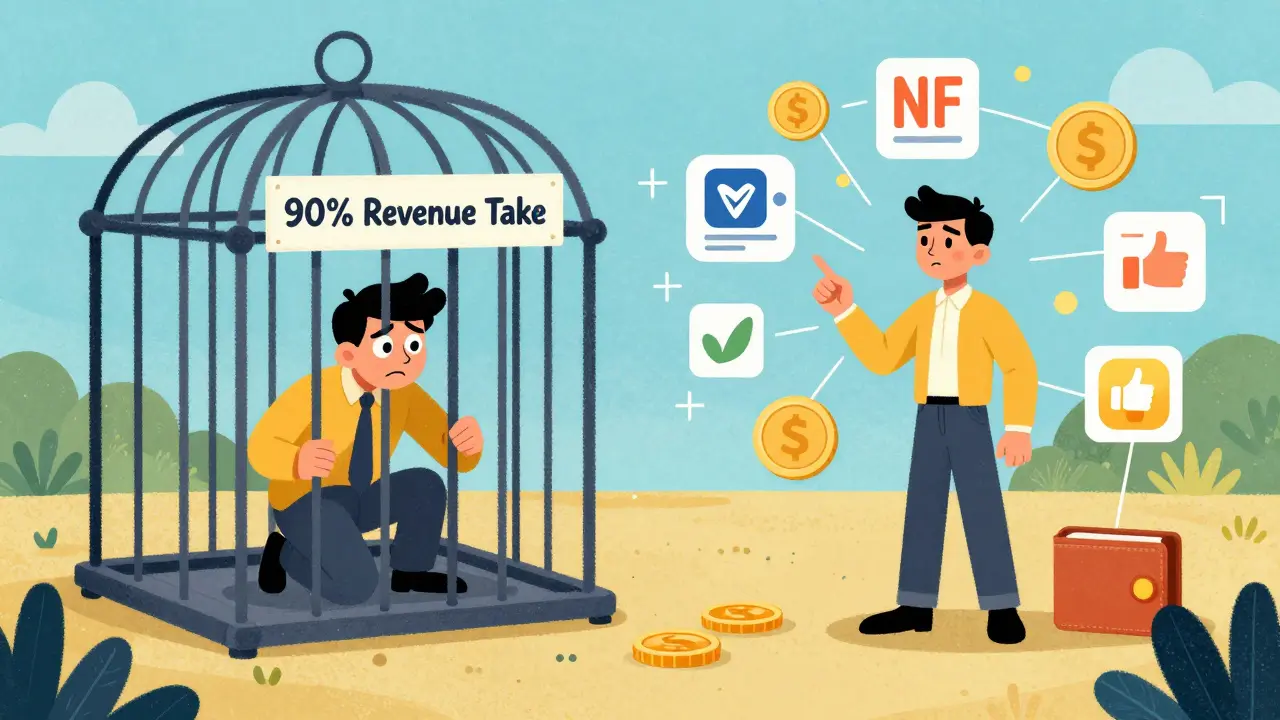
Real Platforms, Real Results
Not all decentralized social media is the same. Here’s how a few major players are doing it:- Farcaster: Built on Optimism, Farcaster focuses on identity portability. Your profile moves with you. If you switch from one app to another, your followers, tips, and reputation come too. DEGEN is the native token used for tipping, and the $0.01 post fee keeps spam low while funding the network.
- Lens Protocol: Running on Polygon, Lens lets creators fully own their social graph. Every post, comment, or repost is a NFT. When someone collects it, 5% of the fee goes to you. It’s popular with artists, musicians, and Web3 communities because it’s cheap, fast, and open.
- Diamond App: Built on the DeSo blockchain, Diamond App introduced creator coins. Users buy your coin, trade it, and hold it as an investment. Your influence becomes a tangible asset. Likes are convertible to cash. It’s like having your own stock market, based on your content.
- Mastodon: Not blockchain-based, but federated. Each server is independent. Some servers allow crypto tipping. Others integrate with Patreon or Buy Me a Coffee. It’s flexible, community-driven, and growing fast-especially as users flee Twitter’s instability.
- Bluesky: Still early, but its open protocol lets third-party apps build monetization tools. Some already let users send crypto tips directly from the app.
The Catch: It’s Not Easy
This isn’t magic. It’s technology. And technology takes work. If you’re used to clicking a button to enable monetization on YouTube, this will feel foreign. You need a crypto wallet. You need to understand private keys. You need to explain to your audience how to send you a tip in USDC or ETH. Many people still don’t know what a wallet is. That’s the biggest barrier. Creators who succeed here are the ones who teach. They make simple videos: "How to tip me on Farcaster." "How to buy my NFT post." They use Discord or Telegram to help followers get set up. They don’t assume everyone knows blockchain-they meet people where they are. Also, adoption is still low. You won’t get millions of followers overnight. But you won’t need to. On decentralized platforms, 100 true fans who tip you $5 a month are worth more than 10,000 passive followers on Instagram who never engage.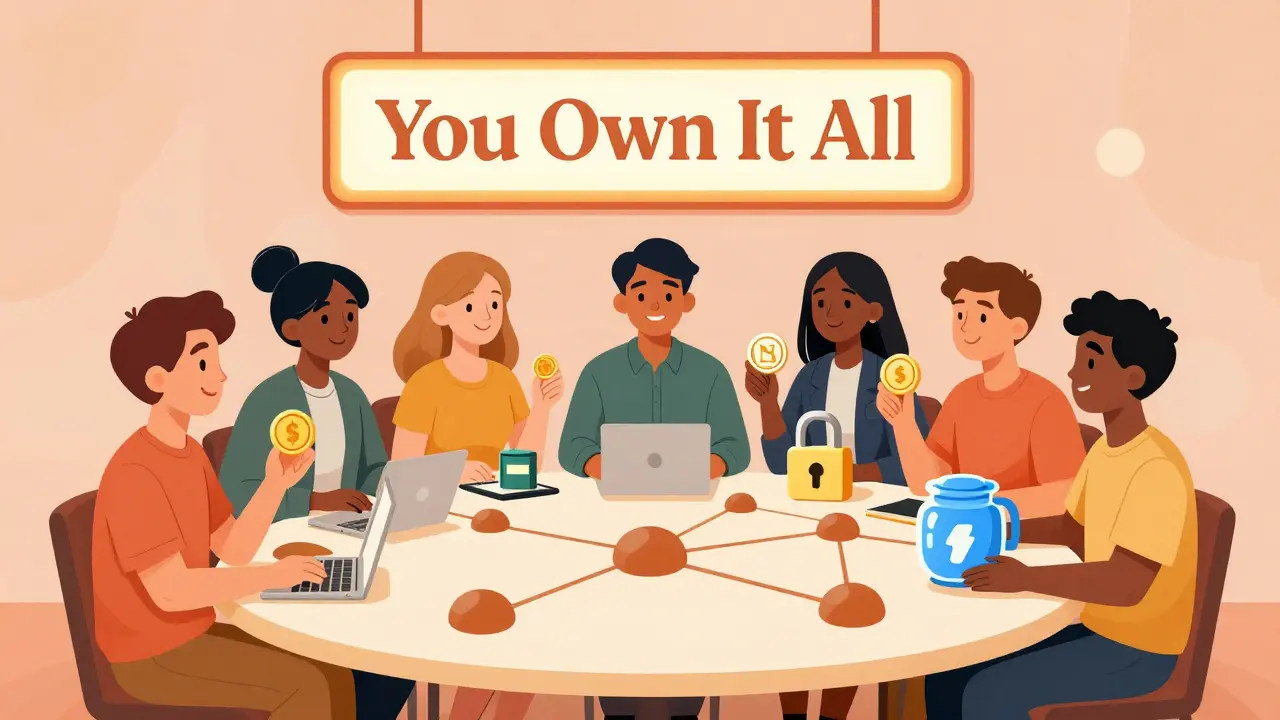
What You Need to Get Started
If you’re ready to try it, here’s how to begin:- Choose a platform: Start with Farcaster or Lens Protocol-they’re the most mature. Mastodon works if you prefer federated networks.
- Set up a wallet: MetaMask is the most common. Trust Wallet and Coinbase Wallet also work. Keep your seed phrase safe.
- Connect your wallet: Each platform has a simple guide. It takes less than five minutes.
- Start creating: Post like normal. Don’t overthink monetization yet.
- Ask for tips: Add a small note to your bio: "Tip me in ETH or USDC." Or: "I accept creator coin purchases."
- Learn from others: Join Discord servers for your platform. Watch how top creators do it. Copy what works.
You don’t need to be a tech expert. You just need to be willing to try something new. The tools are getting simpler every month.
The Bigger Picture
This isn’t just about money. It’s about control. It’s about ownership. It’s about building a community that lasts-not one that gets wiped out by a CEO’s decision. In 2025, millions of users are leaving centralized platforms. Not because they hate social media. Because they hate being treated like products. Decentralized social media offers a different path: one where creators aren’t just participants-they’re stakeholders. The early adopters on these platforms are already seeing results. Some are earning full-time incomes. Others are building brands that survive even if the platform changes. The lesson is clear: if you want to keep your voice, your audience, and your income-you need to own them.Can I really make money on decentralized social media?
Yes, but not like on YouTube or TikTok. You won’t get paid for views. Instead, you earn from direct support-tips, NFT sales, subscriptions, and transaction fees. Creators with engaged audiences are making $500 to $5,000 a month by focusing on a few hundred true fans, not millions of passive followers.
Do I need to understand blockchain to start?
Not deeply. You don’t need to code or mine crypto. But you do need to set up a wallet, understand how to receive crypto, and explain it simply to your audience. Most platforms have step-by-step guides. The hardest part is getting your followers to trust the process.
What’s the best platform to start with?
Farcaster and Lens Protocol are the most beginner-friendly right now. Both have low fees, strong communities, and clear ways to earn. Farcaster is great if you want to build an identity that moves across apps. Lens is ideal if you create visual content, music, or NFTs.
Are these platforms safe?
They’re safer than centralized platforms in one key way: your content and income aren’t held hostage. But you’re responsible for your wallet. If you lose your private key, you lose access. Never share it. Use a hardware wallet if you’re earning significant amounts.
Can I use fiat currency instead of crypto?
Some platforms allow it. Minds accepts both crypto and fiat. Others use third-party tools like Buy Me a Coffee or Ko-fi, which let you receive PayPal or credit card payments while still being on a decentralized network. But the purest form of DeSoc monetization uses crypto-because it’s direct, borderless, and censorship-resistant.
5 Comments
Let’s be brutally honest: this entire ‘decentralized social media’ fantasy is just Wall Street repackaging predatory capitalism with blockchain glitter. You think ‘owning your content’ means freedom? It means you’re now responsible for every tax liability, every legal threat, every chargeback, every wallet hack. And don’t get me started on the ‘100 true fans’ myth-unless those fans are also holding your token, you’re just begging for charity in a digital alley. The only thing decentralized here is the delusion.
Oh, splendid. Another manifesto from the Web3 priesthood, complete with bullet points like it’s a TED Talk. Let’s not pretend this isn’t just a rebrand of ‘get rich quick’ with a side of crypto bros. The ‘5% fee going to you’? That’s a tax you didn’t vote for. The ‘NFTs for content’? That’s how you turn art into a gambling table. And the ‘no more bans’? Tell that to the 12-year-old who lost $8,000 in ETH because he didn’t know what a private key was. This isn’t liberation-it’s financial whiplash dressed up as revolution.
I’m… honestly kind of curious about this. I don’t understand half the tech, but the idea of not being at the mercy of some algorithm that decides I’m ‘low-engagement’? That feels nice. I’ve had posts vanish for no reason, and honestly, it’s exhausting. I tried tipping someone on Farcaster last week-just $1 in USDC-and they replied with a voice note saying ‘thank you.’ It was… human. Not like a bot saying ‘thanks for the like.’ Maybe it’s messy. Maybe it’s weird. But maybe that’s the point? We’re not supposed to be perfect-we’re supposed to be connected.
Hey, I just want to say-you’re not alone if this feels overwhelming. I started with zero crypto knowledge. I didn’t even know what a wallet was. But I watched three 10-minute YouTube videos, set up MetaMask, and posted a silly cat meme with a ‘tip me in USDC’ note. Guess what? Someone did. $2.50. I cried a little. Not because of the money, but because someone chose to support me, not because an algorithm pushed my post. This isn’t about becoming a millionaire. It’s about reclaiming dignity. You don’t need to be an expert. You just need to show up. And if you’re reading this? You already are. Keep going. The community’s waiting.
Very insightful post. I have been following decentralized platforms for some time now. The concept of ownership is indeed powerful. However, I believe the real challenge lies in education-helping creators and audiences understand the tools without fear. I have helped five small artists in my network set up their wallets, and seeing their joy when they received their first tip was unforgettable. Patience and clarity matter more than hype. Thank you for writing this.