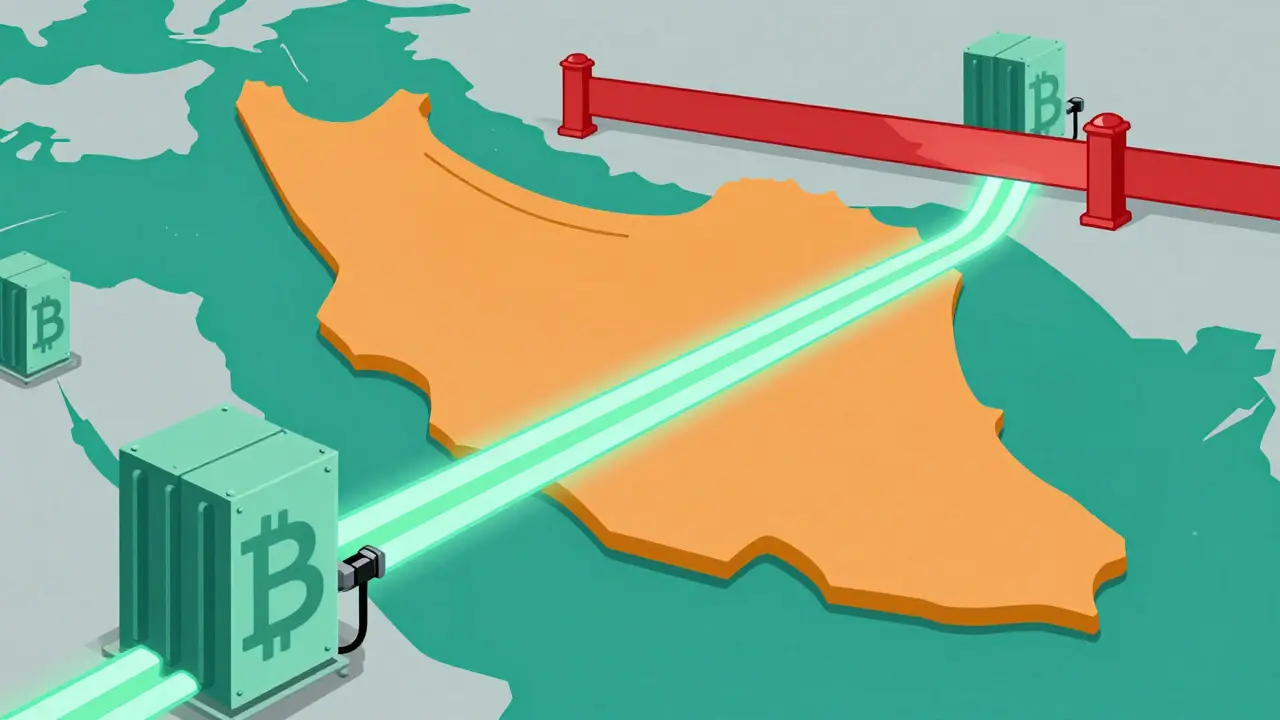
Imagine a country cut off from the global banking system, unable to move dollars or euros across borders. Now imagine that same country quietly building one of the world’s largest Bitcoin mining networks, not just for profit, but as a lifeline to bypass international restrictions. This isn’t science fiction-it’s reality in Iran. Since the United States withdrew from the Joint Comprehensive Plan of Action (JCPOA) in 2018, Tehran has turned cryptocurrency into a strategic tool for survival.
The scale is staggering. According to blockchain analytics firm Elliptic, roughly 4.5% of all global Bitcoin mining happens inside Iran. That might sound small, but it translates to hundreds of millions of dollars generated annually. More importantly, it allows the Islamic Republic to monetize its abundant energy resources without touching traditional financial intermediaries like SWIFT or correspondent banks. What started as an opportunistic experiment has evolved into what analysts call "all but an official policy."
From Opportunism to State Policy
At first, Iran’s approach mirrored China’s early stance: legalize the technology, ban the payments. But by 2020, the script flipped. Facing deepening isolation, Iranian authorities began legalizing crypto payments for imports and rolling out comprehensive mining licenses. By 2022, they had issued permits for over 10,000 mining farms and allowed around 90 domestic exchanges to operate.
This wasn’t random chaos. It was calculated infrastructure building. A think tank attached to the president’s office even published reports highlighting how digital assets could help avoid sanctions. The message was clear: if you can’t use the dollar, build your own parallel system.
By mid-2025, this strategy had matured into part of a broader sanctions-evasion network. Alongside a "dark fleet" of over 320 tankers moving oil under false flags, Iran used crypto to move billions in value. In fact, $4.18 billion worth of cryptocurrencies flowed out of Iran in 2024-a 70% jump from the previous year.
The Energy Equation: Cheap Power, Big Impact
Bitcoin mining runs on electricity. And Iran has plenty of it-mostly because it’s incredibly cheap. Thanks to heavy state subsidies, miners often pay near-zero rates for power. To put that in perspective: the electricity consumed by Iranian miners equals the energy needed to burn about 10 million barrels of crude oil every year. That’s roughly 4% of Iran’s total oil exports back in 2020.
Where does this power come from? Mostly natural gas flared at oil fields and surplus capacity from state-run plants. Some facilities are located in special economic zones or military bases where oversight is minimal. One standout example is a 175-megawatt farm in Rafsanjan, Kerman province-a joint venture between IRGC-linked companies and Chinese investors drawn by those rock-bottom energy costs.
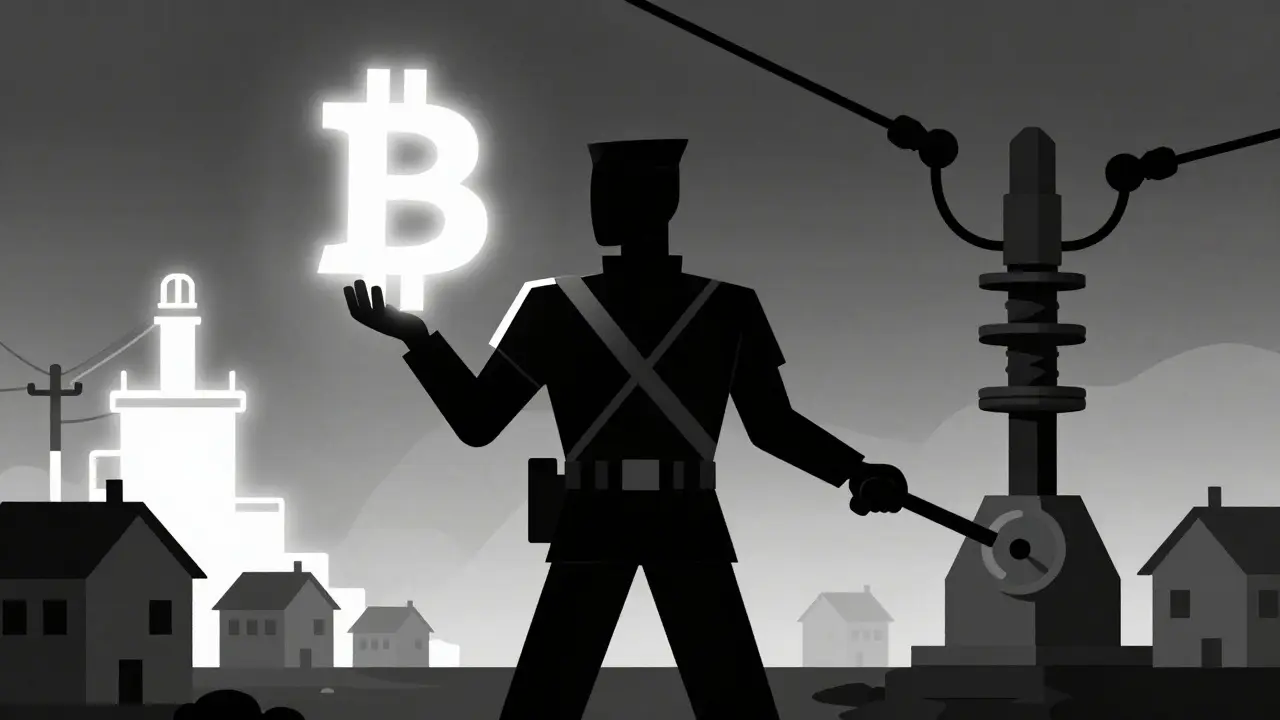
But here’s the catch: this massive draw on the grid worsens blackouts for regular citizens. During summer peaks, entire neighborhoods lose power while mining rigs keep running. Critics argue this creates a two-tiered system where regime-connected entities thrive while ordinary Iranians suffer.
Who Controls the Mines?
If you’re wondering who really benefits from all this hashing power, look no further than the Islamic Revolutionary Guard Corps (IRGC). Under direct orders from Supreme Leader Ali Khamenei, the IRGC accelerated its entry into crypto mining between 2019 and 2020. They viewed Bitcoin generation as compensation for lost access to US dollar transactions.
These aren’t small operations. We’re talking about industrial-scale setups with dedicated power feeds, political protection, and connections to powerful religious foundations like Astan Quds Razavi. Investigative reports have described them as a "crypto cartel" exploiting national resources.
International partners play a role too. Iran signed bilateral crypto cooperation agreements with Russia in November 2018 and negotiated deals with eight other countries including Austria, Germany, and South Africa. Even more concerning, investigations revealed that IRGC-affiliated firms processed $8 billion in transactions through Binance since 2018.
| Country | Primary Method | State Coordination | Key Risk |
|---|---|---|---|
| Iran | Bitcoin Mining | High (IRGC-led) | Energy Grid Strain |
| Venezuela | Petro Token | Medium | Lack of Adoption |
| North Korea | Hacking/Theft | High (Labor Bureau) | Criminal Exposure |
| Russia | Mining + Payments | Medium-High | Regulatory Uncertainty |
How It Works: The Technical Playbook
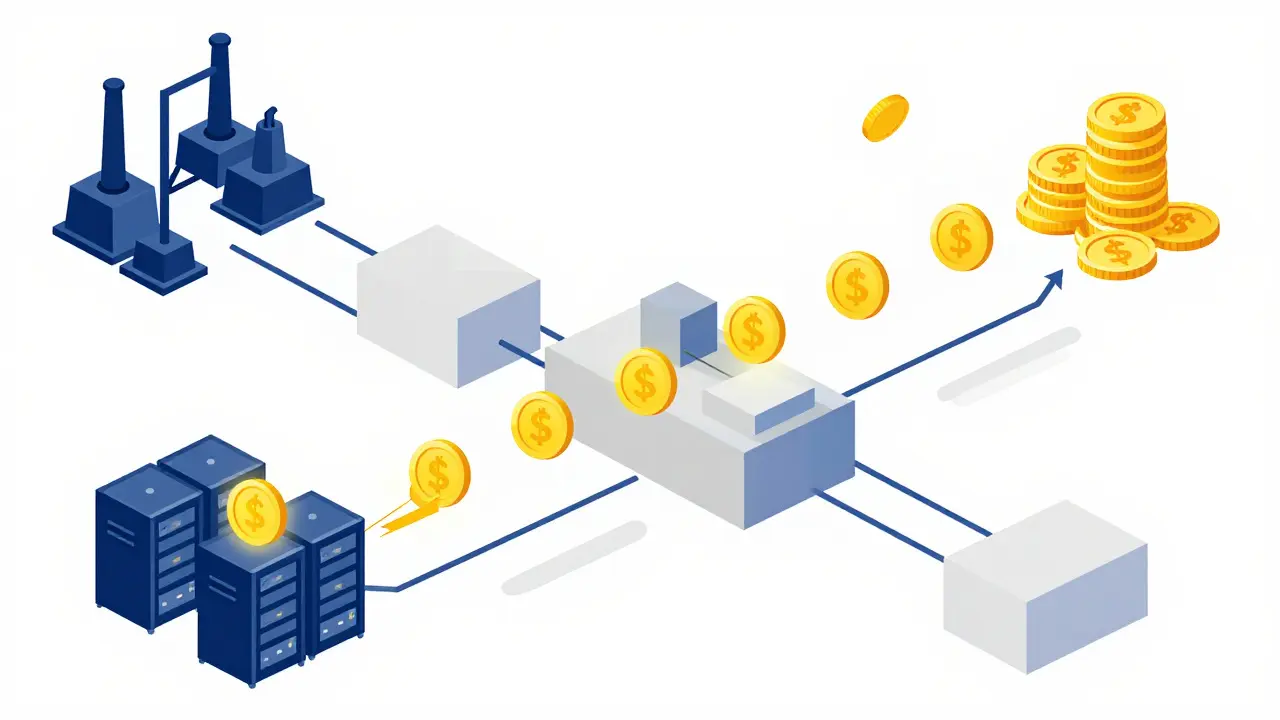
So how do they actually get the money out? It’s not as simple as clicking “withdraw.” Iranian miners receive payments directly in Bitcoin, which then need to be converted into usable currency or goods. Here’s the typical flow:
- Mining Phase: ASIC machines (mostly made in China) run 24/7 in subsidized facilities.
- Aggregation: Hash power is pooled together, often using proxy services to obscure origins.
- Conversion: Bitcoin is swapped for stablecoins (like USDT) or other cryptos via domestic or offshore exchanges.
- Exit Route: Funds move through shell companies in UAE/Hong Kong free zones or Beijing-based refineries before reaching final destinations.
Chainalysis and TRM Labs confirm these routes dominate Iran-linked flows today. FinCEN’s June 2025 advisory specifically warned about TRON-based stablecoin systems being used to launder mined proceeds.
For smaller operators, the process is harder. Import restrictions mean buying new hardware requires smuggling or gray-market suppliers. Internet connectivity issues disrupt pool connections. And regulatory rules change frequently, creating constant uncertainty.
Why This Matters Beyond Iran
You might think this only affects Middle Eastern geopolitics. Think again. Every time you send a Bitcoin transaction, there’s a chance it involves fees paid by Iranian miners. Elliptic warns this creates systemic risks for international banks and fintech firms trying to comply with sanctions.
Consider this: if a major exchange accidentally processes funds linked to an IRGC mining operation, could it face secondary sanctions? Absolutely. That’s why many platforms now implement geographic blocking or enhanced due diligence-even though some argue such measures undermine Bitcoin’s core principle of neutrality.
Academics studying sanctions effectiveness point out something troubling: Iran proves that financial penalties are becoming less effective in the age of decentralized finance. If one nation can generate billions outside the traditional banking system, others will follow.
The Human Cost vs. Strategic Gain
Let’s talk about the people living in Iran. While state-backed mines hum along, everyday citizens deal with rolling blackouts, inflation, and limited internet access. Persian-language Telegram channels show mixed feelings: some praise increased crypto availability, others rage against wasted energy.
Dissident groups report that revenues mostly benefit regime elites rather than improving public services. Meanwhile, independent miners struggle with equipment shortages and unpredictable regulations. Support varies wildly depending on your political connections-if you’re tied to the IRGC, you get preferential treatment. If not, expect scrutiny.
This disconnect highlights a critical flaw in the strategy: yes, it helps evade sanctions, but does it serve the population? Probably not.
What Comes Next?
Looking ahead, Iran plans to expand mining capacity by 50% over the next two years. New facilities are coming online in Bushehr and Khuzestan provinces, leveraging renewable energy installations alongside fossil fuels. Officials also want to reduce reliance on foreign exchanges by boosting domestic platforms.
However, challenges remain. Global mining efficiency improves constantly, potentially eroding Iran’s cost advantage. International enforcement efforts are escalating-with more monitoring and targeted designations. And technically speaking, advanced algorithms may eventually favor greener, smarter grids over brute-force subsidy models.
Still, unless diplomatic breakthroughs occur, expect Iran to double down. Their playbook offers lessons-and warnings-for anyone watching the intersection of technology, politics, and economics.
Is Bitcoin mining legal in Iran?
Yes, since 2020, Bitcoin mining is fully legal and regulated in Iran. The government issues licenses through multiple ministries and encourages large-scale operations within designated economic zones. However, using cryptocurrency for daily payments was initially banned before recent shifts toward broader adoption.
How much electricity do Iranian miners consume?
Estimates suggest Iranian miners use enough electricity equivalent to burning 10 million barrels of crude oil annually. This represents approximately 4% of Iran's total oil export value in 2020 and contributes significantly to nationwide power shortages during peak demand periods.
Which organizations control most Iranian mining operations?
The Islamic Revolutionary Guard Corps (IRGC) plays a dominant role, operating large facilities often co-owned with Chinese investors. Religious foundations like Astan Quds Razavi also manage significant portions of the network. These entities enjoy political protection and preferential access to subsidized energy.
Can international users detect Iranian-mined Bitcoin?
Not easily. Bitcoin itself doesn't carry metadata about miner location. Blockchain analytics firms like Chainalysis and Elliptic attempt to identify patterns based on IP addresses, wallet clusters, and transaction timing-but definitive attribution remains difficult due to proxies and mixing techniques employed by operators.
Has Iran successfully evaded sanctions using crypto?
Partially. While crypto hasn't replaced traditional revenue streams entirely, it provides crucial liquidity for importing essential goods and funding strategic programs. Over $4 billion flowed out via crypto in 2024 alone, proving its utility despite ongoing enforcement pressures from Western agencies.