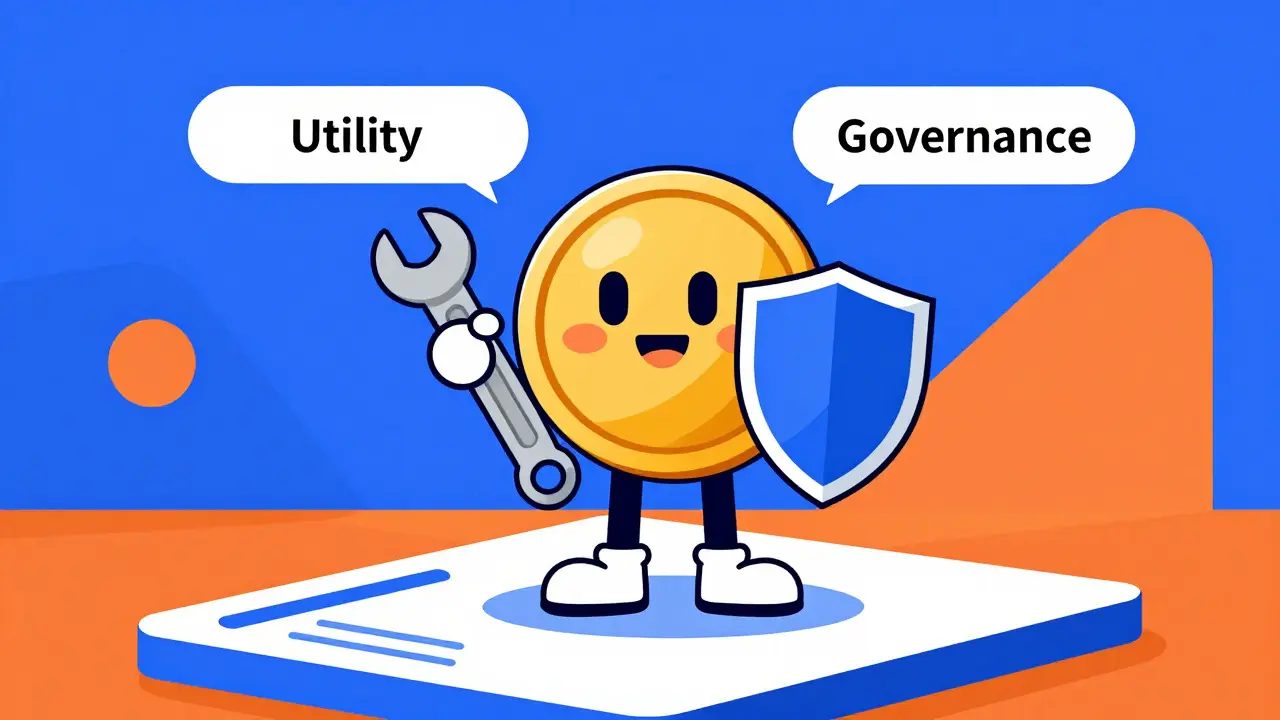
Why does one exchange token trade for hundreds of dollars while another sits at pennies? It isn't just hype. The price of an exchange token is a native digital asset issued by a trading platform to provide utility, incentives, and governance rights within its ecosystem is tied directly to how well that platform works and how hard it pushes value back to holders.
If you hold tokens from a major centralized exchange or a decentralized protocol, you are holding a piece of that platform’s economic engine. Understanding how these engines work helps you spot which tokens have real staying power and which are just riding the wave of short-term speculation.
The Two Engines of Token Value
To understand why a token gains value, we first need to look at where that value comes from. Think of it as two separate but connected engines. The first engine is the protocol service is the actual utility and quality of the trading platform itself, including liquidity, security, and user experience. This includes things like low slippage, fast order execution, deep liquidity pools, and a wide variety of trading pairs. If the platform is slow, buggy, or lacks assets people want to trade, nobody cares about the token. If the platform is excellent, demand for the underlying service rises, which naturally pulls up demand for the token tied to it.
The second engine is the token architecture is the specific economic mechanisms designed to increase the fundamental value of the token through incentives, supply control, and utility functions. This is the design layer. It dictates how the token interacts with users. Does it offer discounts? Does it allow staking? Does it capture revenue? A great platform with a poor token design might still see weak token performance because the value generated by the platform doesn’t flow efficiently to the token holders.
Fee Discounts: Immediate Utility
The most common way exchange tokens gain initial traction is through fee discounts. This is straightforward economics. If you pay a 0.1% trading fee on every transaction, paying in cash costs you money. If you can pay that same fee using an exchange token and get a 25% discount, holding that token saves you immediate cash.
This creates a direct financial incentive to buy and hold the token. For high-volume traders, these savings add up quickly. Platforms like Binance with its BNB token, or Gate.io with its GT token, use this model effectively. Users aren't just buying the token hoping the price goes up; they are buying it to reduce their operational costs. This steady, organic demand forms a solid floor for the token's price. When millions of traders are constantly buying the token to pay fees, the velocity of the token changes, and scarcity begins to play a role.
Buybacks and Burns: Artificial Scarcity
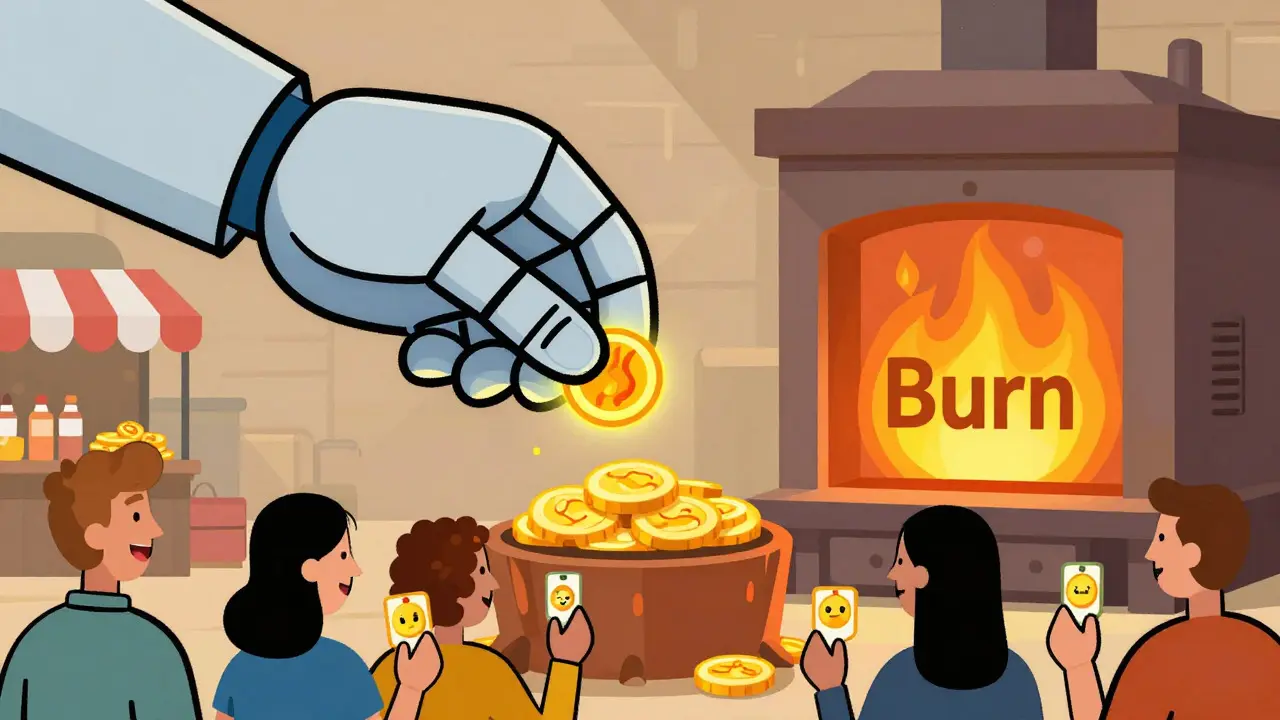
Discounts drive demand, but supply management drives price appreciation. Many successful exchanges implement buyback and burn mechanisms are strategies where platforms use a portion of their profits to repurchase tokens from the open market and permanently remove them from circulation. This is a powerful deflationary tool.
Here is how it works in practice. An exchange generates millions of dollars in trading fees daily. Instead of keeping all that profit, the platform commits a percentage-say, 20% or 50%-to buying back its own token on the open market. Once bought, those tokens are sent to a "burn address," meaning they are destroyed forever. The total supply drops. If demand remains constant or grows, and supply shrinks, basic math dictates the price must rise.
This mechanism aligns the interests of the platform and the token holder. As the exchange grows and trading volume increases, more fees are generated, leading to larger buybacks, which reduces supply further. It creates a positive feedback loop where platform success directly translates to token scarcity and potential value appreciation.
Staking and Yield: Reducing Velocity
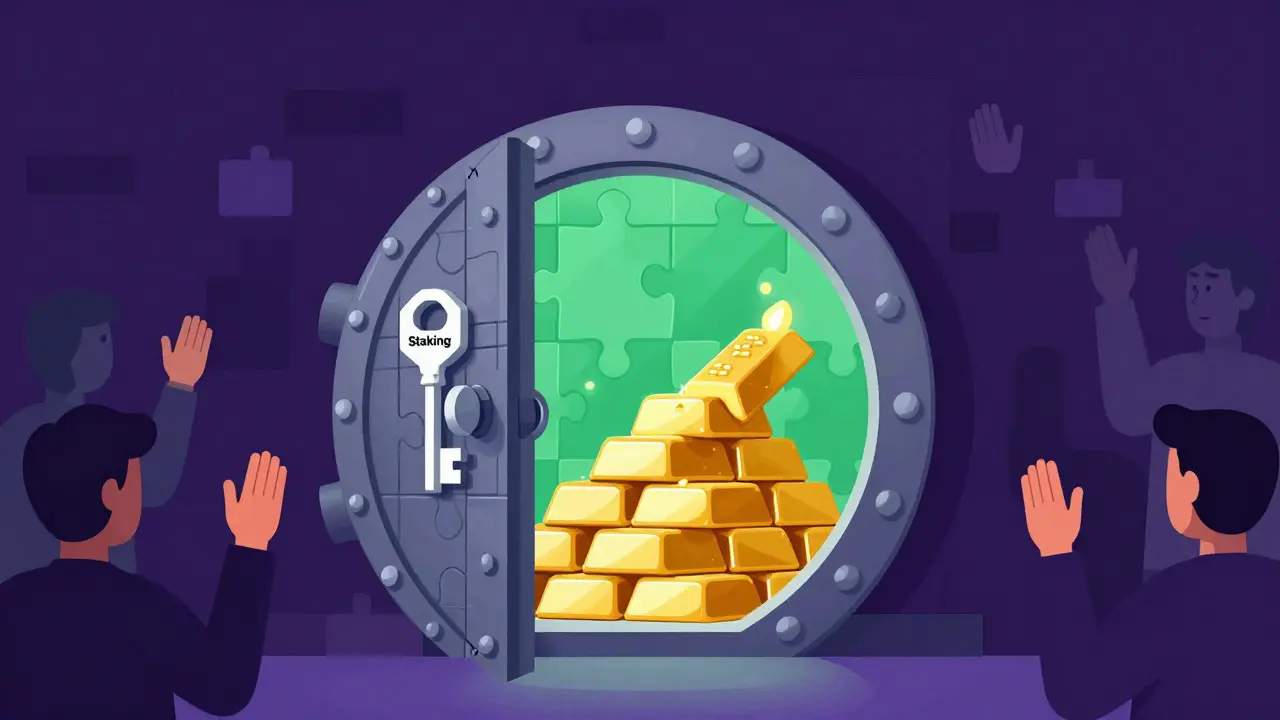
In traditional finance, if everyone sells a stock at once, the price crashes. In crypto, token velocity-the speed at which tokens change hands-can have a similar effect. High velocity often means low price stability because holders are quick to dump their assets. To counter this, platforms introduce staking.
Token staking is the process of locking up tokens in a smart contract or exchange wallet to earn rewards, thereby reducing circulating supply and encouraging long-term holding. By staking your tokens, you lock them away. They are no longer available for immediate sale. This reduces the circulating supply, creating upward pressure on price. But staking also offers rewards. These rewards can come in the form of additional tokens, a share of the platform's trading fees, or yield from lending protocols integrated into the exchange.
For example, some decentralized exchanges distribute a portion of their swap fees to users who stake their governance tokens. This turns the token from a simple utility pass into a productive asset that generates income. Holders are incentivized to keep their tokens locked for the long term to maximize their yield, stabilizing the token's supply and supporting its value.
Governance and Exclusive Access
Beyond pure economics, exchange tokens often grant political power and exclusive perks. In decentralized finance (DeFi), this is known as governance. Token holders can vote on proposals that shape the future of the platform. Should the platform list a new coin? Should fees be adjusted? Which blockchain networks should be supported?
This voting right gives holders a sense of ownership and agency. More importantly, it attracts serious investors who want influence over the protocol's direction. Additionally, many exchanges use tokens as gatekeepers for exclusive opportunities. Launchpads and launchpools allow token holders to participate in early-stage sales of new projects. These early investments often yield significant returns if the new project succeeds. The ability to access these lucrative opportunities adds a layer of speculative value to the exchange token itself.
| Mechanism | Primary Benefit | Impact on Supply/Demand | Risk Factor |
|---|---|---|---|
| Fee Discounts | Immediate cost savings for traders | Increases demand via utility | Dependent on trading volume |
| Buyback & Burn | Deflationary pressure | Decreases supply permanently | Requires consistent platform profitability |
| Staking/Yield | Passive income generation | Locks up supply (reduces velocity) | Smart contract risk or slashing penalties |
| Governance | Voting rights and influence | Attracts long-term institutional holders | Low voter participation can lead to centralization |
Network Effects and Platform Quality
All these mechanisms rely on one critical factor: network effects. An exchange token is only as valuable as the community using the platform. As more users join, liquidity deepens, spreads tighten, and the platform becomes more attractive. This attracts even more users. It is a virtuous cycle.
Platform quality acts as the accelerator. If an exchange improves its infrastructure, reduces latency, or adds innovative features like AI-driven trading tools, it triggers a productivity shock. Users flock to the better experience. The increased adoption boosts trading volume, which fuels the buyback programs and fee distributions mentioned earlier. The token price rises, attracting more speculators and long-term holders, which further validates the platform's success.
However, this relationship is fragile. Regulatory crackdowns, security breaches, or poor customer service can reverse the cycle instantly. When trust erodes, users leave, volume drops, and the token loses its primary source of demand. Therefore, the best exchange tokens are backed by platforms with robust compliance frameworks, strong security records, and transparent operations.
Productive vs. Non-Productive Tokens
It is also important to distinguish between productive and non-productive tokens. Non-productive tokens derive value solely from their utility within the ecosystem (like paying fees). Their value is based on the equation of exchange, where reduced velocity and increased utility drive price. Productive tokens, on the other hand, generate cash flows. They act more like equity or debt instruments. They distribute profits, dividends, or yields directly to holders.
In today's mature crypto market, the most resilient exchange tokens combine both characteristics. They offer immediate utility for trading while also providing a share of the platform's revenue through staking or fee distribution. This hybrid model provides a stable foundation for value growth, balancing speculative interest with tangible economic returns.
What makes an exchange token different from a regular cryptocurrency?
A regular cryptocurrency like Bitcoin or Ethereum operates independently of a specific corporate entity or platform. Its value is derived from its network security, scarcity, and broad adoption as a store of value or medium of exchange. An exchange token, however, is intrinsically linked to a specific trading platform. Its value depends heavily on the success, user base, and revenue of that particular exchange. It serves as a utility tool for discounts, governance, and access within that specific ecosystem.
How do buyback and burn programs actually increase token price?
Buyback and burn programs reduce the total circulating supply of a token. When an exchange uses its profits to buy tokens from the open market, it creates buying pressure. When those tokens are burned (destroyed), they are removed from existence forever. If demand for the token remains steady or grows while the supply shrinks, the price per token must mathematically increase to balance the equation.
Is staking exchange tokens safe?
Staking on reputable centralized exchanges is generally considered safe regarding custody, as the exchange manages the technical aspects. However, it carries risks such as platform insolvency, regulatory action against the exchange, or smart contract vulnerabilities if staking occurs on-chain. Always research the exchange's security track record and insurance policies before locking up significant capital.
Do all exchange tokens offer fee discounts?
Most major exchange tokens offer fee discounts as a core utility feature because it is the easiest way to drive initial adoption. However, not all do. Some newer or niche platforms may focus primarily on governance rights or yield generation without offering direct fee reductions. Always check the specific whitepaper or documentation of the exchange to understand its tokenomics.
What happens to an exchange token if the exchange shuts down?
If a centralized exchange shuts down or is banned, its token typically loses most of its value because its primary utility-access to the platform and fee discounts-disappears. While some tokens might retain minor speculative value or migrate to a new entity, historically, the collapse of the underlying platform leads to a catastrophic drop in the token's price. This highlights the importance of platform stability when investing in exchange tokens.
10 Comments
It is honestly refreshing to see someone break down the actual mechanics instead of just screaming 'to the moon' or 'it's a scam.' The distinction between the protocol service engine and the token architecture is spot on. You can have the shiniest UI in the world, but if the tokenomics don't reward holding, it’s just a hollow shell waiting to collapse. I’ve seen too many projects fail because they focused entirely on marketing rather than building that sustainable feedback loop described here. It gives me hope that we are moving towards more mature economic models where utility actually drives price action rather than pure speculation.
Man, reading this feels like watching paint dry but with more buzzwords. Burn mechanisms? Governance rights? It all sounds like fancy smoke and mirrors to keep us chasing the next shiny object while the house quietly takes its cut. I remember when people actually cared about what they were buying, not just how much discount they could get on fees. We are living in a weird time where destroying value is considered a feature. Just my two cents, but I’m sticking to cash for now. :)
the narrative of scarcity is so deeply embedded in our collective consciousness now isnt it... we forget that these tokens are essentially IOUs from a corporation that might cease to exist tomorrow. the jargon around deflationary pressure masks the reality of centralization. who controls the burn address? who decides the fee structure? it is a pseudo-democracy wrapped in blockchain aesthetics. we need to question the underlying power structures before blindly staking our future into black holes.
Let us be perfectly clear about what is happening here. This entire article is a sophisticated piece of propaganda designed to normalize the theft of user funds under the guise of 'economic engines.' The regulatory bodies are already circling, and once they strike, these 'buybacks' will vanish into thin air along with your principal investment. The elites are using these platforms to launder money and consolidate power while you sit there happily staking your assets. Wake up! The system is rigged against the little guy, and trusting a centralized entity with your governance rights is nothing short of financial suicide.
While the skepticism expressed by some is understandable, one must consider the mathematical inevitability of supply reduction if the platform remains profitable. The equation is simple: if demand stays constant and supply decreases, price appreciation is the logical outcome. However, the critical variable here is trust. In traditional finance, we have centuries of legal precedent. In crypto, we have smart contracts and corporate promises. The question is not whether the mechanism works, but whether the entity executing it will remain solvent and compliant in the long term.
You guys are overthinking it. If the exchange makes money, you make money. That is basically it. BNB has been doing this for years and look at it. Sure, there are risks, but ignoring the yield opportunities is stupid. Just check the whitepaper, see if they have a burn schedule, and if the volume is high enough to support it. Stop listening to the doomers and start looking at the charts. :)
this whole thing reeks of greed. why should we trust these tech bros with our money when they cant even run a basic website without crashing during high volatility. the moral decay of this industry is staggering. we are told to buy in to save on fees but really we are just funding their lavish lifestyles. keep your coins in cold storage and ignore the hype. the truth is simple but they hide it behind complex tables and graphs.
I feel like everyone here is missing the emotional toll of watching your portfolio swing based on some CEO's tweet. It is exhausting. The article talks about 'network effects' but doesn't mention the anxiety of waking up to a -20% day because of regulatory news. I try to stay positive and focus on the community aspect, but sometimes it feels like we are just rats in a maze pressing levers for crumbs. Does anyone else feel this way? Or am i just being too sensitive?
The point about productive versus non-productive tokens is crucial and often overlooked. Too many investors treat exchange tokens like lottery tickets rather than equity-like instruments. When a token generates actual cash flow through fee sharing, it provides a floor that pure speculative assets lack. It is encouraging to see more platforms adopting this hybrid model. It creates a healthier ecosystem where holders are aligned with the platform's success rather than just hoping for a quick exit.
really good explination! i always wondered why some tokens cost so much more than others. the part about burning tokens makes sense now. it is like they are deleting copies of a painting to make the remaining ones more valuable lol. thanks for breaking it down simply. i think i will look into staking now since it seems safer than just holding. :)