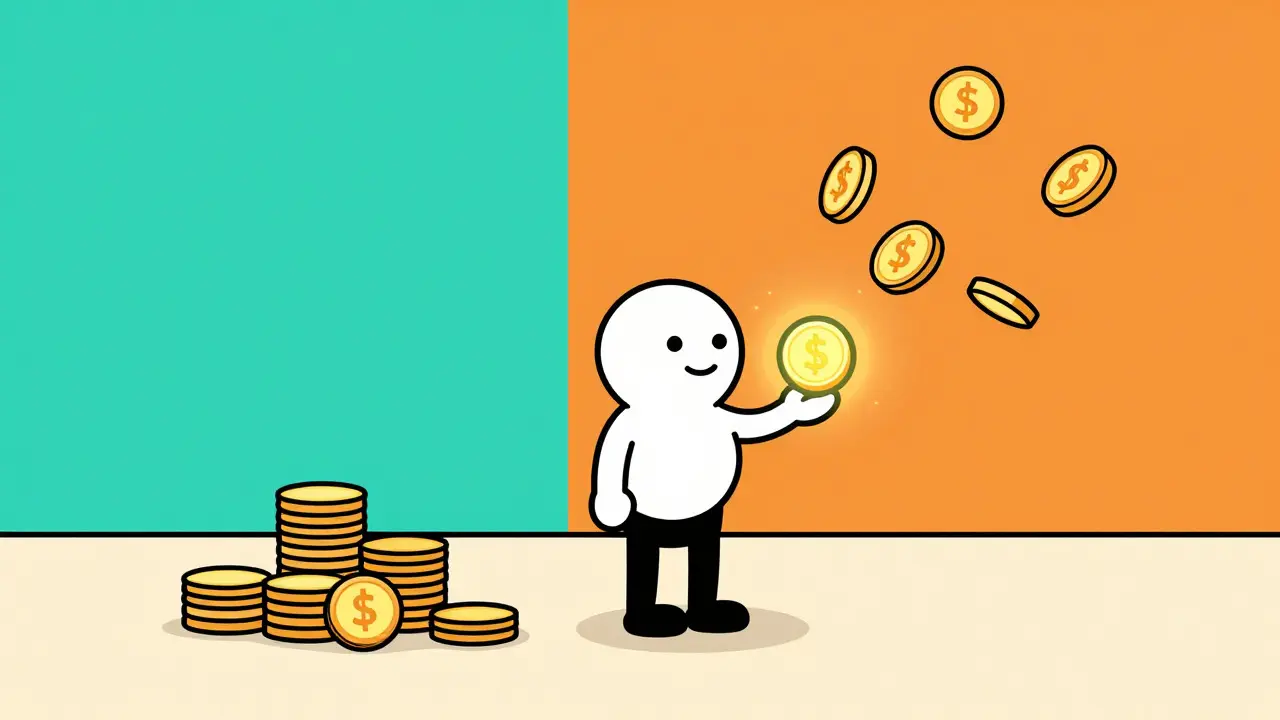
Have you ever wondered why a digital token issued by a cryptocurrency exchange can skyrocket in value while others stagnate? It’s not just hype or market speculation. The price of an exchange token is a native digital asset issued by trading platforms that derives value from utility, fee discounts, governance rights, and supply-side mechanics like buybacks and burns is deeply tied to the economic engine of the platform itself. These tokens are more than just payment methods for trading fees; they are comprehensive ecosystem assets that capture platform value and distribute it back to stakeholders.
To understand how these tokens gain value, we need to look under the hood. We’ll break down the two main types of token economics-productive versus non-productive-and explore specific mechanisms like fee distribution, staking, and burn models that drive demand and reduce supply. By the end, you’ll see exactly how platforms like Binance, Gate.io, and decentralized exchanges structure their incentives to create long-term value.
The Two Pillars of Token Valuation
At its core, an exchange token’s value comes from two sources: the quality of the service it provides and the architecture of the token itself. Think of the first pillar as the "product." If the exchange has high liquidity, reliable infrastructure, and a wide range of trading pairs, users want to be there. The second pillar is the "token design." This includes the specific rules and incentives built into the code that make holding the token beneficial.
Economists often categorize these tokens into two buckets: productive and non-productive. Understanding this distinction is crucial because it changes how you calculate their worth.
- Non-Productive Tokens: These act like commodities (e.g., gold or oil). They don’t generate cash flow on their own. Their value is determined by the equation of exchange (MV = PQ). Here, M is the money supply (token count), V is velocity (how fast tokens change hands), P is price, and Q is the quantity of goods/services. If the platform’s value (PQ) stays constant but velocity (V) drops because people are holding onto tokens rather than spending them, the price (M) must rise. Platforms design utility features specifically to lower this velocity.
- Productive Tokens: These resemble equity or debt instruments. They generate cash flows, such as dividends or revenue sharing. Their value is calculated using the Net Present Value (NPV) of future income streams. If a token pays out a portion of the exchange’s profits, its price reflects those expected future earnings.
Most modern exchange tokens, like BNB (Binance Coin) or GT (GateToken), blend both approaches. They offer utility (non-productive) while also implementing mechanisms that mimic profit-sharing or deflation (productive-like effects).
Fee Discounts: The Immediate Utility Driver
The most direct way an exchange token gains value is through transaction fee discounts. When you trade on a centralized exchange, you pay a fee, usually between 0.1% and 0.5%. Exchanges incentivize users to hold their native token by offering significant discounts on these fees.
For example, if an exchange offers a 25% discount on trading fees when you pay with their token, the math becomes simple for active traders. If you trade $1 million in volume, saving 25% on fees translates to thousands of dollars in savings annually. This creates a tangible, immediate reason to buy and hold the token. It’s not just an investment bet; it’s a cost-saving tool.
| Feature | BNB (Binance) | GT (Gate.io) | FTT (FTX - Historical Context) |
|---|---|---|---|
| Fee Discount | Up to 25% on spot/futures | Direct discounts on spot and contract trading | Significant fee rebates |
| Buyback/Burn | Quarterly auto-burns until 100M cap | Profit-based buybacks and burns | Revenue-backed buybacks |
| Governance/Launchpad | Binance Launchpad access | Gate Startup priority subscriptions | Launch Island participation |
This mechanism works because it ties the token’s demand directly to the platform’s trading volume. As more people trade, more people need the token to save money, driving up demand. However, this only works if the underlying exchange is trustworthy and liquid. If the platform fails, the discount becomes worthless.
Deflationary Mechanics: Buybacks and Burns
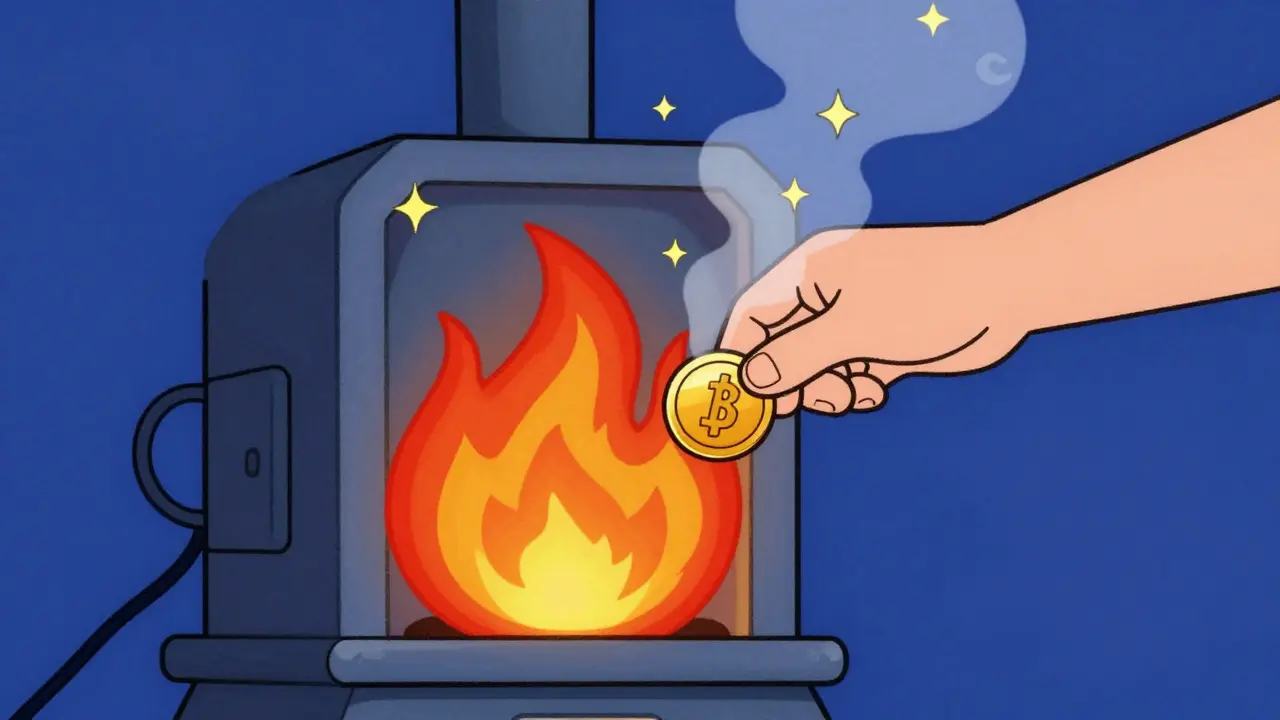
While discounts increase demand, buyback and burn mechanisms decrease supply. In economics, when demand rises and supply falls, prices go up. Many exchanges have adopted "burn" models where they permanently remove tokens from circulation.
Binance popularized this with its quarterly "Auto-Burn" program. Using a formula based on BNB’s price and total block production, Binance destroys a portion of its treasury until only 100 million BNB remain. This creates a predictable deflationary pressure. Similarly, Gate.io uses part of its profits to buy back GT tokens from the open market and burn them. This links the token’s scarcity directly to the exchange’s profitability. If the exchange makes more money, it burns more tokens, reducing supply and potentially increasing the value of remaining holdings.
This approach transforms the token from a simple utility pass into a store of value. Investors aren’t just buying a discount voucher; they’re buying a share in a shrinking pie. As the total supply drops, each remaining token represents a larger claim on the platform’s ecosystem benefits.
Staking and Yield: Reducing Velocity
Remember the equation MV = PQ? To increase price (M), platforms try to reduce velocity (V). Staking is the primary tool for this. When users stake their tokens, they lock them up for a period to earn rewards. This removes tokens from the circulating supply, making them less available for sale.
Staking mechanisms serve multiple purposes:
- Income Generation: Holders earn additional tokens or interest, providing a yield similar to a dividend.
- Reduced Sell Pressure: Locked tokens cannot be sold, which stabilizes the price during market volatility.
- Governance Participation: In decentralized exchanges (DEXs) like SushiSwap or Uniswap, staking often grants voting power. This turns passive holders into active participants who help decide the protocol’s future.
For instance, MakerDAO uses a continuous governance model where token holders must stake to vote. This ensures that those with "skin in the game" guide the protocol. By incentivizing long-term holding through yields, exchanges create a base of loyal supporters who are less likely to dump their tokens during short-term dips.
Network Effects and Platform Productivity
Exchange tokens benefit immensely from network effects. As more users join an exchange, the liquidity improves, slippage decreases, and the platform becomes more attractive. This growth increases the "flow utility" of the token-the practical usefulness of having the token in your wallet.
Consider the feedback loop:
- A new user joins the exchange because of its reputation.
- They buy the native token to get fee discounts or participate in a launchpad.
- This increases demand for the token, pushing the price up.
- Higher prices attract investors looking for capital appreciation.
- More investors bring more liquidity and attention to the exchange.
This cycle amplifies value over time. However, it depends heavily on platform productivity. If an exchange upgrades its tech stack, adds new trading pairs, or improves security, it triggers a "positive productivity shock." Users expect more people to join in the future, so they buy tokens today to position themselves for future gains. This forward-looking behavior can cause significant price volatility, as the market constantly re-evaluates the platform’s growth trajectory.

Governance and Exclusive Access
Beyond financial metrics, exchange tokens provide intangible value through governance and exclusive access. Holding tokens often grants you a voice in how the platform operates. You might vote on listing new coins, adjusting fee structures, or allocating development funds. This democratic element is particularly strong in decentralized finance (DeFi) protocols.
Additionally, tokens act as keys to exclusive opportunities. Most major exchanges run "Launchpads" or "Startups" programs where new projects raise funds. Token holders often get priority allocation or better pricing in these initial offerings. For example, Gate.io’s GT holders get early access to its Gate Startup projects. This allows investors to seize early opportunities in promising new cryptocurrencies before they hit the broader market. The potential upside from these launches can far outweigh the cost of holding the token, creating a powerful incentive to accumulate and hold.
Risks and Considerations
While the mechanics sound robust, exchange tokens carry unique risks. Unlike traditional stocks, they are often unregulated securities. The value is tightly coupled to the central entity issuing them. If the exchange faces regulatory crackdowns, security breaches, or operational failures, the token can lose value rapidly regardless of its utility.
Furthermore, the "productive" nature of some tokens is illusory. If a token’s yield comes solely from printing new tokens (inflationary rewards) rather than real revenue, the underlying value may erode. Always distinguish between yield generated from actual trading fees and yield generated from inflation. The former is sustainable; the latter is a Ponzi-like dynamic that collapses when new user growth slows.
Finally, consider the competition. The crypto space is crowded. If a rival exchange offers better fees, superior technology, or more attractive tokenomics, users will migrate, taking their liquidity and demand with them. The value of an exchange token is ultimately a reflection of confidence in the platform’s ability to stay relevant and profitable in a fiercely competitive market.
What is the difference between a productive and non-productive exchange token?
A non-productive token acts like a commodity, deriving value from scarcity and utility (like fee discounts) without generating direct cash flow. Its price is influenced by supply/demand dynamics and velocity. A productive token resembles equity, generating cash flows such as revenue sharing or dividends. Its value is based on the net present value of these future income streams. Most modern tokens blend both characteristics.
How do token burns increase value?
Token burns permanently remove tokens from circulation, reducing the total supply. If demand remains constant or increases while supply decreases, basic economic principles dictate that the price per token should rise. Buyback-and-burn programs link this deflation directly to the exchange’s profitability, rewarding holders as the platform succeeds.
Why is token velocity important for valuation?
Velocity refers to how frequently a token changes hands. In the equation of exchange (MV=PQ), lower velocity means tokens are being held rather than spent. When users stake tokens or hold them for fee discounts, velocity drops. With lower velocity and constant platform value, the monetary value (price) of each token must increase to balance the equation.
Do exchange tokens always go up in value?
No. While mechanisms like burns and discounts support value, exchange tokens are highly volatile. Their price is tied to the health of the exchange, regulatory news, and broader crypto market trends. If an exchange loses trust, faces legal issues, or fails to innovate, its token can lose significant value despite deflationary mechanics.
What role does governance play in token value?
Governance gives token holders a say in platform decisions, such as listing new assets or changing fees. This creates a sense of ownership and community alignment. Additionally, governance tokens often grant access to exclusive features or early project launches, adding tangible utility that drives demand beyond simple trading discounts.
8 Comments
Man, this is such a refreshing take on why these tokens actually move. Most people just see the green candles and think it's magic or pure hype, but breaking it down to utility and supply mechanics makes so much sense. It’s like watching an ecosystem breathe. When you realize that holding BNB isn’t just betting on price but actually saving money on every trade, the whole perspective shifts. It feels good to know there’s real engineering behind the value instead of just vibes.
I always felt like exchange tokens were kinda sketchy until I read about the burn mechanisms. Now it looks like a little digital ouroboros eating its own tail to stay alive and shiny. The way they lock up supply while giving you discounts is pretty clever, honestly. It’s not just a coin anymore, it’s like a membership card that pays you to keep it in your pocket. Makes me wanna stash some GT away just to see what happens next.
velocity is key here bro like if everyone holds the token the velocity drops and price goes up its simple economics but ppl forget that part. staking locks it up so u cant sell which means less supply floating around. its basically artificial scarcity mixed with real utility. most crypto projects fail because they dont understand this balance between flow and stock. need to reduce velocity to increase valuation.
Let us be quite frank about the inherent instability of these centralized constructs. The notion that a private entity can manipulate supply through 'burns' while simultaneously acting as the counterparty to all trades is nothing short of audacious. One must question who truly controls the ledger when the issuer also dictates the rules of engagement. It is a house of cards built on trust, and we all know how fragile that commodity is. The regulatory hammer will eventually fall, and these 'utility' arguments will crumble under the weight of securities law. Proceed with extreme caution, for the emperor has no clothes.
The distinction between productive and non-productive tokens is indeed fascinating from an economic standpoint. However, one might argue that the line blurs significantly when platforms introduce revenue-sharing models. If a token grants access to launchpads where early allocations yield significant returns, is that not a form of cash flow? It seems the definition of 'productive' is evolving beyond traditional dividends. I wonder if future exchanges will adopt more transparent accounting standards to reflect these hybrid nature of assets.
Actually, you guys are missing the bigger picture. It’s not just about burns or discounts. It’s about network effects. Once an exchange becomes the default place to trade, their token becomes the default store of value within that ecosystem. It’s a self-fulfilling prophecy. People buy BNB because Binance is big, and Binance stays big because people use BNB. Classic winner-takes-all dynamic. Don’t sleep on the governance aspect either. :)
its all rigged anyway. they print tokens to pay devs then burn a tiny bit to make charts look green. typical corporate greed wrapped in blockchain buzzwords. nobody really owns anything unless its fully decentralized but even then its messy. just hold gold or something real. these digital coupons will vanish when the music stops. trust no one especially not the ceo of the exchange.
Omg yes! Finally someone explained it without making my head spin. I used to think staking was just free money but now i get that its mostly about keeping the token out of circulation. Its like a savings account but for crypto. Love the breakdown on fee discounts too, thats the part that actually helps my wallet right now. Thanks for sharing this info, super helpful!