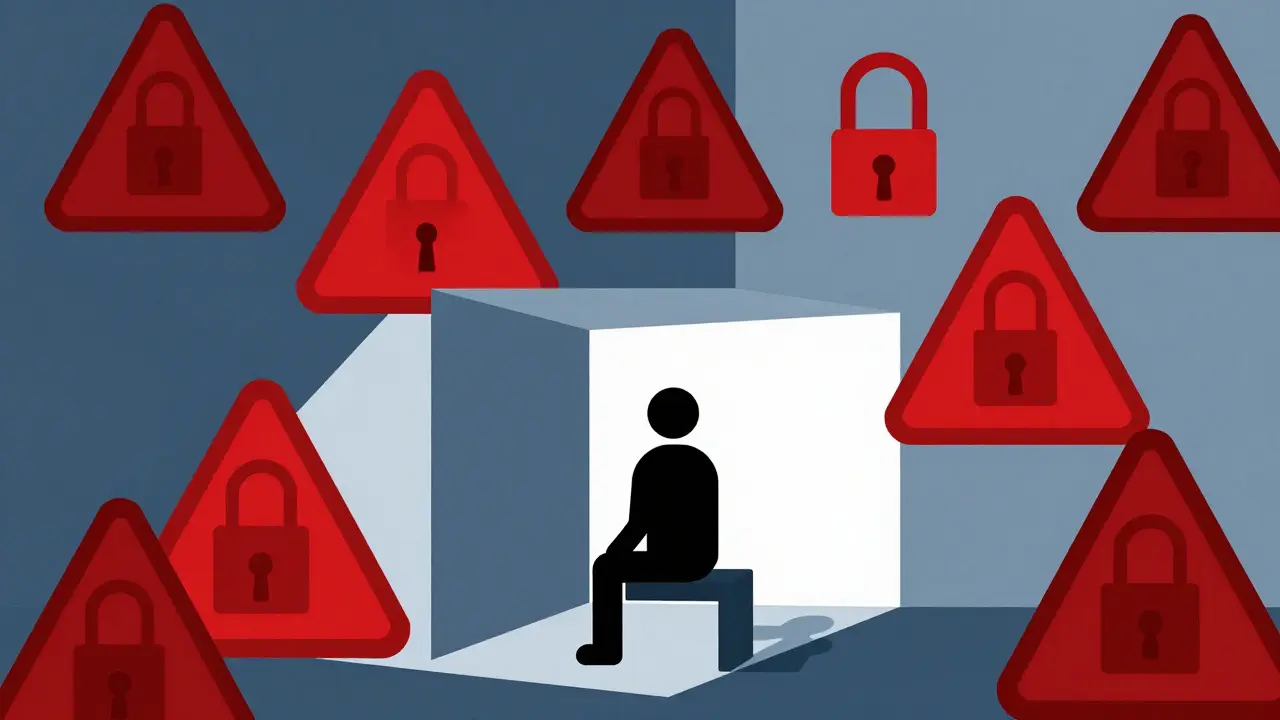
Why Privacy Matters More Than Ever
If you live in Bangladesh and want to trade Bitcoin or Ethereum, you face a unique challenge. It isn't just about finding a platform; it's about keeping your activities invisible to monitoring systems. In March 2026, the regulatory environment remains tight. The Digital Security Act, passed in 2018, still grants authorities broad powers to track online behavior. This creates a situation where traders feel they are constantly being watched.
For many locals, a Virtual Private Network (VPN) isn't just a convenience tool. It has become a necessity for basic financial freedom. When you connect to a crypto exchange without protection, your IP address reveals your location immediately. If that exchange restricts users from Bangladesh, your account could get frozen, funds seized, or worse, you could face legal scrutiny. Using a high-quality VPN masks your real identity by routing your connection through a different country.
Understanding Exchange Restrictions
It is not just the Bangladeshi government blocking access; many global platforms have their own geo-blocks. Major exchanges like Bitfinex explicitly refuse clients from Bangladesh, along with countries like Kyrgyzstan and Ecuador. Then there is Binance. While known globally, Binance blocks access in over 50 nations depending on local laws.
This creates a two-sided problem. You have domestic laws limiting your ability to buy digital assets and international companies refusing to serve you. A Virtual Private Network solves both issues at once. By connecting to a server in a permitted country (like Turkey or Singapore), you appear to be browsing from an unrestricted region. This allows you to sign up for accounts and execute trades that would otherwise be impossible.
Choosing the Right VPN Service
Not all VPNs work well for crypto trading. Speed, security, and reliability are non-negotiable. A slow connection means missed trades when markets move fast. A leaky connection means your IP slips out, revealing your true location. After analyzing the market leaders in 2026, three names consistently perform well for this specific use case.
| Service | Best Feature | Security Protocol | Payment Options |
|---|---|---|---|
| ExpressVPN | RAM-only servers | Lightway / Chameleon | Crypto accepted |
| NordVPN | Anti-phishing tools | NordLynx (WireGuard) | CoinGate integration |
| Surfshark | Unlimited devices | WireGuard / IKEv2 | Standard payment |
ExpressVPN often tops the recommendation list because it uses RAM-only servers. This means data isn't stored permanently on hard drives, reducing the risk of interception. It also provides private DNS on every server, making it virtually impossible for third parties to intercept your data. For those prioritizing speed and stability during high-volatility trading hours, this service is a strong candidate.
NordVPN stands out for its safety features. Beyond masking your IP, it scans the dark web for leaked credentials and protects against phishing links-common threats in the crypto space. It supports connections from 118 countries and even accepts cryptocurrency payments via CoinGate, which adds another layer of privacy for buyers who don't want to leave paper trails with credit card issuers.
Surfshark is frequently recommended for obtaining IP addresses specifically routed through regions with favorable crypto laws. Its unlimited device policy allows you to protect your phone, laptop, and tablet simultaneously without paying extra. If you trade across multiple gadgets, this flexibility is essential.

The Technical Setup Process
Setting up these tools is more straightforward than most people think. However, skipping steps can lead to "leaks," where your real IP gets exposed despite the VPN being on. Here is the standard workflow used by experienced traders in the region.
- Select your provider: Choose a service that guarantees no logging policies. Verify they accept anonymous payment methods.
- Register formally: Sign up for an account. Do not use personal information linked to your local banking identity if possible.
- Download the app: Always get the client software directly from the provider's website or official app stores to avoid modified versions.
- Connect to the right server: Do not just connect to the nearest server. Look for locations where your target exchange operates freely (e.g., Germany, Canada).
- Verify your leak status: Before entering credentials, visit an IP-check site to confirm your location shows as the server's country, not your actual home IP.
For specific exchanges like Bitfinex, some users prefer specialized extensions. For instance, PureVPN offers a browser extension approach where you navigate to "Popular Websites" within the tool and select the crypto exchange directly. This routes traffic through optimized nodes designed for financial transactions, ensuring faster order execution speeds.
Critical Security Standards
In the world of cryptography, details matter immensely. You need to look past marketing buzzwords and understand the encryption specs protecting your money.
- AES-256 Encryption: This is the industry standard. It scrambles your data into a complex code that is mathematically difficult to crack without the decryption key.
- WireGuard Protocol: Modern protocols like WireGuard offer better performance and security compared to older standards like OpenVPN. They allow for faster tunneling speeds, meaning less latency when you click 'Buy' or 'Sell'. High latency can cost you significant value during rapid price swings.
- Split Tunneling: This feature allows you to send only the crypto app traffic through the VPN while letting other apps use your regular internet. This is useful if you need to access local news or banking portals alongside your trading dashboard.
Beyond the code, consider the physical infrastructure. Providers with dedicated customer support teams available 24/7 are safer choices. If you get disconnected mid-trade, you need immediate assistance to restore the connection rather than waiting for a reply to an email ticket.
Common Troubleshooting Scenarios
Even with top-tier gear, issues happen. Internet connectivity in South Asia can fluctuate, and exchanges sometimes update their detection algorithms to block VPN IPs faster. Knowing how to fix common errors saves panic.
If the exchange platform doesn't load, first check your browser cache. Stale cookies can remember your previous real IP address and force the site to block you before the VPN takes over. Clear your cache and reload the page.
Should that fail, switch servers. One IP might be flagged while a neighbor node remains clean. Contact support only if you've tried at least three different server locations. Remember that "dedicated" static IPs are often worth the premium cost if you trade frequently, as they are rarely banned compared to public dynamic IPs shared by thousands of users.
Future Trends and Risks
As we move deeper into 2026, the arms race between regulators and privacy tools continues. Governments are exploring stricter ways to identify digital asset holders, including blockchain analysis techniques that link wallet addresses to IP data. Without a robust proxy or VPN layer, this association is trivial for sophisticated analysts.
Using a top-tier VPN is currently the most effective method to maintain anonymity. However, always verify that the provider you choose does not share logs with third parties. The "zero-knowledge" architecture ensures that even the company providing the service cannot hand over your activity data because they simply don't store it. As long as you prioritize security protocols over cheap pricing, you can manage your portfolio with significantly reduced risk of exposure.
Is it safe to use a VPN for crypto trading in Bangladesh?
Yes, using a reputable VPN is one of the safest ways to browse exchanges securely. It encrypts your data and hides your location, protecting you from ISP tracking and potential geo-blocks imposed by exchanges.
Does Binance work in Bangladesh without a VPN?
No, Binance restricts users in certain jurisdictions due to local regulations. Without a VPN changing your IP to an allowed country, you likely will not be able to access the exchange or withdraw funds.
Which protocol is fastest for trading?
WireGuard is generally considered the fastest modern protocol. It offers lower latency and faster connection times compared to older protocols like OpenVPN, which is crucial for timely trade execution.
Can I pay for a VPN with Bitcoin?
Many major providers like NordVPN and ExpressVPN accept cryptocurrency payments. This allows you to purchase the service anonymously without using your bank account.
What happens if my VPN disconnects during a trade?
A quality VPN includes a Kill Switch feature. This automatically cuts your internet access if the connection drops, preventing your real IP address from leaking to the exchange or trackers.
8 Comments
Staying private online is really important right now especially for finance.
We know laws change often so just using a simple trick isnt enough protection.
You have to plan ahead and pick tools that work properly.
This guide helps people understand the basics clearly without too much confusion.
I see many folks get into trouble by rushing the setup process.
Taking your time saves you from losing money later on.
Keep checking your connection status to ensure it stays strong.
Being careful is the best defense against tracking systems.
Everyone deserves to handle their funds safely without fear.
We should support better privacy rights for traders in our region.
The reliance on obfuscation techniques masks underlying metadata exposure vectors.
Standard tunneling protocols fail to fully anonymize packet headers effectively.
Government surveillance infrastructure adapts rapidly to known provider signatures.
Users mistakenly believe RAM-only architecture guarantees absolute anonymity.
Jurisdictional legal frameworks often bypass technical encryption barriers.
Deep packet inspection remains a viable threat despite high-level security claims.
One must consider the geopolitical implications of server location choices.
Credential stuffing attacks target weak authentication points regardless of IP masking.
A sophisticated actor can correlate timing data across multiple network endpoints.
Relying solely on commercial solutions ignores the intelligence capabilities of state actors.
Always verify your IP masking works before you enter any financial data.
I have ben using vpn since 2024 and things changed alot.
You cant trust just any service out there honestly.
Some of them log everything you do on their end.
It gets dangerous if the law comes knocking for your info.
Always look at the no logs policy very carefully first.
Then check the encryption standards they claim to use daily.
Wireguard is fast but older openvpn works good sometimes.
Make sure your connection doesnt drop when power goes out.
Kill switch is essential for keeping that identity hidden forever.
If that switch fails your real ip leaks instantly without warning.
I learned this lesson the hard way during a big spike last year.
Lost hundreds because the site saw me from bangladesh suddenly.
Now i rotate servers weekly to avoid detection algorithms updating.
Also keep payment methods anonymous whenever possible for privacy.
Credit cards link back to your bank account easily enough.
Crypto payments are much safer for buying monthly subs there.
It feels good knowing others share these concerns openly.
We are in a weird spot with all these regulations shifting daily.
Focusing on tools that actually work brings peace of mind.
I hope everyone stays safe with their assets while doing this.
Community sharing tips is what keeps us going through the tough times.
This perspective offers a critical layer of technical awareness.
Many overlook the nuance of metadata collection in their daily workflows.
Understanding the limitations of public tools prevents false security assumptions.
Adopting defensive measures requires continuous adaptation to evolving threats.
Resilience in digital environments depends on comprehensive risk mitigation strategies.
Your point regarding jurisdiction highlights significant legal vulnerabilities.
Practical implementation often lags behind theoretical security models.
Education remains the primary barrier against exploitation by third parties.
Building redundancy in connectivity adds necessary buffers against failures.
The utilization of such tools presupposes a fundamental ignorance of network topology.
Commercial entities maintain logs irrespective of stated marketing policies.
True obfuscation demands decentralized routing mechanisms rather than centralized nodes.
Reliance on proprietary software introduces inherent supply chain compromises.
State-sponsored interception capabilities render consumer grade encryption obsolete.
Theoretical benefits are negated by practical operational weaknesses in deployment.
Furthermore the latency introduced often disrupts high frequency trading execution.
Security hygiene involves more than simply masking source address identifiers.
Systemic flaws persist regardless of individual configuration efforts.
scary stuff i feel anxious reading all this :(
why is everything so complicated to just trade safe
i just want to keep my coins safe :/)
hope nobody gets in trouble because of bad advice :(
please take care of yourself out there friends