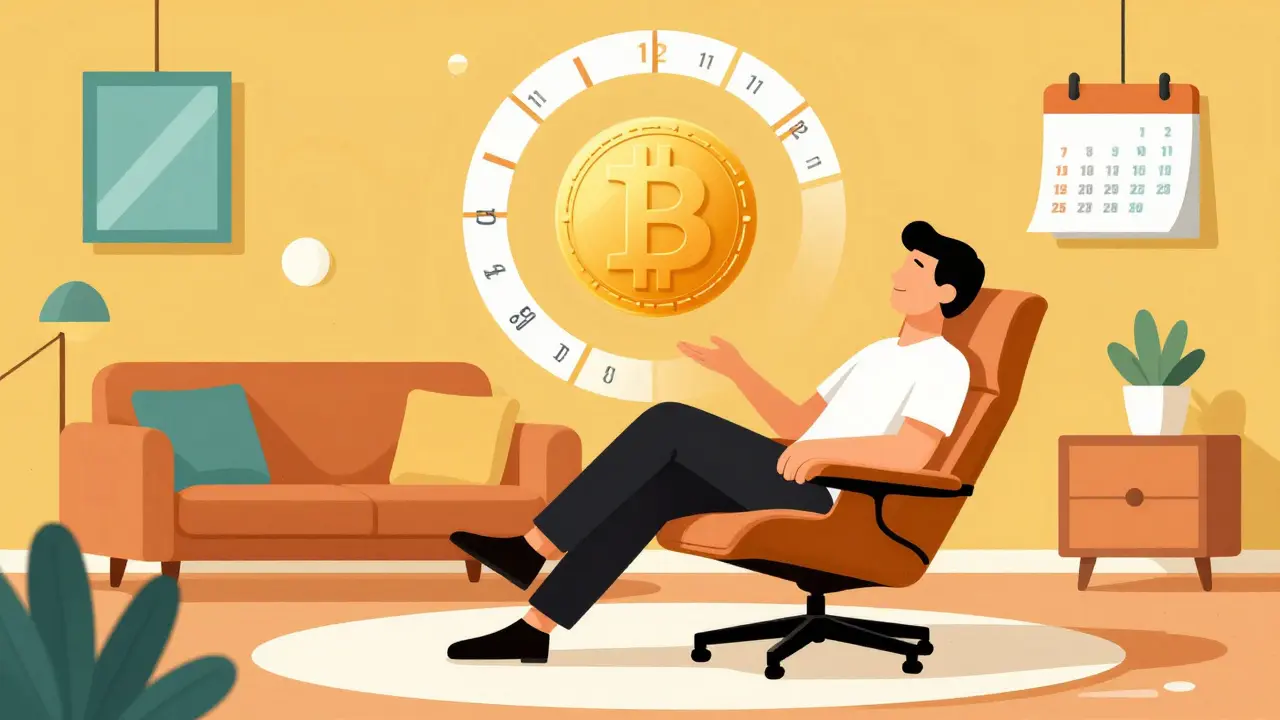
Imagine waking up to a massive Bitcoin rally, only to realize that nearly half of your gains could vanish into the pockets of the tax office. For many investors in Europe, that's a scary reality. However, if you're holding assets in Germany, you have a massive advantage. Germany is one of the few places in the EU where you can legally pay zero tax on your crypto gains, provided you have the patience to hold your coins for a year. It's a game-changer for long-term investors, but if you miscalculate your timing by even a few hours, you could be facing a tax bill that eats a huge chunk of your profits.
The Magic of the 12-Month Holding Period
In most countries, cryptocurrencies are treated as financial assets. But in Germany, the government takes a different view. Under Section 23 EStG is the part of the German Income Tax Act that classifies cryptocurrencies as "private money" rather than traditional capital assets. This distinction is why the 12-month rule exists.
The rule is simple: if you hold your Bitcoin, Ethereum, or any other digital asset for at least 365 calendar days, any profit you make when selling or swapping it is completely tax-free. This doesn't just apply to selling for Euros; it also covers swapping one coin for another or using crypto to buy a coffee or a car. Once you hit that one-year mark, the gains are yours to keep. According to data from Koinly, this makes Germany one of the most attractive hubs for "HODLers" in the entire European Union.
The Cost of Impatience: Short-Term Trading
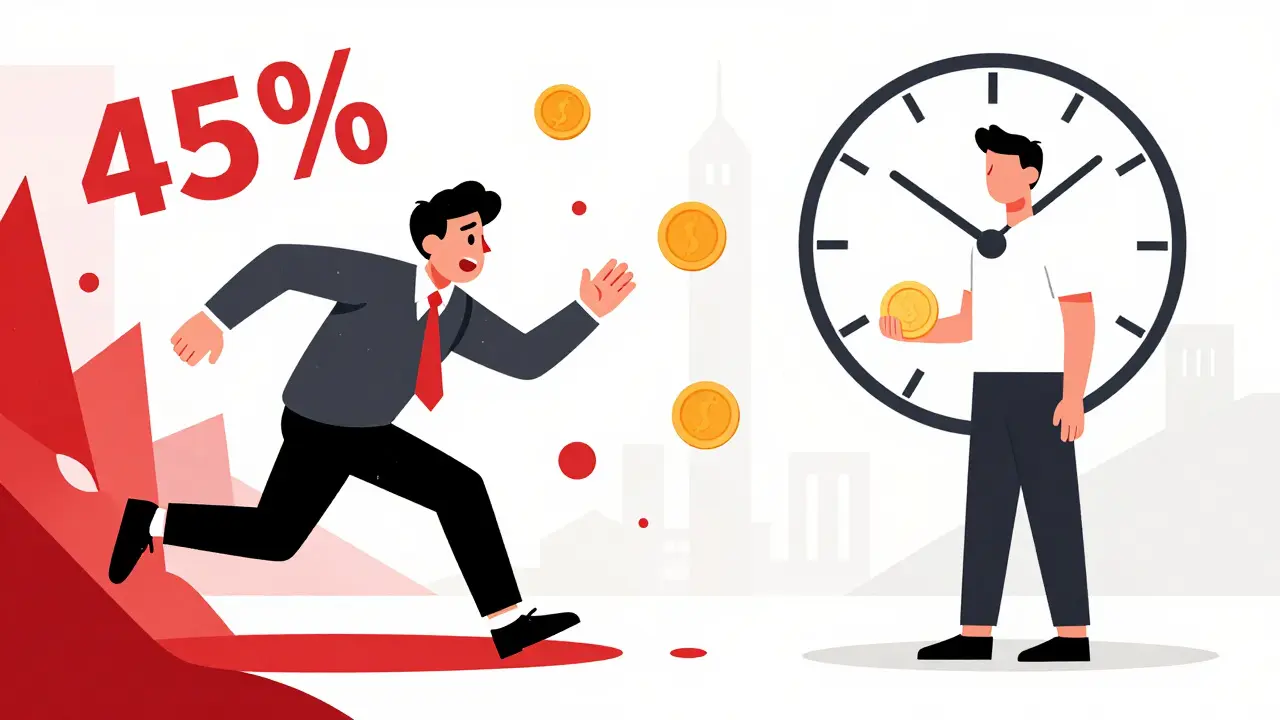
If you're an active trader or just got lucky with a quick flip, the rules get a lot tougher. If you sell your assets before the 365-day window closes, your gains are taxed as "other income." This means they are subject to your personal progressive income tax rate, which can climb as high as 45%.
On top of that, you might have to pay the Solidaritätszuschlag (Solidarity Tax), which is an extra 5.5% on your tax bill. When you do the math, the maximum effective tax rate can hit 47.475%. That is a steep price to pay for a few months of impatience.
There is a small silver lining: the short-term exemption threshold. Currently, if your total net gains from short-term trading are below €1,000 in a calendar year, you don't have to pay tax on them. However, be careful-if you earn €1,001, you aren't just taxed on the extra Euro; you are taxed on the entire amount.
| Scenario | Holding Period | Tax Rate | Taxable Amount |
|---|---|---|---|
| Long-term Holder | > 365 Days | 0% | Tax-Free |
| Small Trader | < 365 Days | 0% | Gains below €1,000 |
| Active Trader | < 365 Days | 14% to 47.475% | All gains above €1,000 |
The FIFO Trap and Record Keeping
Here is where things get tricky. The Bundeszentralamt für Steuern (BZSt), or Federal Central Tax Office, requires you to use the FIFO method-First-In, First-Out. This means the tax office assumes the first coins you bought are the first ones you sell.
Imagine you bought 1 BTC in 2022, and then bought another 1 BTC last month. If you sell 1 BTC today, the FIFO rule says you sold the one from 2022, making the trade tax-free. But if you've been mixing coins in a single wallet and don't have a precise log, it's easy to make a mistake. One user on Reddit recently shared a horror story about losing thousands of Euros in taxes because they miscalculated their holding period by just 12 hours.
To avoid this, pros suggest a few simple habits:
- Use Separate Wallets: Keep your "long-term" coins in a different wallet from your "trading" coins. It makes the paper trail much cleaner.
- Screenshot Everything: Don't trust exchanges to keep your history forever. Save your transaction timestamps and trade IDs.
- Invest in Software: Using tools like Blockpit or Koinly can save you 20 hours of manual spreadsheet torture.
Dealing with Staking, Mining, and DeFi
Not all crypto income is a "capital gain." If you're earning rewards, the rules shift. Staking and mining rewards are generally taxed as income when you receive them. However, the 12-month rule still applies to the *appreciation* of those rewards. If you receive a staking reward and hold that specific reward for a year, any further increase in value is tax-exempt.
As for DeFi, the Federal Ministry of Finance has clarified that liquidity pool deposits and yield farming rewards are often taxable events immediately. The world of Decentralized Finance is complex, and the BZSt is increasingly looking at these transactions. If you're deep into yield farming, a specialized tax advisor is almost a necessity.
Reporting Your Gains via Elster
When it's time to file, you'll likely use Elster, Germany's official online tax portal. While the government has improved the crypto module, most people still use third-party software to crunch the numbers before uploading them to Elster. Your tax returns are generally due by July 31 of the following year, though deadlines can sometimes shift due to administrative backlogs.
The BZSt is also moving toward automatic data collection. Starting in 2026, they plan to integrate directly with major exchanges like Kraken and Coinbase. This means the tax office will know exactly what you traded and when, making it nearly impossible to "forget" to report a short-term gain.

Is the 12-Month Rule Safe?
You might be wondering if this tax haven will last. There is a cloud on the horizon called the DAC8 directive. This is an EU-wide effort to standardize how crypto is reported and taxed. Some analysts believe the EU might push for a harmonized tax-perhaps a flat 15% rate-which could potentially kill off Germany's 0% exemption.
While there is a good chance the rules will change by 2027, many experts believe there will be "grandfathering" provisions. This means assets you already hold might still be exempt under the old rules. Until then, the strategy is clear: buy, hold, and don't touch your coins for at least a year and a day.
Do I have to pay tax if I swap Bitcoin for Ethereum?
Yes, a swap is considered a "disposal" in Germany. If you have held the Bitcoin for less than 12 months, the gain is taxable. If you've held it for more than 12 months, the swap is tax-free.
What happens if I sell my crypto after 364 days?
You miss the exemption. You will be taxed at your personal income tax rate (up to 45% plus solidarity surcharge) on the full gain, provided the total gain exceeds €1,000.
Does the €1,000 exemption apply to every coin?
No, the €1,000 threshold applies to your total net gains across all short-term crypto activities for the entire financial year.
Is the 12-month rule applicable to NFTs?
Yes, the Federal Ministry of Finance confirmed in March 2025 that NFTs generally follow the same 12-month holding period rules as other cryptocurrencies.
Can I offset my crypto losses against my gains?
Unlike the US system, Germany does not allow traditional tax-loss harvesting to offset other types of income. You can only offset losses against gains within the same category of "private sales
What to do next
If you're currently holding crypto in Germany, your first move should be an audit. Go back through your exchange histories and mark the exact date of acquisition for every major batch of coins. If you're close to the 12-month mark, resist the urge to trade-even a small move could trigger a massive tax event.
For those with complex portfolios involving DeFi or staking, don't wait until July to figure this out. Get your data into a BZSt-compliant reporting tool now. If you're managing six-figure gains, spending a few hundred Euros on a professional tax advisor who understands Section 23 EStG is the cheapest insurance policy you can buy.
10 Comments
Omg I can't even imagine the stress of missing a deadline by 12 hours!!
That is literally a nightmare and just makes me want to cry for that person.
So glad I'm not in Germany lol but also kinda wish I was for the 0% tax thing!
everyone knows the DAC8 directive is going to wreck this loophole eventually
I tried doin this in Germany and the paperwork was just too much for me...
it felt like they wanted me to fail and i honestly just felt so overwhelmed by the whole process.
now im just stuck with a mess of a portfolio and no one to help me fix it
It is imperative that individuals maintain meticulous records of their acquisition dates to ensure compliance with the FIFO method.
While the 12-month exemption is highly advantageous, the administrative burden of proof rests entirely upon the taxpayer.
I strongly recommend the use of dedicated tax software to mitigate the risk of human error during the filing process.
For those of you who are feeling a bit intimidated by the complexity of the FIFO method and the various rules surrounding staking and DeFi, please remember that taking things one step at a time is the best way to reach your goals and ensure your financial future is secure.
You can start by simply organizing your spreadsheets for one month and then gradually move towards using specialized software like Koinly or Blockpit, which will allow you to breathe easier and feel more confident as you navigate the German tax landscape with patience and diligence.
Very useful guide. I think many people forget that swapping coins is a taxable event.
I've helped a few expats settle in Europe and this is a huge selling point for Germany.
Just a heads up, make sure you keep those screenshots because some exchanges have terrible history export tools that might miss transations if you have a high volume of trades.
Typical EU bureaucrats trying to standardize everything. The US is where real trading happens anyway.
It is fascinating how different countries view the nature of digital assets.
The classification of crypto as private money in Germany really gives the long-term holder a fair shake compared to the short-term speculator.
Who cares about the rules? Just move your coins to a cold wallet and keep your mouth shut!
The tax office can't track what they can't see, and anyone who says otherwise is just a coward!