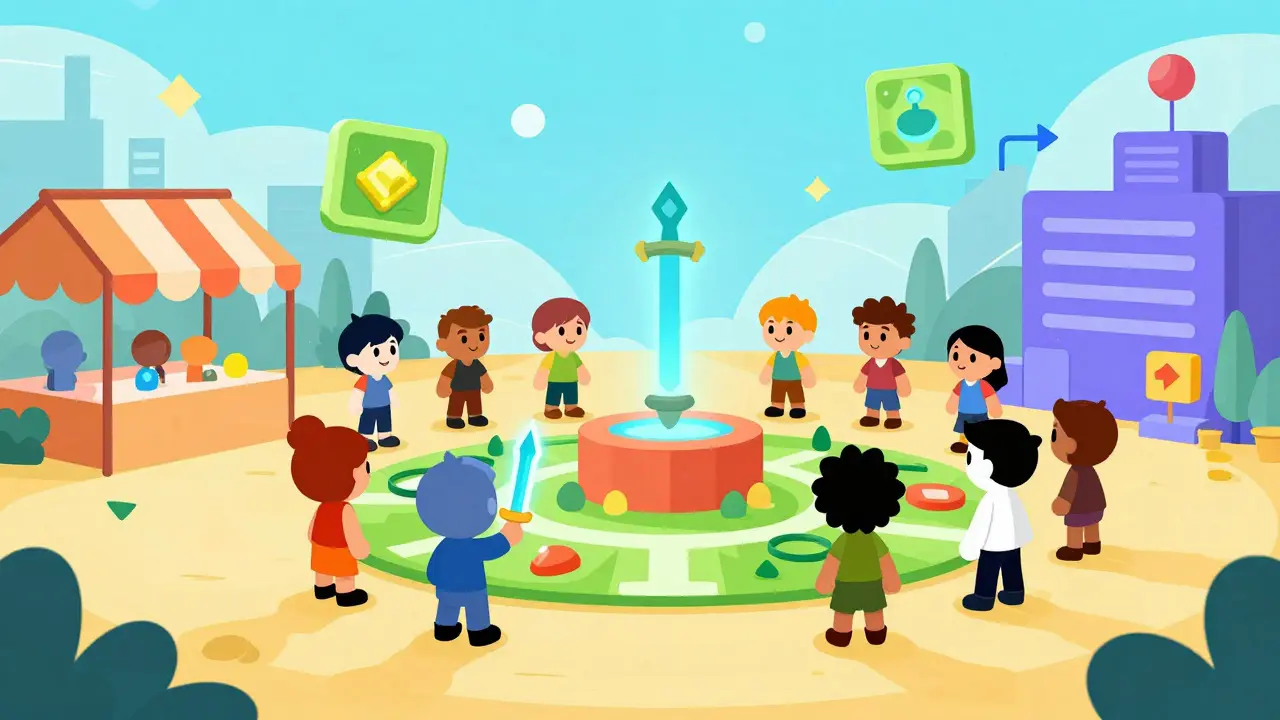
Imagine spending hours grinding for a legendary sword in your favorite game, only to find its value crash by 90% overnight because too many players earned it at once. That is the nightmare scenario of poorly designed Gaming NFT Economy and tokenomics systems that fail to balance supply with demand. In traditional gaming, developers control the economy from behind closed doors. In blockchain gaming, the economy is open, transparent, and driven by real market forces. If you get the math wrong, the game dies. If you get it right, you create a thriving ecosystem where players truly own their assets.
The core challenge here isn't just coding a fun game; it's building an economic engine that sustains itself. Tokenomics-the study of how tokens are distributed, used, and valued-determines whether a game becomes a sustainable community or a quick cash grab. Today, we break down exactly how these economies work, why most fail, and what makes the few survivors stand out in 2026.
What Actually Drives a Gaming NFT Economy?
To understand why some blockchain games thrive while others collapse, you first need to separate the two main pillars: the assets and the currency. Most successful projects use a dual-token model, though single-token models are gaining traction for their simplicity.
Non-Fungible Tokens (NFTs) represent unique digital assets within the game. These could be characters, weapons, land plots, or cosmetic skins. Unlike traditional in-game items, these NFTs live on the blockchain, meaning you can sell them on external marketplaces like OpenSea or Blur if you decide to quit the game. This ownership is the biggest selling point of Web3 gaming.
Then there are utility and governance tokens. Utility tokens act as the in-game fuel. You might spend them to repair gear, enter tournaments, or craft new items. Governance tokens, on the other hand, give holders a voice. They allow players to vote on future updates, reward structures, or even which new features get developed. When you hold governance tokens, you aren't just playing the game; you're helping run it.
The relationship between these elements creates a loop. Players earn utility tokens by using their NFTs. They spend those tokens to upgrade their NFTs. The scarcity of high-level NFTs drives up their value, while the demand for utility tokens keeps the currency relevant. If this loop breaks-for example, if tokens become too easy to earn but hard to spend-the economy inflates and collapses.
Inflation vs. Deflation: The Battle for Value
The single biggest threat to any gaming economy is inflation. In simple terms, inflation happens when there are more tokens chasing fewer goods. If every player who logs in earns 100 tokens, but there are only five rare swords to buy, the price of those swords will skyrocket in token terms, or the token's value will plummet against real-world money.
Deflationary models attempt to fight this by capping the total supply of tokens, similar to Bitcoin. As players buy and burn tokens to access certain features, the remaining supply shrinks, potentially increasing value over time. However, pure deflation can discourage spending. If everyone believes the token will be worth more tomorrow, they hoard it instead of spending it in the game, killing the internal economy.
Inflationary models, like Ethereum’s historical approach, allow for continuous token creation. To make this work, developers must create massive sinks-ways for tokens to leave circulation permanently. Examples include transaction fees, crafting costs, or entry fees for high-stakes matches. The key is ensuring that the rate of token destruction matches or exceeds the rate of token emission.
Successful games often hybridize these approaches. They might have a capped supply of governance tokens but an elastic supply of utility tokens that burns based on network usage. This flexibility allows the economy to adapt to player behavior without rigid constraints.
Mechanisms That Stabilize Game Economies
Developers don't just hope for stability; they engineer it. Several proven mechanisms help keep gaming economies healthy.
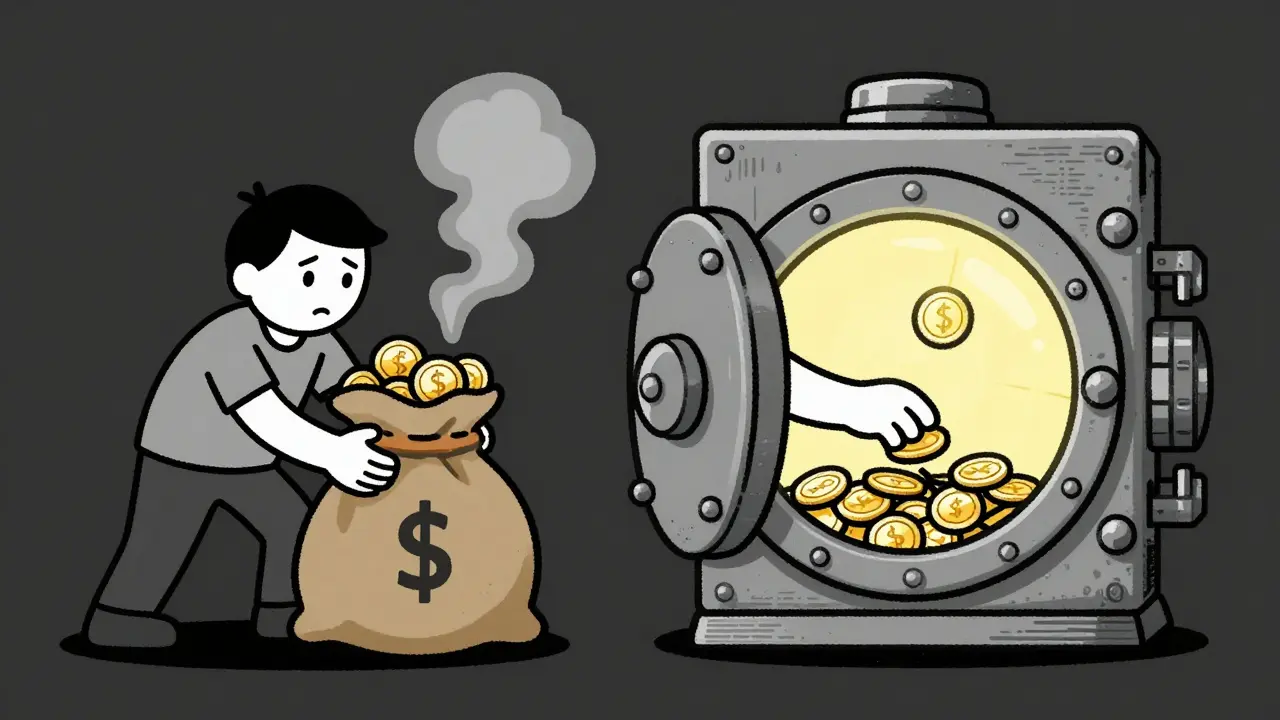
Buyback-and-burn mechanisms are among the most effective tools. Here, the project team uses a portion of revenue-perhaps from NFT sales or advertising-to buy back utility tokens from the open market and destroy them. This reduces circulating supply and supports the token price, giving players confidence that their earnings have long-term value.
Staking introduces another layer of stability. By locking up their tokens for a set period, players remove them from immediate circulation. In return, they earn rewards, such as increased yield on their NFTs or exclusive access to events. Staking discourages panic selling during market dips because unlocking early often comes with penalties. It also aligns player incentives with the game's long-term success.
Another strategy involves creating friction. Not every action should be cheap or instant. Requiring energy points, durability checks, or cooldown periods ensures that resources aren't depleted too quickly. For instance, making basic resources off-chain assets that require significant effort to convert into tradeable NFTs prevents bots from flooding the market with low-value items.
Integrating Decentralized Finance (DeFi) tools like liquidity pools can also help. By allowing players to provide liquidity for trading pairs, the game gains deeper markets and reduced volatility. This means players can swap tokens smoothly without massive price slippage, enhancing the user experience.
| Model Type | Supply Mechanism | Primary Risk | Best For |
|---|---|---|---|
| Deflationary | Capped supply, burning | Hoarder mentality, low velocity | High-value collectibles, governance |
| Inflationary | Continuous emission | Rapid devaluation, hyperinflation | Active gameplay loops, frequent transactions |
| Hybrid | Elastic supply + sinks | Complex balancing act | Massively multiplayer online games (MMOs) |
The Role of Fractional NFTs and Accessibility
One of the barriers to entry in blockchain gaming has always been cost. A top-tier character or plot of virtual land might cost thousands of dollars, pricing out casual players. This is where Fractional NFTs come into play. By splitting a high-value asset into smaller, tradable shares, developers allow multiple players to own a piece of the same asset.
This doesn't just democratize ownership; it increases liquidity. Instead of one expensive item sitting idle, dozens of fractional shares trade hands daily. Players can enter the economy with small amounts of capital, gradually accumulating shares until they own a full asset. This creates a more dynamic marketplace and expands the player base significantly.
However, fractionalization requires careful design. Who controls the asset? Can one shareholder veto moves? Protocols must establish clear governance rules for fractionalized assets to prevent disputes. Despite these complexities, the trend toward fractional ownership is growing as teams look to maximize participation.
Play-to-Earn vs. Play-and-Earn: Shifting Mindsets
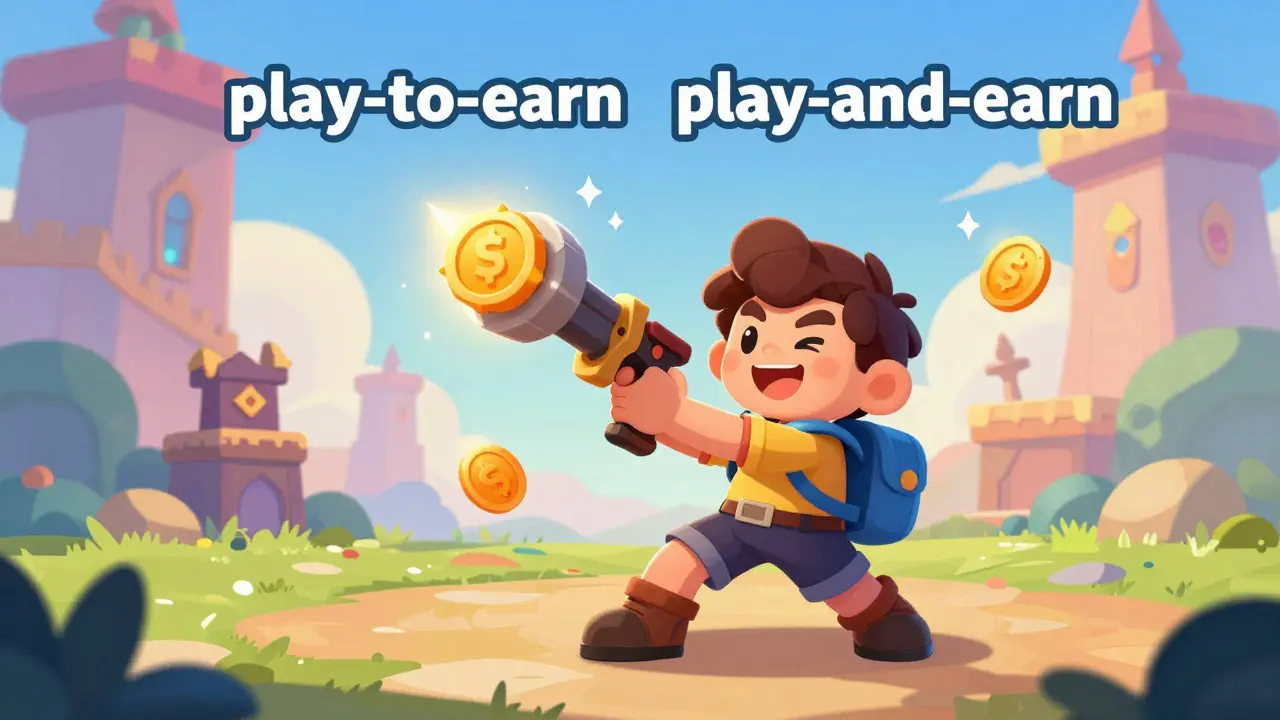
Early blockchain games were often criticized for being "play-to-earn" schemes that felt more like jobs than games. Players logged in solely to farm tokens, leading to unsustainable inflation as new users joined expecting quick profits. When the influx slowed, token prices crashed, and the game died.
The industry is shifting toward "play-and-earn." In this model, earning is a secondary benefit of genuine enjoyment. The game must be fun first. If the core loop is engaging, players stay for the entertainment, and the economic benefits become a nice bonus rather than the sole motivator. This shift reduces pressure on the tokenomics system because retention is driven by gameplay quality, not just financial incentive.
Games that succeed in this era focus on depth and width. Depth refers to complex progression systems that keep individual players engaged for months. Width refers to diverse activities-trading, crafting, battling-that create multiple avenues for spending and earning. A rich ecosystem absorbs excess tokens naturally through varied interactions.
Challenges Facing Developers in 2026
Even with robust designs, challenges remain. Price volatility of underlying blockchains poses a systemic risk. If Ethereum or Solana experiences a major downturn, the value of in-game tokens tied to those networks may drop regardless of the game's internal health. Developers must hedge against this by decoupling in-game value from external market sentiment as much as possible.
Regulatory uncertainty also looms large. Governments worldwide are still defining how digital assets are treated. Is a utility token a security? Are NFTs property or investments? Clear legal frameworks are essential for long-term viability. Projects that ignore compliance risks face potential shutdowns or fines.
Finally, technical scalability matters. High gas fees can ruin the user experience. Transactions must be fast and cheap to support micro-transactions common in gaming. Layer-2 solutions and specialized gaming chains are addressing this, but developers must choose their infrastructure wisely.
What is the difference between utility and governance tokens in gaming?
Utility tokens are used for in-game actions like buying items or entering matches. They function as currency within the ecosystem. Governance tokens grant voting rights on project decisions, such as feature updates or treasury management. While utility tokens drive daily activity, governance tokens align long-term interests between players and developers.
How do buyback-and-burn mechanisms stabilize token prices?
By purchasing tokens from the open market and destroying them, the total circulating supply decreases. Assuming demand remains constant or grows, a lower supply leads to higher prices per token. This mechanism helps counteract inflation caused by continuous token rewards given to players.
Why is inflation dangerous for blockchain games?
Inflation erodes the value of earned tokens. If too many tokens exist relative to available goods, players lose confidence in the currency's purchasing power. This leads to mass sell-offs, crashing prices further and destabilizing the entire economy. Sustainable games must ensure token sinks match or exceed emissions.
Can fractional NFTs make expensive in-game assets accessible?
Yes. Fractional NFTs split high-value assets into smaller shares, allowing multiple players to own portions. This lowers the entry barrier, increases liquidity through more frequent trades, and enables broader participation in the game's premium economy without requiring large upfront investments.
What is the role of staking in gaming tokenomics?
Staking locks tokens for a period, removing them from circulation and reducing sell pressure. In return, stakers earn rewards like extra yields or exclusive content. This encourages long-term holding, stabilizes prices, and aligns player incentives with the game's sustained growth rather than short-term gains.
9 Comments
the whole point of blockchain gaming is supposed to be player ownership but most projects just copy paste the same broken economic models. if you dont have real sinks for your utility tokens its just a ponzi scheme with extra steps. i see this happen over and over again where devs promise sustainability but they really just want quick liquidity before the rug pull. the math has to work or the game dies fast.
i really hope we see more games focusing on fun first honestly it feels like so many players are burned out from treating their hobby like a second job. when the earning part stops working people leave but if the gameplay is actually good they might stick around even if the token value dips. its such a delicate balance and i think developers need to listen to their communities more about what actually makes them enjoy the experience rather than just chasing metrics.
you guys are all missing the forest for the trees. fractional nfts are a disaster waiting to happen because governance becomes a nightmare. who decides how to use the asset when fifty different shareholders want different things? it creates gridlock and kills any strategic advantage the item might have had. plus the legal liability for those protocols is insane and nobody talks about that enough.
this article sounds like typical western tech bro nonsense trying to justify another bubble. in my country we know that real value comes from tangible assets not digital pictures of swords that can be copied by anyone with a screenshot tool. these crypto schemes always target naive people who dont understand basic economics. keep your blockchain games far away from our financial systems because they are nothing but scams designed to steal from the working class.
the dual token model is still the most robust way to handle inflationary pressure in early stage games. utility tokens need high velocity while governance tokens act as store of value. if you mix them you get hyperinflation in the short term which destroys confidence. look at axie infinity back in the day they failed because they didnt separate the spendable currency from the appreciating asset properly. also layer 2 scaling is non negotiable right now because gas fees kill micro transactions instantly.
lol another article pretending this stuff is serious business :P. most of these games are just bots farming each other. the only real winners are the devs who cash out early. rest of us just watch our bags go to zero. india is better off ignoring this hype cycle completely and focusing on actual software development jobs instead of gambling on virtual items that have no intrinsic value whatsoever.
i totally agree with larry about the sinks being crucial. without proper burn mechanisms the economy just explodes. i remember playing one game where everyone was rich but nothing cost anything anymore so there was no incentive to do anything except sit on your tokens. it was super boring and lonely. maybe if devs focused more on creating friction like durability costs or energy limits it would feel more realistic and sustainable for long term engagement.
typical optimistic take from someone who probably lost money. nobody cares about your feelings when the chart goes down. the market doesnt care if the game is fun it only cares about supply and demand. if you cant sell your assets quickly you have nothing. stop pretending this is a community and start realizing its a predator prey ecosystem where the whales eat the small fish alive every single day.
it is indeed a fascinating topic though i must say the regulatory landscape remains quite ambiguous for international participants. perhaps we should wait for clearer guidelines before investing significant capital into these ventures. the potential for innovation is undeniable but the risks are equally substantial and often overlooked by enthusiastic newcomers who fail to conduct adequate due diligence on the underlying smart contracts and team backgrounds.