
Every blockchain starts with a single moment. A split second where code becomes reality, and a decentralized ledger is born from nothing but mathematics and intent. This starting point is called the genesis block. It is Block 0. The root of the tree. Without it, there is no chain, no trust, and no currency.
While most people know Bitcoin’s origin story, the world of crypto has thousands of other genesis blocks. Some are technical necessities. Others are political statements. A few are hidden jokes or Easter eggs left by developers for those who look closely. Understanding these famous genesis blocks gives you a map of why different cryptocurrencies exist and what they stand for.
The Original Protest: Bitcoin’s Genesis Block
Bitcoin’s Genesis Block is not just the first block; it is the most famous digital artifact in financial history. Created by Satoshi Nakamoto on January 3, 2009, at 18:15:05 GMT, this block anchors the entire network that now handles billions of dollars in daily volume.
What makes this block unique isn’t just its position as Block 0. It’s the message embedded inside it. Satoshi didn’t just write code; he wrote a headline into the coinbase transaction:
"The Times 03/Jan/2009 Chancellor on brink of second bailout for banks"
This references a front-page article from The Times newspaper in London. Why did Satoshi do this? Two reasons. First, it proves the block was created after that date, establishing a timestamp that cannot be forged. Second, it serves as a permanent critique of the traditional banking system. The 2008 financial crisis had just shaken the world. Banks were failing. Governments were printing money to save them. Bitcoin was launched as a direct response to this instability-a system that couldn’t be bailed out because it couldn’t be controlled by any central authority.
Technically, this block is strange. It contains a reward of 50 BTC, but these coins are unspendable. They are stuck forever. Unlike every other block mined since, the Genesis Block wasn’t found through mining competition. It was hard-coded into the original software. There is no previous block hash to reference because there was nothing before it. It stands alone, immutable and silent, waiting for the rest of the chain to grow around it.
The Smart Contract Revolution: Ethereum’s Homestead
If Bitcoin is digital gold, Ethereum is a global computer. Its genesis block marked the launch of a platform that allows developers to build applications directly on the blockchain. Launched in July 2015, Ethereum’s genesis block introduced the concept of smart contracts-self-executing agreements with the terms directly written into code.
Unlike Bitcoin, which focused purely on peer-to-peer transactions, Ethereum’s founders wanted to create a programmable economy. The genesis block allocated millions of ETH to early contributors and the development foundation. This distribution model sparked debates about decentralization that continue today. Critics argued that pre-mining gave too much power to a small group. Supporters argued it funded the rapid development needed to compete with established tech giants.
The technical structure of Ethereum’s genesis block included initial balances for addresses involved in the pre-sale. This set the stage for the Decentralized Application (DApp) ecosystem. Today, Ethereum hosts everything from decentralized finance (DeFi) protocols to non-fungible tokens (NFTs). Every one of these innovations traces its lineage back to that initial state defined in 2015.
Forks and Fractures: When Communities Split
Not all genesis blocks are born from scratch. Some are born from conflict. When a community disagrees on the direction of a project, they may fork the code. This creates a new blockchain with its own genesis block, often inheriting the history of the old one up to a certain point.
- Bitcoin Cash (BCH): In August 2017, a disagreement over block size limits led to a hard fork. Bitcoin Cash started with a genesis block that copied Bitcoin’s history up to that moment. The goal was to increase transaction throughput and lower fees for everyday payments.
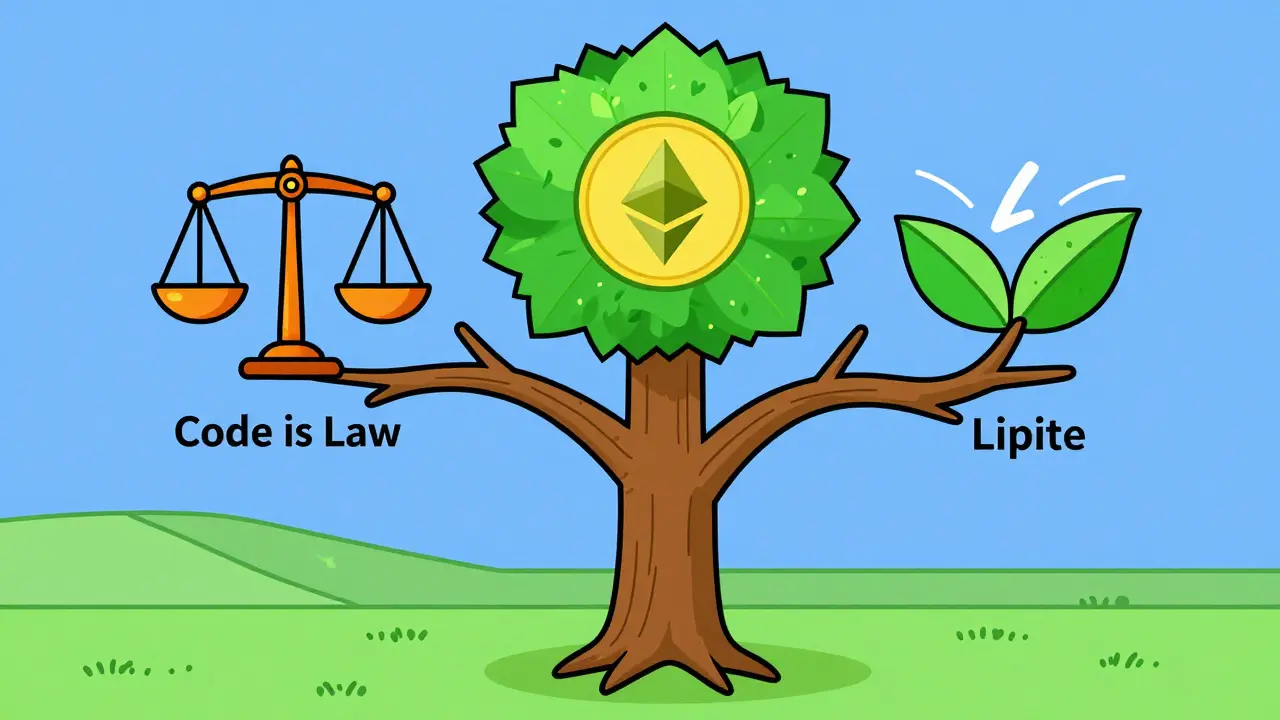
- Ethereum Classic (ETC): In 2016, the DAO hack resulted in a massive loss of funds. The majority of the Ethereum community voted to revert the transaction, creating a new chain (Ethereum). A minority refused, believing that immutability was more important than saving stolen funds. They continued on the original chain, which became Ethereum Classic. Its genesis block represents a philosophical stance: code is law, even when it fails.
- Litecoin (LTC): Launched in 2011 by Charlie Lee, Litecoin’s genesis block was designed to be a "lite" version of Bitcoin. It uses a different hashing algorithm (Scrypt) to allow faster block generation and easier mining with consumer hardware. Its genesis block pays homage to Bitcoin while asserting its own identity as silver to Bitcoin’s gold.
These forks show that genesis blocks can also represent ideological divides. They are snapshots of a community’s values at a specific moment in time.

Hidden Messages and Developer Humor
Satoshi’s newspaper headline set a precedent. Many developers embed messages in their genesis blocks. These aren’t always serious. Sometimes, they are jokes, quotes, or personal notes.
| Cryptocurrency | Message / Content | Meaning / Context |
|---|---|---|
| Bitcoin | "The Times 03/Jan/2009..." | Critique of bank bailouts during the 2008 financial crisis. |
| Dogecoin | "The Times 03/Jan/2014 Dogs take over the world" | A parody of Bitcoin’s message, highlighting Dogecoin’s humorous origins. |
| Zcash | "The Washington Post 2016-10-28" | References an article about privacy and surveillance, aligning with Zcash’s focus on zero-knowledge proofs. |
| Monero | No public headline, but includes cryptographic commitments | Focuses on privacy and fungibility rather than political statements. |
| Cardano | Includes references to academic papers | Reflects Cardano’s research-driven, peer-reviewed development approach. |
Dogecoin’s genesis block is particularly notable. Created in December 2013 as a joke based on the Shiba Inu meme, it deliberately mimicked Bitcoin’s format. By changing the date to 2014 and replacing the bank bailout headline with "Dogs take over the world," the creators signaled that this was a fun, inclusive alternative to the serious, elitist tone of early Bitcoin communities. Despite its humorous start, Dogecoin has grown into a major cryptocurrency with real-world usage and a passionate community.
Why Genesis Blocks Matter Today
You might wonder why we care about blocks from 2009 or 2015. The answer lies in trust. In traditional finance, trust is placed in institutions: banks, governments, regulators. In crypto, trust is placed in code and history. The genesis block is the root of that history.
When you verify a transaction on Bitcoin, your wallet checks the chain of hashes back to the Genesis Block. If that block were altered, the entire chain would break. This immutability is what secures the network. It means that no government, hacker, or corporation can rewrite the past. They cannot inflate the supply retroactively. They cannot erase transactions.
For newer projects, the genesis block defines the initial distribution of assets. Did the team keep 50% of the supply? Was it distributed fairly via airdrop? Was it sold in a private sale? These decisions, encoded in the genesis block, affect how users perceive the project’s fairness and decentralization. A poorly distributed genesis block can lead to centralization risks, where a few wallets hold enough power to manipulate the network.
How to Explore Genesis Blocks Yourself
You don’t need to be a developer to see these blocks. Most block explorers allow you to view Block 0. Here is how you can check:
- Go to a block explorer like Blockchain.com (for Bitcoin) or Etherscan.io (for Ethereum).
- Search for "Block 0" or enter the height "0" in the search bar.
- Look at the "Coinbase" or "Input" section. This is where the embedded message or initial allocation is stored.
- Check the timestamp. Compare it to the historical context mentioned above.
For Bitcoin, you will see the raw data containing the Times headline. For Ethereum, you will see the initial balance allocations. It’s a fascinating glimpse into the minds of the creators.
The Future of Genesis Blocks
As blockchain technology evolves, so do genesis blocks. With the rise of Layer 2 solutions and sidechains, new chains are being launched frequently. Each one needs a genesis block. Some use "airdrop" mechanisms to distribute tokens to existing users of the main chain, ensuring continuity and security. Others use proof-of-stake validators to secure the new chain from day one.
Central Bank Digital Currencies (CBDCs) are also exploring blockchain technology. Their genesis blocks will likely be very different-controlled, permissioned, and issued by national governments rather than anonymous developers. This contrast highlights the diversity of the blockchain space. From decentralized protests to centralized efficiency, the genesis block remains the starting line.
Whether you are a historian, a developer, or an investor, understanding genesis blocks helps you understand the soul of a cryptocurrency. It tells you why it exists, who built it, and what values it prioritizes. In a world of constant change, Block 0 is the one thing that never changes.
What is a genesis block in simple terms?
A genesis block is the very first block in a blockchain. It is Block 0. It contains no transactions (or only a special initial transaction) and serves as the anchor for all subsequent blocks. Without it, the chain has no starting point, and the network cannot establish trust or verify history.
Why does Bitcoin's genesis block have a newspaper headline?
Satoshi Nakamoto embedded the headline "The Times 03/Jan/2009 Chancellor on brink of second bailout for banks" to prove the block was created after that date. It also served as a political statement criticizing the instability of the traditional banking system during the 2008 financial crisis, positioning Bitcoin as a decentralized alternative.
Can the coins in the Bitcoin genesis block be spent?
No. The 50 BTC reward in Bitcoin's genesis block is unspendable. It was hard-coded into the software without a valid proof-of-work solution, meaning no private key exists to unlock it. These coins are permanently locked and serve only as a historical marker.
How do I find the genesis block of a cryptocurrency?
You can find it using a block explorer. Search for "Block 0" or enter the height "0" in the search bar of sites like Blockchain.com (for Bitcoin) or Etherscan.io (for Ethereum). Look for the coinbase transaction or input data to see any embedded messages or initial allocations.
What is the difference between a soft fork and a hard fork regarding genesis blocks?
A soft fork is backward-compatible and usually doesn't create a new genesis block; it continues the existing chain with new rules. A hard fork is not backward-compatible and often results in a split, creating two separate chains. One chain may continue from the last common block, effectively treating that point as a new genesis for the diverging path, though technically it inherits the history up to that point.
Why is Ethereum's genesis block considered controversial?
Ethereum's genesis block included a large pre-mine, where millions of ETH were allocated to the founding team and early investors before the network went live. Critics argue this centralizes control and contradicts the spirit of decentralization, whereas supporters say it was necessary to fund development and ensure network stability.
9 Comments
hey guys, just read this and it made me think about how much history is hidden in plain sight. i always thought bitcoin was just math but the newspaper headline part is so cool. it shows that satoshi had a point to make not just code to write. the fact that those 50 btc are stuck forever is kinda poetic in a way. its like a monument to that moment in time. also dogecoin being a joke that became real is wild. makes you wonder what other things we take too seriously right now.
The article fails to address the fundamental flaw in Ethereum's initial distribution model which inherently compromises decentralization from day one. Pre-mining creates an oligarchy of developers who hold disproportionate power over the network governance. This is not innovation; it is centralized control disguised as technology. Bitcoin remains superior because it adhered strictly to fair launch principles without such manipulative allocations.
I really appreciate how this post breaks down complex concepts into understandable pieces. It helps new people feel less intimidated by the technical jargon often associated with blockchain. Understanding the genesis block gives context to why different coins behave the way they do today. It’s empowering to know where these systems started.
i totally agree with the part about trust. its crazy to think that a bunch of code can be more reliable than banks. i still have trouble understanding the tech side though. like how does the hash work exactly? but reading this made me want to look up my own wallet history. maybe i should try exploring block 0 on etherscan. seems fun actually.
you see the genesis block as a starting point but i see it as a prison. the code is law they say but who wrote the laws? satoshi vanished leaving us with his rules. ethereum devs changed theirs when it suited them. we are all just prisoners of the initial parameters set by anonymous or semi-anonymous figures. true freedom would be no code at all just pure human interaction without digital shackles.
Oh sure, let’s pretend Dogecoin isn’t just a meme coin used for shilling bad projects. The humor is lost on everyone except the bots buying the dip. Meanwhile, serious chains like Cardano are doing actual research while people chase pump-and-dumps based on a Shiba Inu picture. Typical internet culture reducing financial infrastructure to a joke.
This analysis is superficial at best 📉. You ignore the regulatory implications of CBDCs mentioned in the future section which will render most of these 'decentralized' experiments obsolete within five years. Governments do not relinquish monetary sovereignty easily. Your focus on Easter eggs distracts from the impending reality of state-controlled ledgers replacing organic growth models entirely 😒.
The distinction between hard forks and soft forks regarding genesis blocks is crucial for investors to understand risk profiles. A hard fork like Bitcoin Cash represents a community fracture that dilutes security and value. Investors must recognize that ideological purity often comes at the cost of network effects. Stick to networks with proven continuity and robust developer activity rather than chasing narrative-driven splits.
It is fascinating to observe how the philosophical underpinnings of each cryptocurrency are encoded directly into their genesis blocks. Bitcoin’s protest against central banking, Ethereum’s ambition for programmable money, and Monero’s commitment to privacy are not merely marketing slogans but foundational truths established at inception. These blocks serve as immutable declarations of intent that continue to guide development and community values today.