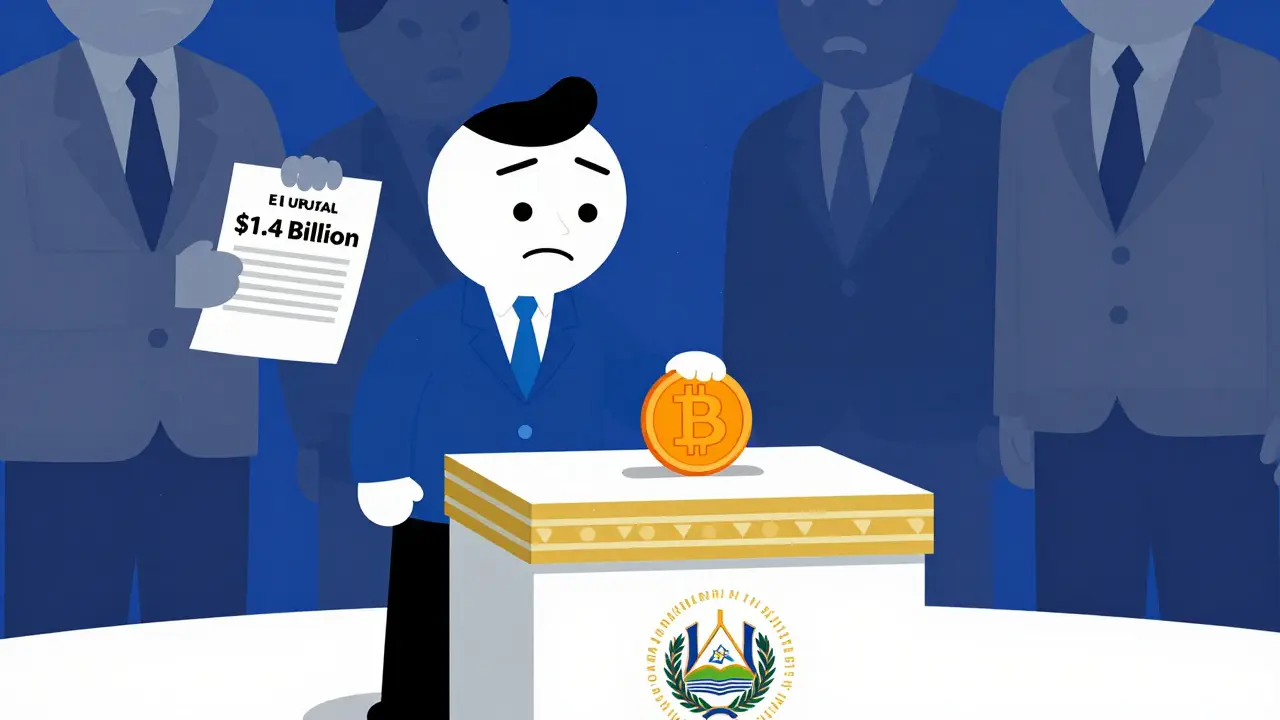
On September 7, 2021, El Salvador became the first country in the world to adopt Bitcoin as legal tender, a move that promised financial revolution but delivered a complex lesson in policy failure. By May 2025, the experiment had officially ended its mandatory status. The Legislative Assembly voted 55-2 to remove Bitcoin’s designation as currency, leaving it only for voluntary private transactions. This reversal wasn’t just a political shift; it was a direct result of pressure from the International Monetary Fund (IMF) during negotiations for a $1.4 billion loan. If you are studying blockchain implementation or government crypto policy, this case offers the most comprehensive real-world data available on why forced adoption rarely works.
The Initial Promise vs. Reality
President Nayib Bukele pitched the Bitcoin law as a tool for economic empowerment. The goal was simple: make banking accessible for the unbanked, reduce remittance costs for families receiving money from abroad, and attract foreign investment by branding El Salvador as a tech hub. In theory, using Bitcoin alongside the US dollar would streamline cross-border payments and cut fees charged by traditional banks.
In practice, the results were starkly different. A report from March 2025 by The Economist labeled the experiment a failure, citing higher costs than benefits. The IMF’s own assessment found no significant improvement in financial inclusion. Instead of empowering citizens, the policy created confusion and resistance. Economist Rafael Lemus noted that the government tried to force Bitcoin into existence without addressing the underlying infrastructure needs. The disconnect between high-level policy goals and ground-level reality became apparent within months.
The Chivo Wallet: Technical Hurdles and Trust Issues
To facilitate adoption, the government launched the Chivo wallet, a digital app designed to handle Bitcoin transactions for everyday users. Initially, there was some success. By 2022, reports suggested more Salvadorans had Lightning wallets than traditional bank accounts. However, this metric masked deeper issues. Many users downloaded the app for the sign-up bonus rather than genuine intent to use Bitcoin for daily purchases.
The Chivo wallet suffered from severe technical problems. Users reported slow transaction speeds, frequent crashes, and poor customer support. More critically, security incidents eroded trust. Hacking attempts and vulnerabilities exposed users to risks they weren’t prepared to manage. For a population with limited digital literacy, these failures were not just inconveniences-they were deterrents. As part of the IMF agreement, the government committed to gradually unwinding its involvement with the Chivo wallet, signaling an acknowledgment that state-run crypto infrastructure was unsustainable.

Forced Adoption and Merchant Resistance
Unlike other countries that created friendly regulatory environments for crypto, El Salvador mandated acceptance. Businesses were legally required to accept Bitcoin if they had the technology. This approach ignored practical realities. Many small merchants lacked smartphones, reliable internet, or understanding of cryptocurrency volatility. They couldn’t easily convert Bitcoin to fiat currency to pay suppliers or employees.
Data from 2024 showed that 92% of Salvadorans did not use Bitcoin for transactions. Only a tiny fraction of businesses accepted it regularly. The rest found workarounds, such as charging extra fees or refusing service altogether. Forced adoption bred resentment rather than innovation. When compared to nations like Switzerland or Singapore, which adopted crypto-friendly regulations without mandating usage, El Salvador’s top-down approach highlighted the importance of organic market growth over legislative coercion.

Financial Impact and Transparency Concerns
One of the most controversial aspects of the policy was the government’s accumulation of Bitcoin reserves. At various points, reports claimed holdings ranged from 688 coins worth $574 million to over 6,100 coins valued at $500 million. These discrepancies raised serious transparency questions. Critics argued that the state was speculating with public funds rather than serving citizens’ needs.
While some profits were realized on paper, the overall fiscal impact remained negative. The cost of implementing the system, including subsidies and technical support, outweighed any gains from reserve appreciation. Furthermore, the IMF required El Salvador to stop purchasing new Bitcoin as a condition for the loan. Although an IMF report from July 2025 stated no new purchases occurred after the agreement, earlier speculation suggested otherwise. This lack of clarity damaged credibility both domestically and internationally.
Lessons for Future Crypto Policy
So what can we learn from El Salvador’s experience? First, voluntary adoption outperforms mandatory mandates. People need to see value before they change habits. Second, infrastructure matters. Without reliable internet, education, and secure tools, even well-intentioned policies fail. Third, transparency is non-negotiable. Governments handling public assets must provide clear, auditable records.
El Salvador still hosts events like the PLANB Forum, maintaining ties to the crypto community. But the era of legal tender is over. For policymakers elsewhere, this case serves as a cautionary tale. Innovation requires patience, education, and respect for user choice-not legislation alone.
Why did El Salvador remove Bitcoin as legal tender?
El Salvador removed Bitcoin's legal tender status due to low adoption rates, technical failures of the Chivo wallet, and pressure from the International Monetary Fund (IMF) as part of a $1.4 billion loan agreement. The IMF cited macroeconomic risks and lack of financial inclusion improvements.
Did the Chivo wallet work for Salvadorans?
The Chivo wallet faced significant challenges, including technical glitches, security vulnerabilities, and poor user experience. While initial downloads were high, actual usage for daily transactions remained minimal due to these issues and general skepticism among users.
How many people used Bitcoin in El Salvador?
By 2024, approximately 92% of Salvadorans did not use Bitcoin for transactions. Only a small percentage of businesses accepted it, indicating very low practical adoption despite government mandates.
What happened to El Salvador's Bitcoin reserves?
El Salvador held varying amounts of Bitcoin, with reports ranging from 688 to over 6,100 coins. The government stopped purchasing new Bitcoin after signing the IMF loan agreement in late 2024, though earlier transparency concerns existed regarding exact holdings and profits.
Is Bitcoin still legal in El Salvador?
Yes, Bitcoin remains legal for voluntary private transactions in El Salvador. However, it is no longer considered legal tender, meaning businesses are not required to accept it, and it cannot be used for tax payments or official state bills.