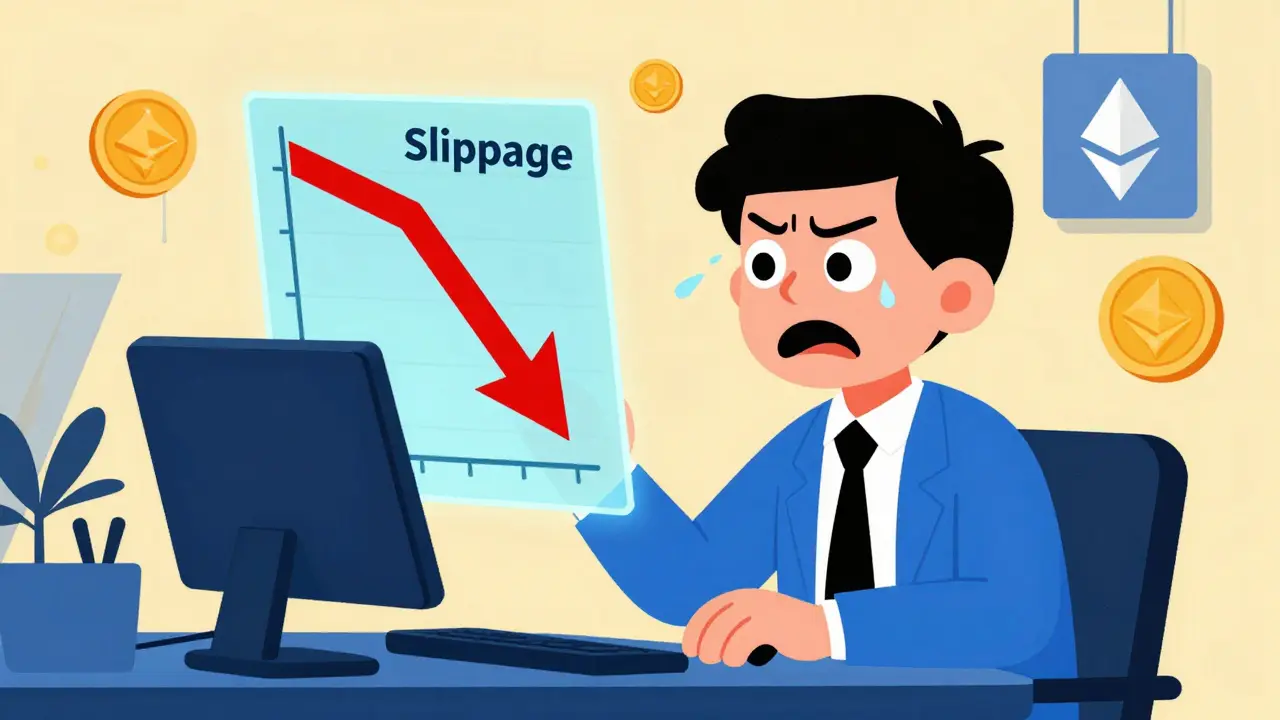
Have you ever tried swapping $10,000 worth of USDT for USDC and watched your profit vanish into thin air? That’s the reality of high slippage on most decentralized exchanges. If you are looking for a place to trade stablecoins without getting eaten alive by fees or price impact, Curve Finance is the leading automated market maker specialized in efficient, low-slippage trading for stablecoins and similarly priced assets. But here is the twist: running it on Ethereum mainnet can cost you more in gas fees than the trade itself. That is why moving Curve to Polygon is a Layer 2 scaling solution that offers significantly lower transaction costs and faster settlement times compared to Ethereum makes so much sense.
In this review, we break down exactly how Curve works on Polygon, whether it is still the king of stablecoin swaps in 2026, and if it fits your specific trading needs. We will look at the numbers, the risks, and the real-world experience of using this protocol today.
Why Curve on Polygon Changes the Game
Let's get one thing straight: Curve was built for stability. Unlike general-purpose DEXs like Uniswap which allows pairing entirely different assets such as ETH and BTC with varying volatility, Curve focuses on assets that should theoretically be worth the same amount. Think USDT, USDC, DAI, or wrapped Bitcoin tokens.
The problem with Ethereum mainnet has always been the cost. In 2025 and heading into 2026, network congestion can push gas fees to absurd levels. On Polygon, those fees drop from potentially $10-$50 per transaction to fractions of a cent. This doesn't just save money; it changes behavior. When trading is cheap, you can execute smaller, more frequent trades. You can provide liquidity without worrying that a single swap will wipe out your yield.
Curve’s algorithm is designed specifically for these similar-value assets. It uses a "stableswap" invariant that keeps prices tight around parity. On Polygon, you get that same mathematical efficiency but with a fee structure that actually allows retail traders to participate profitably. It is not just about saving a few dollars; it is about making DeFi accessible again.
Core Features: What You Get on Polygon
When you connect your wallet to Curve on Polygon, you aren't getting a watered-down version of the mainnet product. You get the full suite of tools, optimized for speed.
- Deep Liquidity Pools: The famous 3pool (USDT, USDC, DAI) exists on Polygon. While the total value locked (TVL) might be lower than Ethereum, it is sufficient for most retail and even mid-sized institutional trades without significant slippage.
- Adaptive Curves: Launched in 2025, this technology automatically adjusts pool parameters based on real-time volatility. If the market gets jittery, the curve adapts to protect liquidity providers. This runs seamlessly on Polygon’s fast block times.
- crvUSD Integration: Curve’s native over-collateralized stablecoin, crvUSD, has surpassed $120 million in circulation. You can mint, burn, and swap crvUSD directly on Polygon, often with better yields due to lower competition for capital compared to mainnet.
- Cross-Chain Bridges: Thanks to integrations with protocols like LayerZero which enables secure cross-chain messaging and asset transfers between different blockchain networks and Wormhole, moving assets onto Polygon to trade on Curve is smoother than ever.
The interface overhaul in 2025 also matters. The old Curve UI was functional but clunky. The new dashboard gives you clearer analytics on your positions, making it easier to track your impermanent loss (which is minimal on Curve) and your earnings.
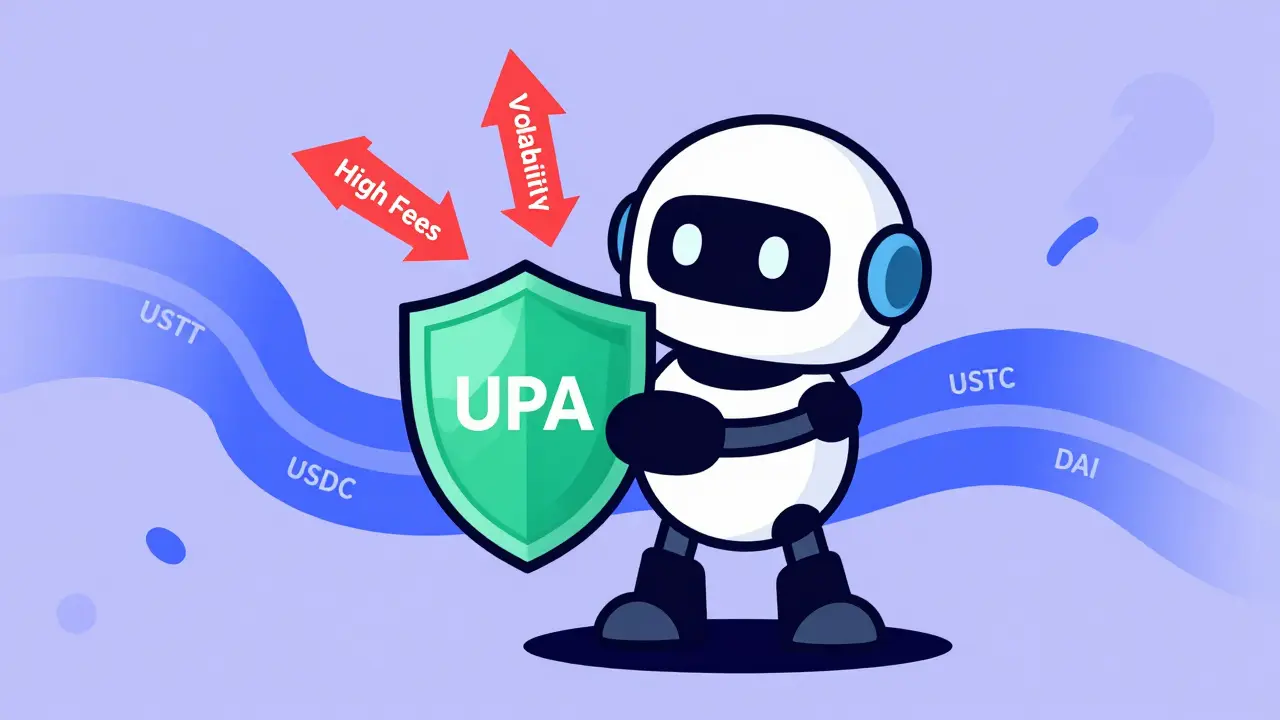
Curve vs. Uniswap on Polygon: The Showdown
You might be wondering, "Can't I just use Uniswap on Polygon?" Yes, you can. But they serve different masters. Here is how they stack up in 2026:
| Feature | Curve Finance (Polygon) | Uniswap (Polygon) |
|---|---|---|
| Best For | Stablecoin-to-Stablecoin swaps | Volatile asset pairs (e.g., ETH/USDC) |
| Slippage on Large Trades | Extremely Low (<0.01%) | Higher (can exceed 0.5%+) |
| Impermanent Loss Risk | Minimal (assets pegged to same value) | High (assets move independently) |
| Fees for Traders | Very Low (typically 0.04%) | Standard (0.05% - 1%) |
| Liquidity Depth | Deep for stablecoins only | Broad across all asset types |
If you are swapping ETH for MATIC, go to Uniswap. If you are swapping USDT for USDC, stay on Curve. The math simply favors Curve for stable assets because its bonding curve is flatter near the center, meaning you get a better price for larger amounts.
How to Start Trading on Curve (Polygon)
Getting started is straightforward, but there are a few steps you need to get right to avoid common pitfalls.
- Set Up Your Wallet: Use MetaMask or Rabby Wallet. Ensure you have added the Polygon network. You will need some MATIC tokens for gas fees. Even though fees are low, you cannot transact with zero balance.
- Fund Your Wallet: Bridge assets from Ethereum or another chain. Use official bridges or trusted aggregators. Never send ERC-20 tokens directly to a Polygon address without bridging.
- Connect to Curve: Go to the Curve website and select Polygon from the network dropdown. Connect your wallet. Sign the permission request.
- Swap Assets: Select the pair (e.g., USDT/USDC). Check the estimated output. Because of low slippage, the estimate should be very close to the actual received amount.
- Provide Liquidity (Optional): If you want to earn fees, deposit equal values of two tokens into a pool. You will receive LP tokens representing your share.
A pro tip: Always check the "slippage tolerance" setting. On Curve, you can often set this very low (0.1% or less) for stablecoin pairs because the price won't move against you during the transaction.

Risks and Considerations in 2026
No DeFi protocol is risk-free. Here is what you need to watch out for.
Smart Contract Risk: Curve has been audited extensively, but bugs happen. The adaptive curve technology introduced in 2025 adds complexity. While it optimizes yields, complex code means more potential attack vectors. Stick to the main pools (3pool, stETH, etc.) which have the deepest battle-testing.
Depegging Events: Curve assumes assets are pegged. If USDT loses its peg to the dollar, the entire pool dynamics shift. During the Terra/Luna crash in 2022, Curve pools suffered massive losses. While safeguards exist now, always monitor the health of the underlying assets you are swapping.
Polygon Network Congestion: While rare compared to Ethereum, Polygon can experience slowdowns during major NFT mints or viral app launches. This might delay your transactions temporarily, though it rarely fails completely.
Regulatory Uncertainty: As governments tighten rules on DeFi in 2026, ensure you are compliant with local laws regarding tax reporting on yield farming income. Curve provides detailed history logs to help with this.
Is Curve on Polygon Worth It?
For stablecoin traders, the answer is a resounding yes. The combination of Curve’s superior AMM design and Polygon’s low-cost infrastructure creates an environment where you can move large sums of capital efficiently. Whether you are a yield farmer looking to rebalance portfolios or a trader hedging exposure, Curve on Polygon remains the gold standard.
However, if you are looking to speculate on volatile altcoins, Curve is not the right tool. It is a specialist, not a generalist. Use it for what it does best: keeping your stablecoins stable and your fees low.
What is the minimum amount to trade on Curve Finance?
There is no strict minimum set by the protocol, but due to rounding errors in smart contracts, it is recommended to trade amounts above $10-$20. Smaller amounts may result in receiving zero tokens due to precision limits.
Do I need CRV tokens to use Curve on Polygon?
No, you do not need CRV tokens to swap assets. However, holding and locking CRV (veCRV) allows you to vote on gauge emissions, which directs rewards to specific pools, and can boost your own yield as a liquidity provider.
How does Curve compare to centralized exchanges like Binance?
Centralized exchanges offer deeper liquidity overall but require you to trust them with your funds. Curve is non-custodial, meaning you retain control of your private keys. Curve is better for privacy and security, while CEXs may be simpler for beginners.
Is it safe to bridge assets to Polygon for Curve?
Bridging carries inherent smart contract risk. Using established bridges like the official Polygon Bridge or LayerZero-integrated services reduces this risk. Always verify contract addresses before approving transactions.
What happens if a stablecoin in a Curve pool depegs?
If one asset depegs, arbitrageurs will drain the undervalued asset from the pool, leaving liquidity providers with the depegged token. This causes significant impermanent loss. Curve’s adaptive curves aim to mitigate this, but risk remains during black swan events.