
If you're in Russia and thinking about using a crypto exchange, you need to know this: not all platforms are safe. Some aren't just risky-they're legal time bombs. In 2025, Russian authorities have cracked down hard on unlicensed crypto platforms, and the consequences aren't just financial. They can be criminal. The exchanges you might think are convenient-fast, easy, no paperwork-are often the same ones linked to money laundering, ransomware, and international sanctions evasion. And if you use them, you’re not just losing money. You could be walking into a police investigation.
Why Russian Crypto Users Are Being Targeted
Russia doesn’t ban owning cryptocurrency. You can hold Bitcoin, Ethereum, or USDT without breaking the law. But using crypto to pay for things inside Russia? That’s illegal. The Bank of Russia has been clear: no digital currency for everyday purchases. What’s allowed is cross-border trade under a narrow experimental regime-only for businesses with over 6 million rubles in assets and full licensing. But here’s the problem: most regular users don’t qualify for that. So they turn to unlicensed exchanges that promise quick transfers, no ID checks, and no questions asked. These platforms aren’t just operating in a gray area-they’re actively helping people bypass capital controls. And the Russian government is no longer turning a blind eye. In October 2024, security services raided over a dozen locations across Russia. They seized more than $10 million in cash, 100 million rubles, and 200,000 euros. The targets? Not just exchange operators. Users too. Police were tracing bank transfers linked to crypto deposits. If your account sent money to a flagged exchange-even once-you could be questioned. Some people were arrested just for transferring 50,000 rubles.The Exchanges You Must Avoid
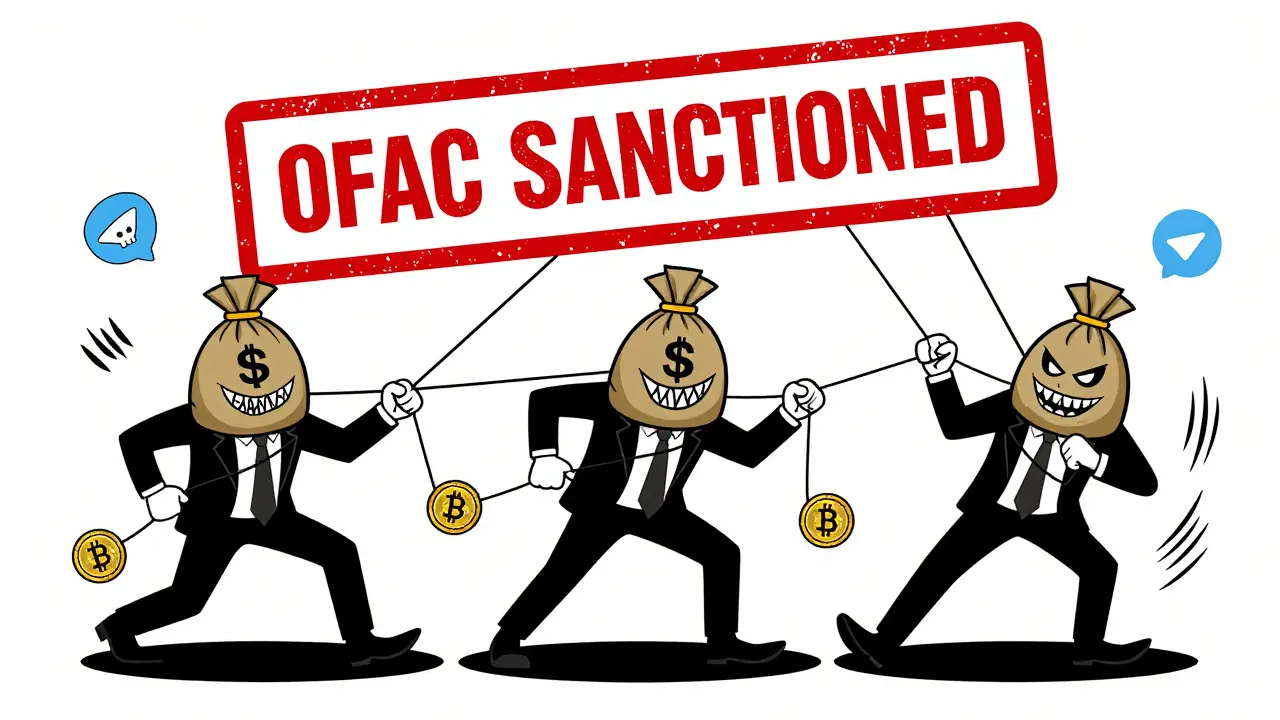
There are three names you need to remember: Garantex, Exved, and Grinex. These aren’t just shady platforms. They’re sanctioned by the U.S. Treasury and actively hunted by international law enforcement. Garantex was one of Russia’s biggest crypto exchanges before it was officially designated by OFAC in April 2022. The U.S. government accused it of processing over $500 million in illicit transactions-including payments to ransomware groups like Hive and 12 major darknet markets. Chainalysis confirmed 68% of its volume was tied to crime. After Garantex was shut down, its team didn’t disappear. They rebranded. Enter Exved and Grinex. Same founders. Same team. Same infrastructure. Exved, for example, is run by Sergey Mendeleev, the original architect behind Garantex. It’s based in Moscow’s International Business Center but uses shell companies in Hong Kong to move money through Russian banks like Alfa-Bank. It’s not a crypto exchange-it’s a cryptolaundromat. Grinex, its successor, operates mostly through Telegram. You sign up with just your phone number. No passport. No address. No KYC. That’s not convenience. That’s a red flag screaming at you. These platforms don’t just take your money. They take your freedom.How These Exchanges Work (And Why They’re Dangerous)
Here’s the typical flow:- You deposit rubles into a bank account linked to a Hong Kong-based company like Feilian Limited.
- The company converts your rubles into USDT or Bitcoin.
- The crypto is sent overseas-often to exchanges in the UAE, Georgia, or Thailand.
- You receive foreign currency or crypto in return.
Real Stories: People Who Lost Everything
On Russian forums like Dvach and RuTracker, hundreds of users have posted about losing their funds. One user, 'CryptoPatriot_88', deposited 1.2 million rubles into Garantex in February 2025. In March, the platform vanished. No response to emails. No customer service. Just silence. He lost everything. Another user on RuTracker reported losing 850,000 rubles through Exved. He tried to withdraw after a week. His account was locked. He was told to wait. Then the platform went offline. He later found out the CEO had fled to Turkey. Trustpilot reviews for Grinex average 1.2 out of 5 stars. Common complaints: “No withdrawals after depositing,” “Account frozen without reason,” “They disappeared after I sent my passport.” These aren’t isolated cases. Over 278 documented losses were reported on RuTracker by October 2025. Average loss per case? 850,000 rubles. That’s over $9,000 USD.Why “Fast and Easy” Is a Trap
Licensed exchanges in Russia take 2-3 days to verify you. They ask for ID, proof of address, and income documents. It’s a hassle. Unlicensed exchanges? You can be signed up in 5 minutes. Just your phone number. No questions. That’s the bait. But speed here doesn’t mean convenience. It means risk. These platforms process transactions 30-40% faster than compliant ones-not because they’re better, but because they ignore anti-money laundering rules entirely. That’s why they’re used by criminals. And here’s the kicker: Russian banks are now sharing crypto transaction data with international agencies like FATF. If you used one of these exchanges, your banking history is already in the hands of U.S. and European investigators.What Happens If You’re Caught?
The Russian Ministry of Finance has made it clear: if you use an unlicensed exchange, you have no legal protection. No recourse. No refunds. No appeal. If you’re caught: - Your bank accounts may be frozen. - You could be summoned for questioning by Rosfinmonitoring or police. - You may face criminal charges under Article 193.1-fines up to 1 million rubles or jail time. - Your passport could be flagged, preventing future international travel. - You might be added to a domestic sanctions list, blocking you from opening any bank account in Russia. There’s no “first offense” exception. If your transaction is linked to a sanctioned entity like Garantex or Exved, you’re treated as a participant in the scheme-even if you didn’t know the details.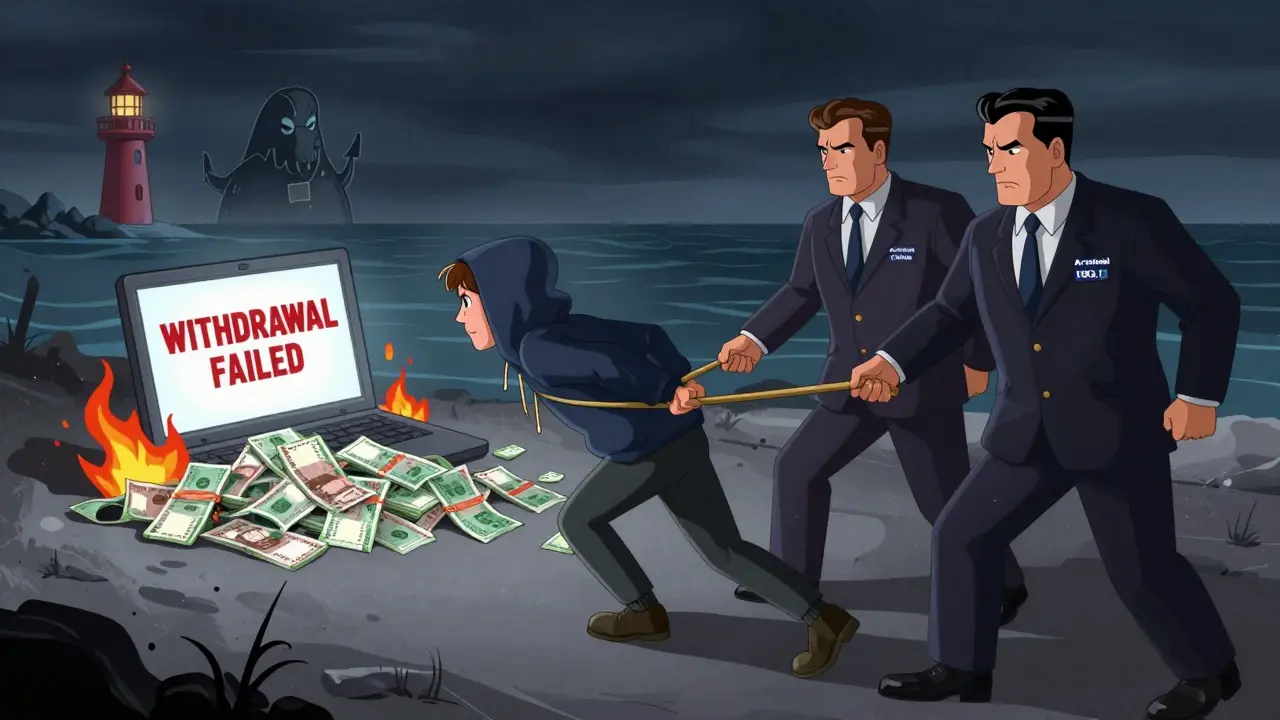
7 Comments
This is terrifying stuff. I knew crypto was risky, but I had no idea using an unlicensed exchange in Russia could land you in jail. I’ve got friends who’ve dabbled in crypto there - I’m sending them this immediately. No one should risk their freedom for a quick buck. Seriously, if you’re reading this and you’ve used one of these platforms, stop. Now. Don’t wait for the police knock.
It’s not just about money. It’s about your life. And the fact that these exchanges are rebranding like ghost apps? That’s next-level predatory.
God, I hope someone in the Russian government cracks down harder. These people aren’t entrepreneurs - they’re digital bandits.
Thank you for writing this. It’s the kind of post that actually saves lives.
Oh honey, you think this is bad? Wait till you see the Telegram bots that sell you ‘crypto’ for rubles and then vanish into the digital ether like a fart in a hurricane. These so-called exchanges aren’t even scams - they’re performance art by con artists with Excel sheets and a YouTube tutorial.
Grinex? More like ‘Grin and Bear It’ because you’re gonna need to grin through the next seven years of your life when your bank account gets frozen and your passport gets flagged like you’re a rogue squirrel smuggling acorns.
And don’t even get me started on the ‘no paperwork’ lie. That’s like saying ‘no seatbelt’ in a Tesla that’s driving itself into a brick wall. You’re not being convenient - you’re being a walking liability with a smartphone.
Also, the CEO fled to Turkey? Of course he did. He’s probably sipping raki in Bodrum right now, laughing while his ex-users cry into their frozen bank statements.
TL;DR: If it looks too easy, it’s a trap wrapped in a phishing email and sold with a Russian accent.
The author demonstrates a dangerous level of emotional manipulation. This is not journalism - it is fearmongering dressed in legal terminology. The Russian state has no moral authority to dictate financial behavior, and the U.S. sanctions are geopolitical theater. Why should a Russian citizen be penalized for circumventing an authoritarian financial regime? The real crime is state control over personal capital.
Article 193.1 is a tool of oppression, not justice. The fact that the author applauds this crackdown reveals a troubling alignment with authoritarian logic. If you believe in free markets, you must oppose state-enforced financial monopolies - even if they are poorly implemented.
These so-called ‘criminal’ exchanges are the only real option for ordinary Russians. The licensed ones are inaccessible. The choice isn’t between safety and risk - it’s between survival and subjugation.
Do not mistake resistance for recklessness. The user is not the criminal - the system is.
Thank you for this meticulously researched, deeply alarming, and utterly necessary exposé.
It’s staggering - and frankly, heartbreaking - to see how systematically vulnerable individuals are being exploited under the guise of financial innovation. The rebranding of Garantex into Exved and Grinex isn’t just clever; it’s monstrous. It’s corporate cannibalism with a side of human suffering.
The statistics - 278 documented losses, average of 850,000 rubles per case - are not numbers. They are shattered lives. Parents who can’t pay for medicine. Students who lost tuition. Retirees who trusted a phone number and a promise.
And the fact that Russian banks are now sharing data with FATF? That’s not surveillance - that’s accountability, however brutal. It’s the first time in decades that the system might actually protect the people from predators.
My heart goes out to every Russian citizen who thought they were getting ahead - and instead got trapped.
Please, if you’re reading this: don’t click. Don’t deposit. Don’t rationalize. Walk away. Even if it hurts. Even if it’s inconvenient. Your freedom is worth more than the illusion of speed.
And if you’ve already been affected? Document everything. Keep receipts. Talk to someone. You are not alone.
- With profound respect and sorrow,
Ian
Man, I’ve seen this movie before - back in the early 2000s with payday loans and ‘no credit check’ car dealerships. Same playbook: fast cash, no questions, then BAM - you’re buried. These crypto exchanges are just the 2025 version of the same old snake oil.
But here’s the thing - the people using them aren’t idiots. They’re just trapped. Russia’s financial system is a maze with no exit, and these platforms are the glowing sign that says ‘FREE EXIT’ - except it’s a trapdoor.
I’ve got a cousin in St. Petersburg who used Grinex last year. Lost 600k rubles. He’s still paying off loans from his sister. He didn’t even know what ‘OFAC’ meant. He just wanted to send money to his brother in Georgia.
So yeah, the platforms are evil. But the real villain? The system that leaves people with zero legal options. We need better alternatives, not just warnings. Maybe a grassroots crypto education project? Like, ‘How to Stay Alive in the Russian Crypto Wild West’ - with real, non-jargon advice.
Also, shoutout to the author. You didn’t just list dangers. You gave context. That’s rare.
Stay safe out there, folks. And if you know someone using these, gently tell them: ‘I care about you more than your USDT.’
So let me get this straight… You can own Bitcoin in Russia, but you can’t use it to buy coffee? 🤡
Meanwhile, the government is out here acting like it’s 1984 and crypto is the new KGB informant.
And the worst part? The people running these exchanges are probably just guys in a Moscow apartment with 3 monitors and a cat named Satoshi.
But hey - if you want to get arrested for sending 50k rubles? Go ahead! I’ll be here, sipping my legally compliant Starbucks and laughing at the irony.
Also, Grinex on Telegram? Bro. That’s not an exchange. That’s a scammer’s DMs with a logo.
Next up: ‘Buy Dogecoin with your grandma’s pension - no KYC, just vibes!’ 😂
Stay safe, stay smart, and for the love of god - don’t trust a platform that doesn’t even have a website.
P.S. If you used one of these? You’re not a criminal. You’re just… really bad at reading the fine print. 😅
Stop. Don't deposit. Don't withdraw. Document everything. Talk to a lawyer.