Crypto Exchange Scam Detector
Enter details about a crypto exchange to see if it matches known scam patterns like CoinCasso. Our tool analyzes key indicators of fraudulent platforms.
0
No risk detected
Key findings:
If you're wondering whether CoinCasso is a legitimate crypto exchange to use in 2025, the answer is simple: CoinCasso is dead - and it was never safe to begin with.
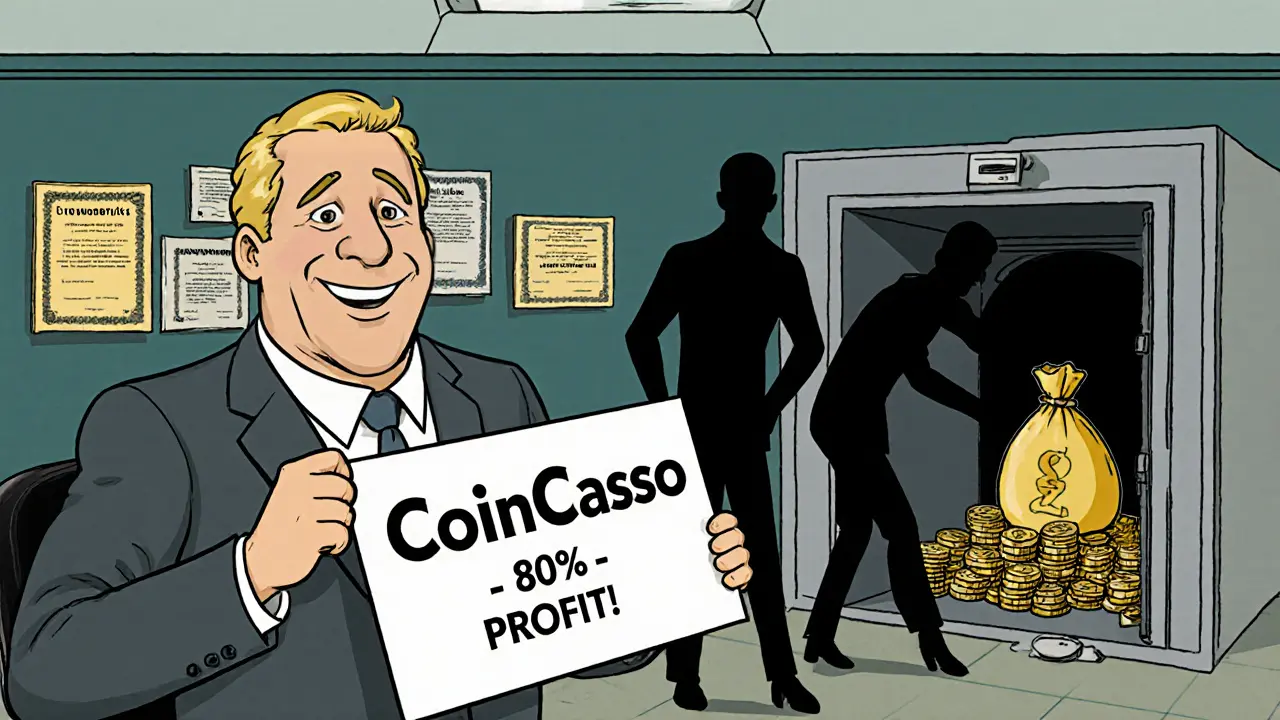
Back in 2019, CoinCasso appeared to be a promising European crypto platform. It offered fiat pairs in EUR and PLN, claimed to support SEPA transfers, and even promised users up to 80% of trading profits. It looked professional. It had a clean interface built on TradingView. It even claimed to have two Estonian licenses. But behind the polished website and multilingual support (English, Polish, Russian, Turkish), the platform was built on sand.
By late 2021, its 24-hour trading volume was just $107,613. That’s less than 0.0002% of Binance’s daily volume at the time. Low liquidity means your trades won’t execute properly. If you tried to sell BTC, the price would crash because no one else was buying. If you tried to withdraw, you’d hit a wall - and that’s exactly what happened to thousands of users.
What Happened to CoinCasso?
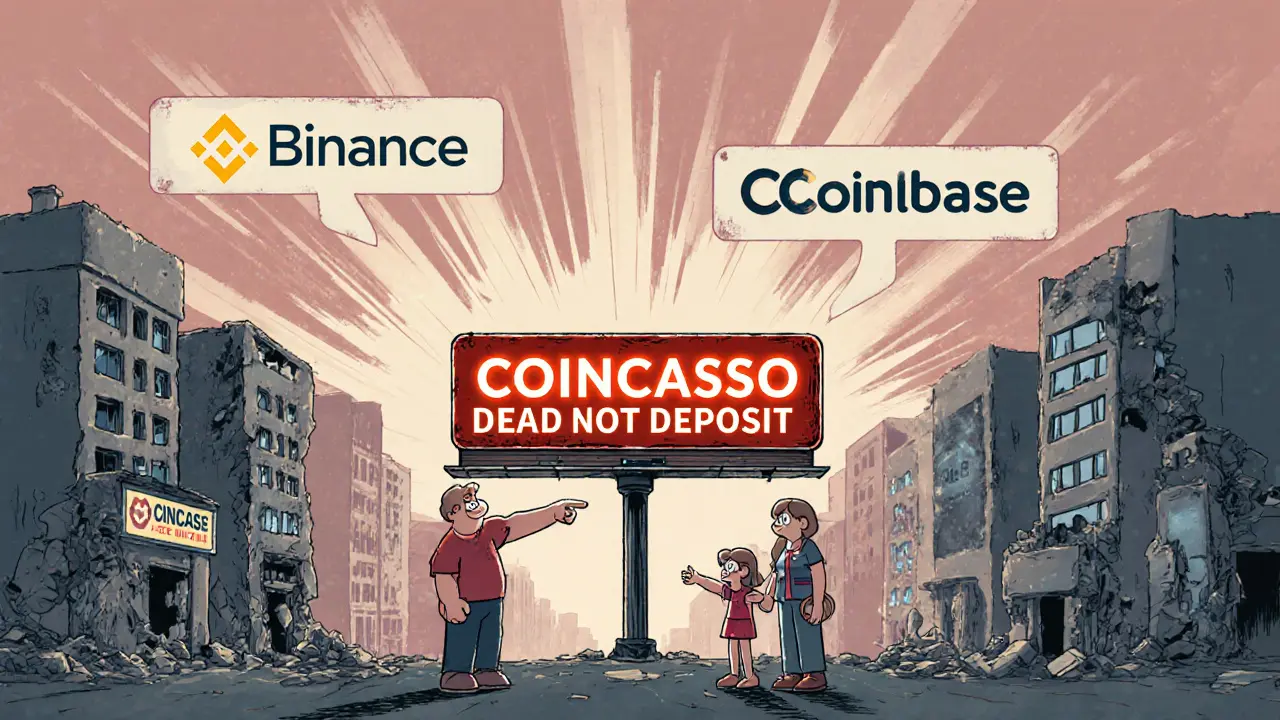
CoinCasso didn’t just fade away. It vanished. In July 2025, Forex Peace Army updated its listing to “Out of business.” Cryptowisser added it to their Exchange Graveyard with a clear label: “Dead.” Cryptolegal.uk included it in their 2025 list of reported scam companies, warning users not to send any funds to it. TradersUnion.com called it a “fraudulent cryptocurrency exchange registered in Lithuania,” despite its Estonian license claims.
The licenses it once held - FRK000282 and FVR000340 - were issued by the Estonian Police and Border Guard Board. But Estonia cracked down hard on crypto exchanges between 2021 and 2022. Hundreds of licenses were revoked for failing compliance checks. CoinCasso was one of them. The platform kept operating illegally after its licenses expired, using old branding to trick new users into depositing funds.
How the Scam Worked
The pattern was classic: attract users with low minimum deposits (as little as 1 PLN or 20 EUR), offer a smooth onboarding process, and then make withdrawals nearly impossible.
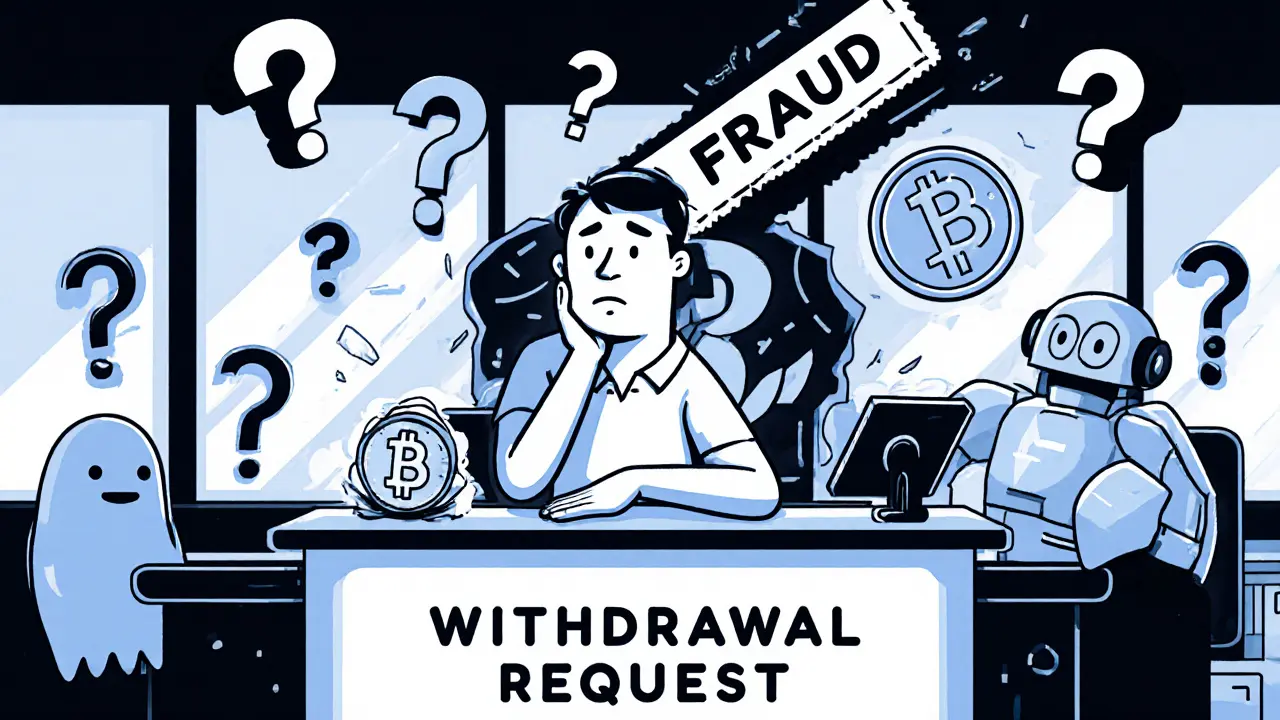
Users who tried to cash out reported being ghosted. Customer service replies were automated, slow, or nonexistent. When users pushed back, they were told to pay “verification fees,” “taxes,” or “compliance deposits” to unlock their funds. That’s not customer support - that’s a pig butchering scam.
BTCC.com issued a blunt warning: “Contacting the CoinCasso customer service is part of the scam. They will feign to work with you, to transfer your crypto out of their wallet or off of their platform.”
Even the few positive reviews on Forex Peace Army - one even gave it 5 stars - are likely fake. They describe it as “the best crypto exchange with EURO currency,” but these reviews appeared right after the platform shut down. That’s not user satisfaction. That’s manipulation.
Trading Features: Too Good to Be True
CoinCasso claimed to offer:
- Spot trading with 50+ crypto pairs
- TradingView-powered charts
- Limit, market, stop-limit, and stop-market orders
- 0.125%-0.25% trading fees (reducible with CCX token)
- Debit cards linked to crypto balances
- Profit-sharing up to 80%
These features sound attractive - until you realize they were all marketing smoke.
Low liquidity made trading impossible. Even if you placed a market order, the price you saw on screen wouldn’t match what you got. Slippage was extreme. The CCX token? It had no real utility. No major exchange listed it. No wallet supported it. It was just a gimmick to make users think they were getting a discount.
The debit card? Never launched. Profit-sharing? Never paid out. The platform showed fake balances and fake transaction histories to keep users hooked.
Security? There Was None
Legit exchanges like Binance, Coinbase, and Kraken store 95%+ of user funds in cold wallets. They use multi-sig, 2FA, and real-time fraud detection.
CoinCasso? No public proof of reserves. No cold storage disclosures. No security audits. No insurance. Just a website that looked professional but operated like a fly-by-night operation.
Even its mobile app claims were misleading. Cryptowisser said it was available on Google Play and App Store - but those apps were either removed or never existed. Users accessed it through their browser, which made phishing easier. Fake login pages copied CoinCasso’s design and stole credentials.
Why People Got Hooked
It wasn’t greed. It was convenience.
For users in Poland, Lithuania, or Estonia, finding a crypto exchange that accepted SEPA transfers was hard in 2020. CoinCasso filled that gap - temporarily. It supported EUR and PLN deposits via bank transfer and debit cards. That made it feel local, trustworthy.
Plus, the interface was clean. No clutter. No confusing menus. For beginners, it looked like a real exchange. That’s how scams thrive: they make the bad look normal.
But normal doesn’t mean safe. A clean website doesn’t fix a broken business model. A responsive chatbot doesn’t replace regulatory oversight.
What to Do If You Used CoinCasso
If you still have funds on CoinCasso - stop trying to withdraw them. Every message you send, every call you make, every payment you make to “unlock” your account is feeding the scam.
There is no recovery service that can get your money back. Companies claiming to help you recover crypto from CoinCasso are just the next stage of the scam. They’ll ask for an upfront fee, then disappear.
Your best move? Report it. File a complaint with your local financial regulator. If you’re in the EU, contact your national financial authority. If you’re in the U.S., file with the FTC. Document everything: screenshots, emails, transaction IDs. Even if you don’t get your money back, your report helps shut down these operations.
Alternatives to CoinCasso
There are dozens of safe, regulated exchanges that actually work. Here are the top alternatives:
- Gate.io - Best overall for low fees and wide coin selection
- Zengo Wallet - Non-custodial, no KYC, built-in security
- Binance - Highest liquidity, 24/7 support, global reach
- Coinbase Exchange - Best for beginners, fully regulated in the U.S. and EU
- UPHOLD - Excellent for fiat-to-crypto, supports 30+ currencies
All of these have real audits, real customer support, and real track records. None of them will ever ask you to pay to withdraw your own money.
Final Verdict
CoinCasso was never a real exchange. It was a scam dressed up as one. It used fake licenses, low liquidity, and emotional manipulation to trap users. It’s gone now - but the damage is done.
If you see anyone promoting CoinCasso today - whether on Reddit, Telegram, or YouTube - walk away. It’s not a platform. It’s a warning.
Never trust a crypto exchange that can’t prove it’s still operating. Never trust one that hides its security practices. And never, ever pay money to get your money back.
Is CoinCasso still operating in 2025?
No, CoinCasso is not operating in 2025. It was officially marked as "dead" by Cryptowisser and listed as "Out of business" by Forex Peace Army in July 2025. All services have been shut down, and the website no longer functions as a trading platform.
Was CoinCasso regulated?
CoinCasso claimed to hold two Estonian licenses (FRK000282 and FVR000340), but these were revoked in 2021-2022 during Estonia’s crackdown on non-compliant crypto exchanges. It continued operating illegally after losing its licenses, making it unregulated and unauthorized by any financial authority.
Can I get my money back from CoinCasso?
It is extremely unlikely you can recover funds from CoinCasso. Any service claiming to help you recover your crypto is likely another scam. The platform’s operators disappeared, and there is no legal mechanism to retrieve funds from a defunct, fraudulent exchange. Your best action is to report the incident to your local financial regulator.
Did CoinCasso have a mobile app?
CoinCasso claimed to have apps on Google Play and the App Store, but these were never verified. Users accessed the platform only through its website, which made it vulnerable to phishing. No official, functional mobile app was ever confirmed by independent sources.
What were CoinCasso’s trading fees?
CoinCasso charged 0.125% to 0.25% for both maker and taker orders. While this seemed competitive, the extremely low trading volume meant slippage was high, making the actual cost of trades much worse than the fee suggested. The CCX token discount was never meaningfully implemented.
Why did CoinCasso fail?
CoinCasso failed because it had no real liquidity, no regulatory compliance, and no sustainable business model. It relied on attracting new deposits to pay old users - a classic Ponzi structure. Once user growth slowed and withdrawals increased, the platform collapsed. It was never designed to last.
Is CoinCasso listed as a scam by official agencies?
Yes. CoinCasso is listed as a scam by Cryptolegal.uk (2025), TradersUnion.com, and Forex Peace Army. It is included in their official databases of fraudulent crypto exchanges and investment schemes. Regulatory bodies in Europe have warned against engaging with it.
10 Comments
CoinCasso was such a classic trap - looks clean, feels legit, then poof. I knew something was off when they asked for a ‘verification fee’ to withdraw $200. Never sent it. Glad someone finally laid it all out like this.
Man, this hits hard. I lost my entire crypto stack to a platform just like this back in 2020. Same fake TradingView charts, same ‘profit-sharing’ nonsense. The worst part? The chatbot kept replying ‘We’re processing your request’ for six months. No one ever responded. I still get flashbacks when I see a new exchange with ‘low minimum deposit’ banners.
Don’t ever let convenience blind you. A pretty UI doesn’t mean they’re not stealing your keys. I wish I’d read this before I deposited.
Now I only use exchanges with public proofs of reserves and real audits. Zengo saved me. No KYC, no BS. Just crypto in my hands. If you’re reading this and still holding funds on some sketchy site - delete the app, screenshot everything, and walk away. No amount of ‘customer service’ is worth your sanity.
Just shared this with my cousin who’s about to invest his tax refund into some ‘new’ exchange. He’s 19, thinks all crypto platforms are like Robinhood. This post is a lifesaver. Thanks for the detailed breakdown - especially the part about fake apps. I didn’t even know that was a thing.
Also, Binance and Coinbase aren’t perfect, but at least if they vanish, I know the SEC will be mad about it. That’s a start.
I can’t believe how many people still fall for this kind of thing. I mean, if a platform doesn’t have a public wallet address they’re using to store funds, or if they don’t have a third-party audit report that’s been published and verified by a reputable firm - you’re not investing, you’re gambling with your life savings. And let’s be honest, the whole ‘80% profit sharing’ thing? That’s not a feature - that’s a red flag painted in neon lights with a siren going off. I’ve seen this script play out a dozen times. The only difference is the branding. CoinCasso, BitKings, CryptoPulse - same playbook. Attract with low barriers, trap with fake liquidity, then vanish when the withdrawals start rolling in. It’s not even clever. It’s just… lazy evil.
And the worst part? The people who wrote those fake 5-star reviews on Forex Peace Army? They probably got paid in crypto that was never real to begin with. I hope someone’s tracking those IP addresses and email domains - because if we don’t start exposing the fraudsters behind the fraudsters, this cycle will never end.
Also - no one ever talks about how these platforms target non-English speakers. Polish, Russian, Turkish - all those multilingual interfaces? That’s not inclusion. That’s exploitation. They know those users are less likely to find English-language warnings. It’s predatory.
I’m so glad this post exists. Please, if you’re reading this and you’re thinking of trying a new exchange - Google ‘[exchange name] scam’ before you deposit a single cent. Don’t trust the homepage. Don’t trust the testimonials. Don’t trust the ‘customer service’ chat. Trust the people who’ve been burned. They’re the only ones telling the truth.
There’s a quiet kind of cruelty in these scams. They don’t just steal money - they steal trust. People who lost funds to CoinCasso didn’t just lose crypto. They lost their belief that the system could work for them. I’ve talked to folks who won’t even open a wallet now, terrified of getting burned again. That’s the real cost.
And while we’re at it - let’s not pretend the regulators are doing enough. Estonia revoked licenses in 2021, but CoinCasso kept operating for four more years. That’s not a gap. That’s a failure. If you’re going to claim to regulate crypto, you need to monitor it. Not just slap a revocation notice on a website and call it a day.
Also, the ‘profit-sharing’ lie? That’s the most insidious part. It turns users into promoters. They’re not just depositing - they’re evangelizing. ‘I made 80%!’ they say. And then they disappear. The platform doesn’t need to pay out - it just needs them to keep recruiting.
Thanks for the alternatives. I’ll be sharing Gate.io and Uphold with my local crypto meetup. Knowledge is the only real wallet.
Wow. What a dramatic, overlong, emotionally manipulative sob story. Let me guess - you lost $50 and now you’re writing a 10,000-word eulogy for a platform that barely had 100 users? Get over it. Crypto is wild. If you didn’t do your due diligence, that’s on you. Also, ‘CoinCasso was never safe’? Newsflash: NOTHING in crypto is safe. Even Coinbase got hacked. You think Binance is some angelic institution? They’ve got more shady partnerships than a politician at a fundraiser.
And why are you pushing Zengo? That’s a non-custodial wallet, not an exchange. You’re not helping anyone by conflating terms. You’re just feeding the FUD.
Stop pretending you’re a whistleblower. You’re just another guy trying to build an audience by screaming into the void.
Tom, you’re the reason crypto feels like a dystopian meme. You think calling people naive for trusting a platform with zero transparency is ‘due diligence’? That’s not wisdom - that’s cynicism wrapped in a tinfoil hat. You don’t get to dismiss real harm because you’re too cool to feel anything.
And yeah, Binance got hacked - but they had insurance, they had transparency, and they paid out. CoinCasso? They vanished. No communication. No apology. No refund. That’s not risk. That’s theft. You can’t equate a breach with a Ponzi. One’s a failure. The other’s a crime.
Also - Zengo isn’t an exchange, but it’s a safer way to hold than leaving your keys on a dead platform. You’re arguing semantics while people lose their life savings. Grow up.
Grace is 100% right. Tom, your comment is toxic. You’re not being edgy - you’re enabling predators. This isn’t ‘crypto is risky’ - this is ‘this platform was a criminal operation.’ There’s a difference.
I worked in fintech compliance for five years. CoinCasso’s license numbers? They were real when issued. But they were revoked. The company kept operating. That’s not ‘gray area.’ That’s fraud. Period.
And if you think people who lost money here are just ‘gullible,’ you’ve never been new to crypto. You don’t know what it’s like to see a clean interface, read ‘SEPA supported,’ and think, ‘Finally, something I can trust.’ That’s not stupidity. That’s hope. And these scammers prey on hope.
Stop gaslighting victims. This post saved people. Let it.
I’m not a crypto guy - I just read this because my sister lost $8k to something like this. I cried reading it. Not because I understand the tech - but because I understand the pain. Thank you for writing this. I’m printing it out and giving it to every family member who says ‘I’m gonna try this new app.’
Why do we keep doing this? We know the pattern. We’ve seen it a hundred times. Yet every new wave of people walks right into it like it’s the first time. Maybe the problem isn’t the scammers. Maybe it’s us. We keep building these shiny temples to get-rich-quick dreams and then act shocked when they collapse. CoinCasso didn’t invent this. We did.