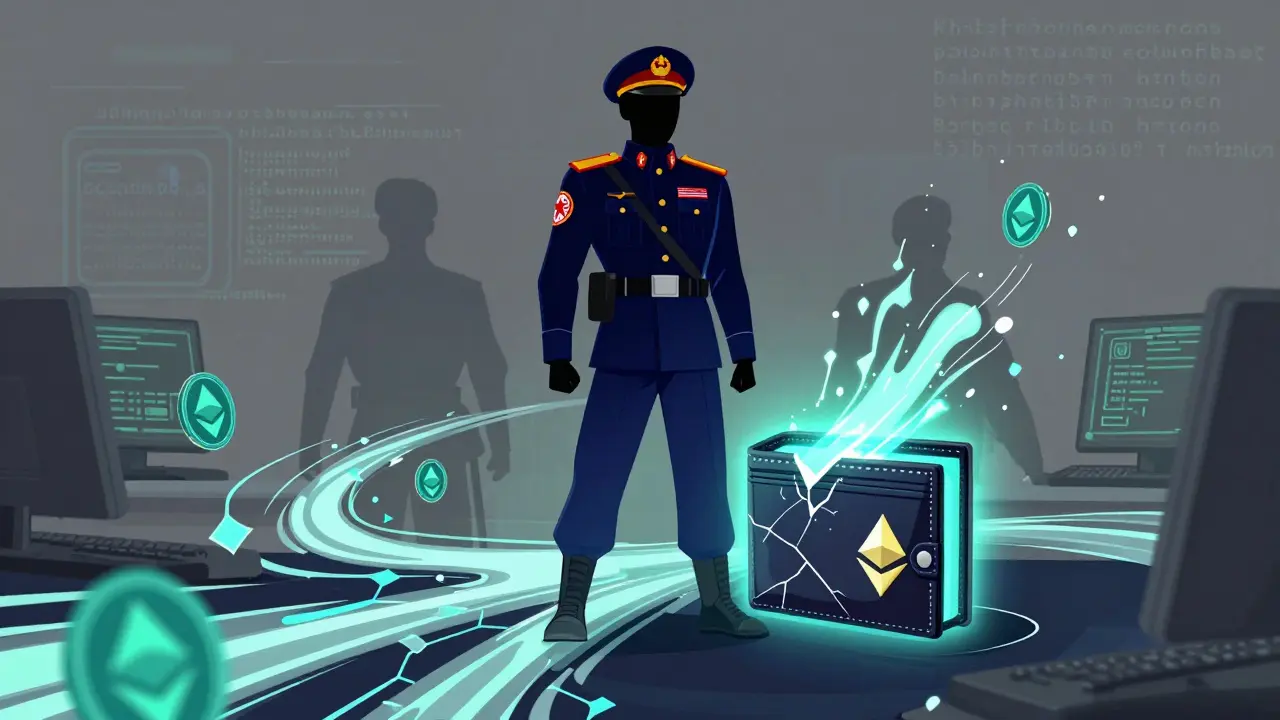
On February 21, 2025, one of the biggest crypto exchanges in the world, Bybit, got hit by the largest cryptocurrency heist in history. Hackers linked to North Korea walked away with $1.5 billion in Ethereum. Not just any hackers-state-sponsored cyber operatives from a secretive unit called TraderTraitor, part of North Korea’s Reconnaissance General Bureau. This wasn’t a random break-in. It was a precision strike on the heart of crypto security: a cold wallet.
How They Broke Into a Cold Wallet
Cold wallets are supposed to be unbreakable. They’re stored offline, disconnected from the internet, shielded from remote attacks. Bybit used multi-signature cold wallets, meaning you needed multiple private keys to move funds. It’s the gold standard. So how did they get in? The answer isn’t simple. Investigators from TRM Labs and the FBI believe one of three things happened: a supply chain attack, an insider leak, or a private key compromise so advanced it bypassed all protections. The hackers didn’t brute-force their way in. They didn’t use phishing emails or malware. They slipped in quietly, maybe through a compromised software update, a trusted employee, or a zero-day exploit in the wallet’s signing system. Once inside, they moved fast. Within minutes, they transferred the entire $1.5 billion out of Bybit’s vaults. The stolen Ethereum didn’t sit still. It flowed through Binance Smart Chain, Solana, and other blockchains, each transfer designed to muddy the trail. By the time the trail cooled, most of it had been converted into Bitcoin-harder to trace, easier to move across borders.The TraderTraitor Unit: North Korea’s Crypto Hit Squad
This wasn’t the first time North Korea stole crypto. In 2024 alone, they pulled off 47 separate thefts totaling $800 million. But TraderTraitor is different. It’s not part of the old-school Lazarus Group that used to spam phishing links. This unit is specialized, well-funded, and focused on one thing: stealing crypto at scale. They’ve been active since at least 2022. Previous targets include JumpCloud, a cloud identity provider, and other software platforms. Their specialty? Supply chain compromises. Instead of attacking the end user, they infect the tools developers use-updates, libraries, APIs-and wait for the vulnerability to spread. It’s like poisoning the water supply instead of breaking into houses. The FBI named this operation “TraderTraitor” to isolate it from other North Korean hacking groups. That’s rare. It means they’re treating this like a national security threat, not just a financial crime.Why Cold Wallets Failed
The biggest shock wasn’t the amount stolen. It was how they stole it. Cold wallets were the last line of defense. If they can be breached, what’s safe? The truth is, cold wallets aren’t magic. They’re only as secure as the people managing them. If a key is ever exposed-even once-during a signature request, or if a hardware device is tampered with during manufacturing, the whole system collapses. Bybit’s setup was strong on paper. But no system is foolproof against a well-resourced, patient state actor. This attack exposed a blind spot: exchanges rely on human processes to manage keys. A single person, under pressure, with the wrong access, can become the weakest link. And North Korea doesn’t need to hack thousands of users. They just need to get one.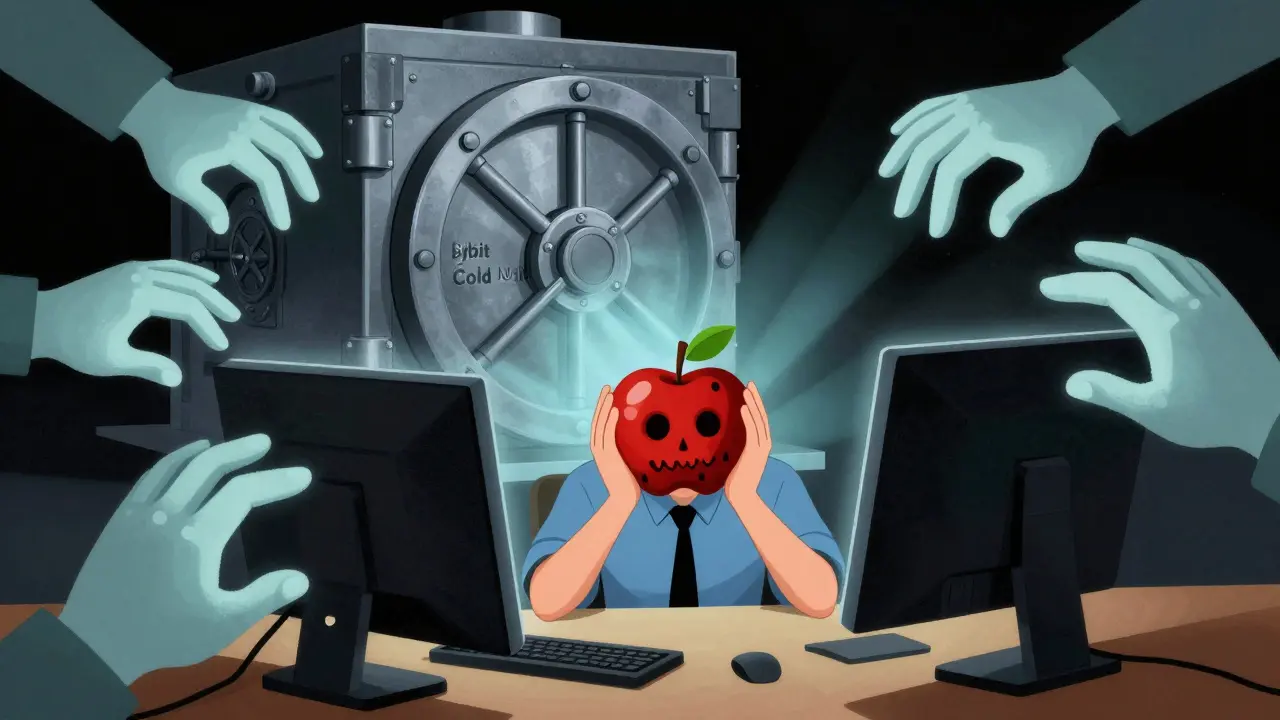
How the Stolen Money Moved
After stealing the Ethereum, the hackers didn’t cash out. They didn’t go to a shady exchange. Instead, they used a flood-the-zone strategy. They split the funds across thousands of addresses. They used cross-chain bridges to move money between Ethereum, Solana, BSC, and others. They mixed transactions with legitimate ones. They sent small amounts to dozens of wallets, then aggregated them later. It wasn’t about hiding-it was about overwhelming. TRM Labs tracked every move and tagged the addresses as “Bybit Exploiter Feb 2025.” They published the list. The FBI asked exchanges, DeFi platforms, and node operators to block transactions from those addresses. Some did. Others didn’t. That’s the problem-there’s no global enforcement. Most of the Bitcoin converted from the stolen Ethereum is still sitting in a few dozen wallets. Not moving. Not spending. Why? They’re waiting. For the right buyer. For a quiet OTC trade. For a time when no one’s watching.Why This Matters Beyond Crypto
This isn’t just about crypto losses. It’s about nuclear weapons. A United Nations report confirmed that North Korea uses cyber theft to fund its military programs. About half of its foreign currency income now comes from hacking. That $1.5 billion? It could buy hundreds of missiles. Or enrich enough uranium for a dozen warheads. The Biden administration called this “a direct threat to global security.” Not “a bad day for Bybit.” Not “a market dip.” A national security crisis. Crypto exchanges are now targets on par with banks, power grids, and defense contractors. And unlike banks, most crypto platforms don’t have federal regulators breathing down their necks. They’re underfunded, understaffed, and overconfident in their tech.What’s Changed Since the Hack
In the weeks after the attack, the crypto world scrambled. - TRM Labs and Chainalysis rolled out real-time monitoring for flagged addresses. - Major exchanges updated their key management protocols, adding mandatory hardware security modules and human approval delays. - The FBI started sharing threat intel directly with private companies-not through slow government channels, but via encrypted, real-time feeds. - Some exchanges began requiring multi-person physical access for any key usage, even for small transfers. But the big question remains: Can you really stop a nation-state that has nothing to lose?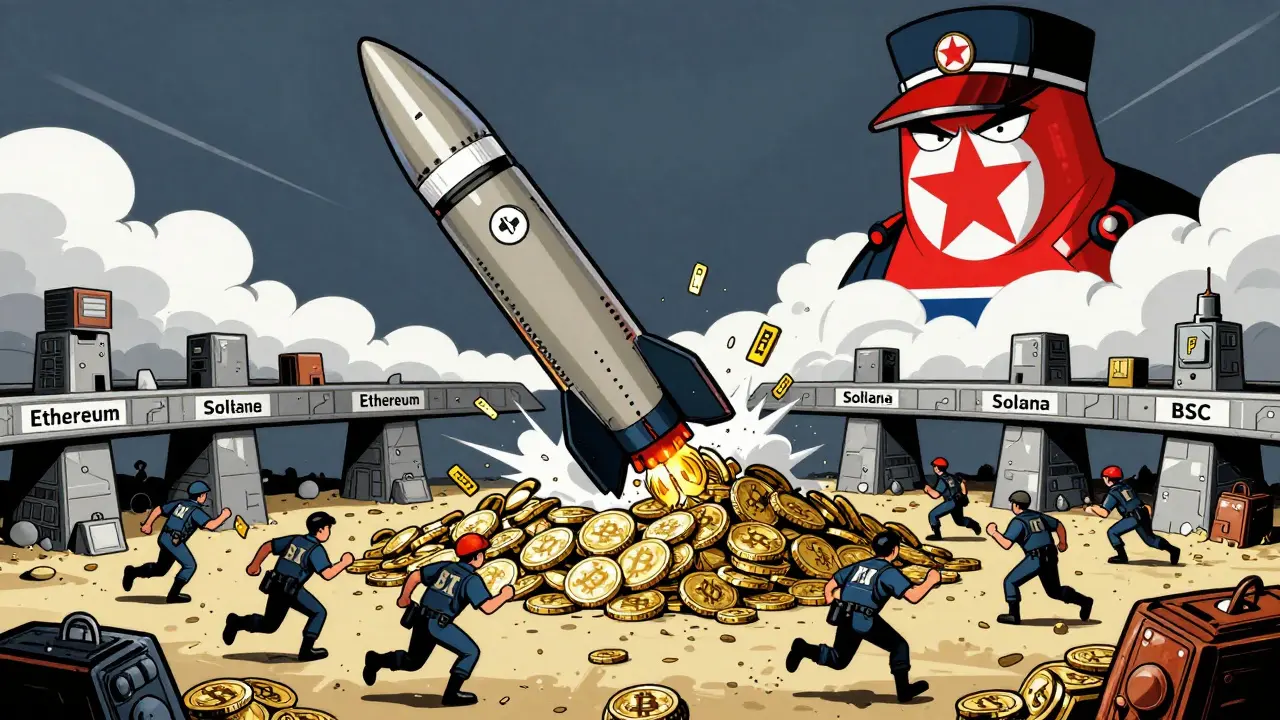
What You Can Do
If you’re a regular crypto user, this hack doesn’t change much. Your small holdings aren’t the target. But if you run a business, manage funds, or work at an exchange, here’s what you need to do:- Never store keys on internet-connected devices-even if they’re encrypted.
- Require at least three human approvals for any large transfer, with physical presence or biometric verification.
- Use hardware security modules (HSMs) that are air-gapped and tamper-resistant.
- Monitor all outbound transactions against public lists of known stolen addresses.
- Train staff to recognize supply chain risks-updates, plugins, third-party APIs are not safe.
5 Comments
This is all nonsense. North Korea didn't steal $1.5 billion-they got played. The real story is that Bybit was using outdated multi-sig protocols with lazy key rotation. Every time an exchange says 'cold wallet' like it's a magic shield, they're lying to you. The FBI's 'TraderTraitor' label? Pure theater. They're just trying to justify their budget. Real crypto security isn't about hardware or approvals-it's about decentralizing trust. If you're relying on a handful of humans to sign transactions, you're already dead.
And don't even get me started on TRM Labs. They're just another Wall Street analytics firm repackaging blockchain data as 'threat intelligence.' The addresses they tagged? Half of them are false positives from legitimate DeFi swaps. They're creating panic to sell more subscriptions. This isn't a national security crisis-it's a marketing scam dressed in military jargon.
One cannot help but reflect upon the profound epistemological rupture that this incident represents within the ontological framework of decentralized finance. The very notion of cryptographic immutability-once hailed as the bedrock of post-national economic sovereignty-has been irrevocably destabilized by the insidious infiltration of state-sponsored actorship into the corporeal substrate of key management infrastructure.
One must ask: if the sanctity of the cold wallet, that most hallowed artifact of digital stewardship, can be breached through a compromised firmware update or an unwitting custodian, then what remains of our faith in blockchain as an apolitical technology? Is it not, in truth, merely a veneer of neutrality over the enduring architecture of human fallibility?
And yet, one cannot ignore the chilling symmetry: the same nation that weaponizes famine and missile technology now weaponizes entropy. The $1.5 billion, converted into Bitcoin, may well be the atomic weight of a new Cold War-where the currency of destruction is no longer uranium, but untraceable UTXOs.
It is not merely a heist. It is a metaphysical betrayal of the digital covenant.
I’ve been thinking about this nonstop since it broke, and I keep coming back to how heartbreaking it is that the most secure systems in crypto aren’t broken by code-they’re broken by care. Someone, somewhere, clicked ‘update’ without verifying the signature. Someone let a vendor’s API slip through without audit. Someone was tired, or overworked, or just didn’t know better.
This isn’t about North Korea being unstoppable. It’s about us failing each other. We built this whole ecosystem on trustless tech, but we still rely on trustless humans to manage it. And when one person slips, the whole house of cards trembles.
I’ve worked in fintech for over a decade, and I’ve seen this pattern over and over: the more complex the security, the more fragile the human layer becomes. We add layers of HSMs, multi-sig, biometrics-but we never build in compassion. We never train people to say ‘no’ when they’re pressured. We never create psychological safety to pause and ask, ‘Is this right?’
Maybe the real solution isn’t better tech. Maybe it’s better culture. Maybe we need to treat key custodians like surgeons, not clerks. And maybe, just maybe, we need to stop glorifying speed and efficiency and start honoring slowness, doubt, and deliberate silence.
I know it sounds naive. But if we don’t start treating people as part of the system-not just the weak link-we’re going to keep losing billions to the same mistake, over and over again.
Okay, I know everyone’s freaking out about North Korea and nukes and all that, but honestly? I’m just glad I don’t keep my crypto on an exchange. I moved everything to a Ledger years ago after the Mt. Gox thing, and I’ve never looked back. I mean, yeah, I get that this was a supply chain attack, but if you’re not managing your own keys, you’re just renting crypto, not owning it.
I know it sounds like a pain to set up, but honestly, once you get the hang of it, it’s kinda peaceful. I write my seed phrase on paper, lock it in a fireproof box, and forget about it. No updates, no hacks, no anxiety. I don’t even check the price that often anymore. It’s weird, but I feel way more in control now.
And if you’re a business or a fund manager? Please, please, please stop outsourcing your security to some third-party service that promises ‘enterprise-grade’ but doesn’t even do basic audits. I’ve seen so many companies get owned because they thought ‘we’re too small to be targeted.’ Spoiler: you’re not. They target the low-hanging fruit. Be the fruit that’s hanging too high.
Just… take a breath. You’ve got this. You don’t need to be a hacker. You just need to be careful. And patient. And a little bit stubborn.
I believe in you. We’ve got this.
There’s a deeper truth here that nobody wants to admit: the blockchain doesn’t care who owns the keys. It only cares that they’re used. The moment you introduce human judgment into a system designed to eliminate it, you introduce chaos.
North Korea didn’t hack the wallet-they exploited the contradiction at the heart of crypto: we want decentralization, but we still need someone to press the button. We want autonomy, but we’re terrified of responsibility. So we outsource it to ‘experts,’ who then become the new gatekeepers.
This isn’t a failure of technology. It’s a failure of philosophy. We built a system that promises freedom, then gave the keys to bureaucrats with compliance checklists. And now we’re shocked when the system collapses under the weight of its own hypocrisy.
The solution isn’t more hardware. It’s less faith in authority. The real security isn’t in HSMs or multi-sig-it’s in radical personal accountability. Own your keys. Know your risks. Don’t outsource your sovereignty.
Otherwise, you’re not a crypto user-you’re a tenant in someone else’s digital empire.