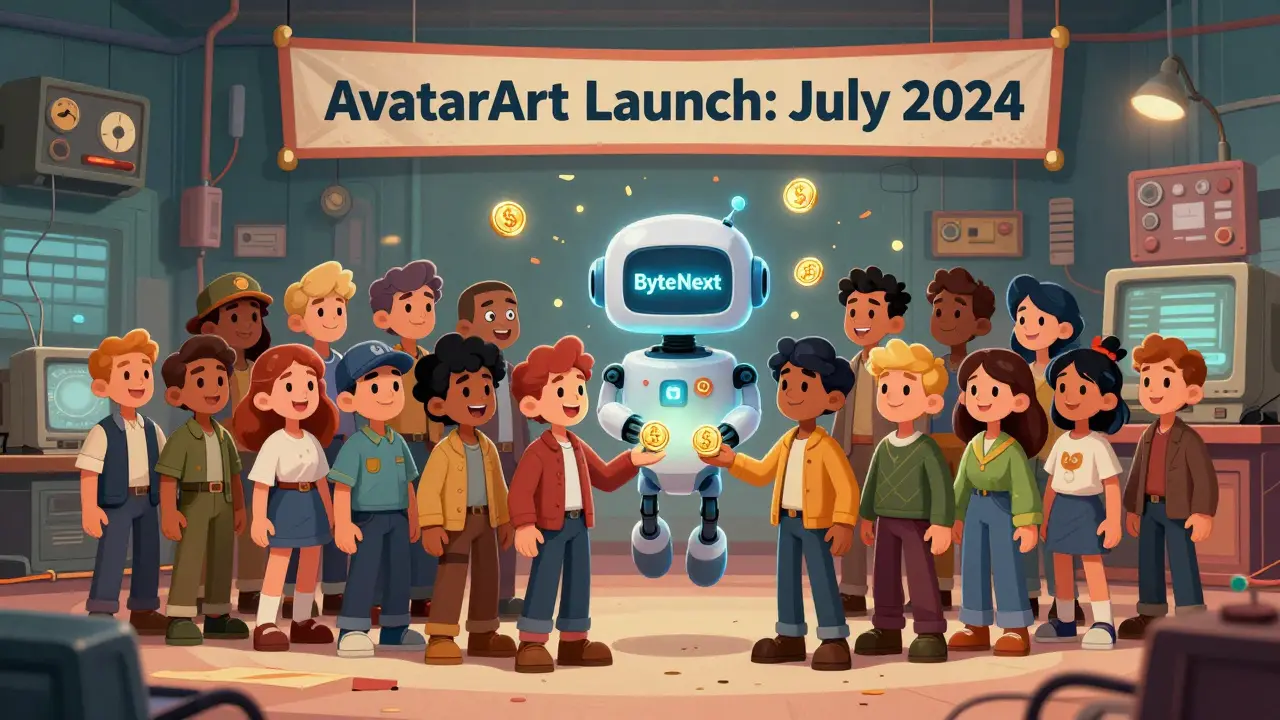
The BNU airdrop by ByteNext was never meant to make people rich. It was meant to build a community. In July 2024, ByteNext handed out 25,000 $BNU tokens to 1,000 people who followed their rules. Each winner got exactly 25 tokens. That’s it. No more. No future drops. And today, those tokens are worth less than a cup of coffee.
What Was the ByteNext Airdrop?
ByteNext launched the $BNU token as the backbone of AvatarArt - a decentralized NFT marketplace built on Binance Smart Chain. The goal? Let artists sell their digital art without middlemen. No galleries. No commissions. Just direct sales powered by blockchain. To kickstart adoption, they ran a single airdrop campaign from July 3 to July 8, 2024. It wasn’t open to everyone. You had to complete five steps:- Add $BNU to your CoinMarketCap watchlist
- Follow both @Bytenextio and @zeusc_ventures on Twitter
- Join the official Telegram group and announcement channel
- Retweet the campaign post and tag at least five people
- Have a Binance Smart Chain (BSC) wallet ready
What Is $BNU Actually Used For?
The token wasn’t just a giveaway. ByteNext designed $BNU to do real work inside AvatarArt:- Pay fees - Every time someone listed or bought an NFT, they paid a small fee in $BNU
- Buy ad space - Artists could spend $BNU to promote their work in virtual 3D galleries
- Author royalties - When an NFT was resold, $BNU was automatically sent to the original creator
- Stake and farm - Users could lock $BNU and NFTs together to earn more tokens
- Vote on art - The community used $BNU to vote on featured pieces
- Governance - Token holders could propose and vote on platform changes
Why Did It All Stall?
Here’s the hard truth: the airdrop worked. People got tokens. But the platform didn’t. Today, $BNU trades at $0.000540. That’s down 99.9% from its all-time high. Trading volume? Less than $10 in 24 hours across all exchanges. Coinbase shows $6.36. Binance shows $0. CoinGecko says trading stopped entirely on all listed platforms 15 days before this writing. Why? Three reasons:- No users - The AvatarArt marketplace never gained traction. Artists didn’t migrate. Buyers didn’t show up.
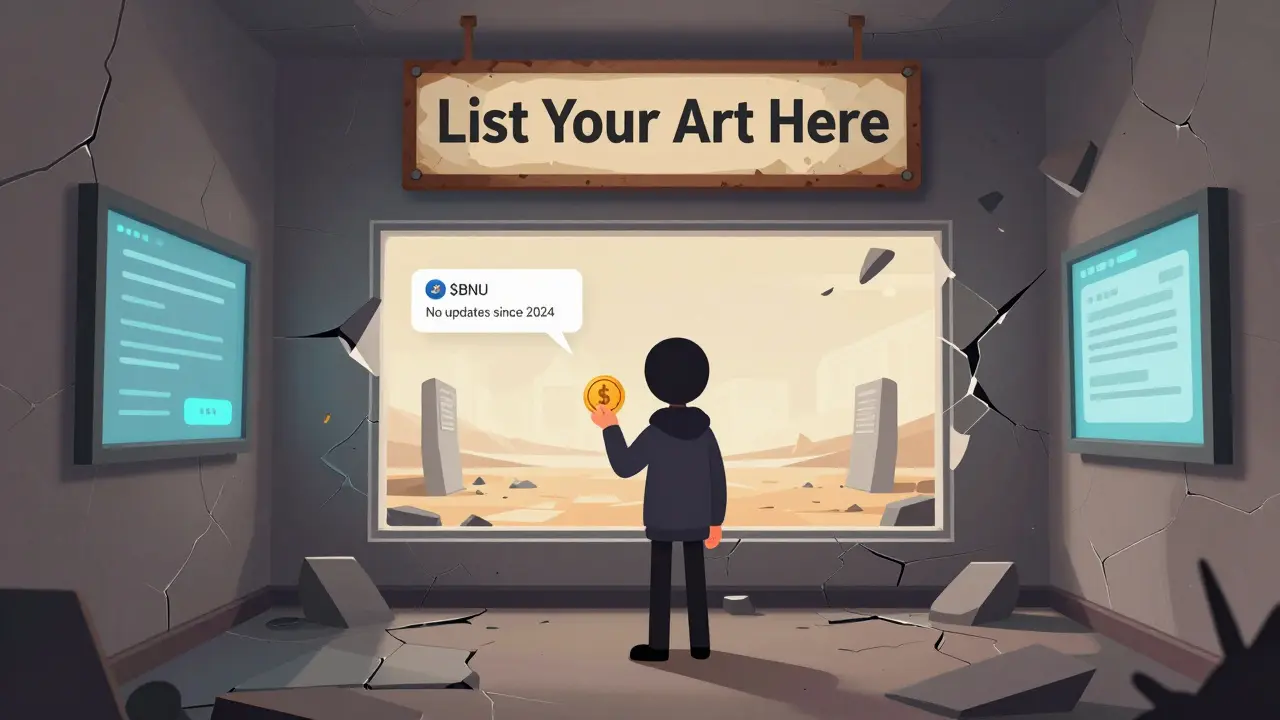
- No updates - The GitHub repo hasn’t been touched since 2024. The Twitter account posts once a month. The website is static.
- No liquidity - Exchanges delisted $BNU because no one was trading it. Without buyers, sellers leave. Without sellers, buyers don’t come.
Who Got the Tokens? And What Happened to Them?
About 1,000 people got 25 $BNU each. That’s $0.0135 per person at today’s price. Some might’ve sold immediately. Others held on, hoping for a comeback. But here’s what’s telling: no one’s talking about it. No Reddit threads. No Twitter threads. No Telegram groups still active. The Telegram channel has 1,200 members - but only 3 posts in the last six months. If you still have those tokens, they’re not worthless. But they’re not liquid. You can’t sell them. No exchange will take them. You can’t swap them on Uniswap or PancakeSwap because there’s no trading pair.Was It a Scam?
No. Not technically. ByteNext didn’t take money. They didn’t promise returns. They didn’t fake team members. The airdrop was transparent. The rules were clear. The token contract is on BSC. You can verify it. But it was a failed project. And that’s different from a scam. A scam is intentional fraud. A failure is just… no one showed up. Many NFT projects launched in 2021-2023 with airdrops like this. Most died. A few survived because they kept building. ByteNext didn’t.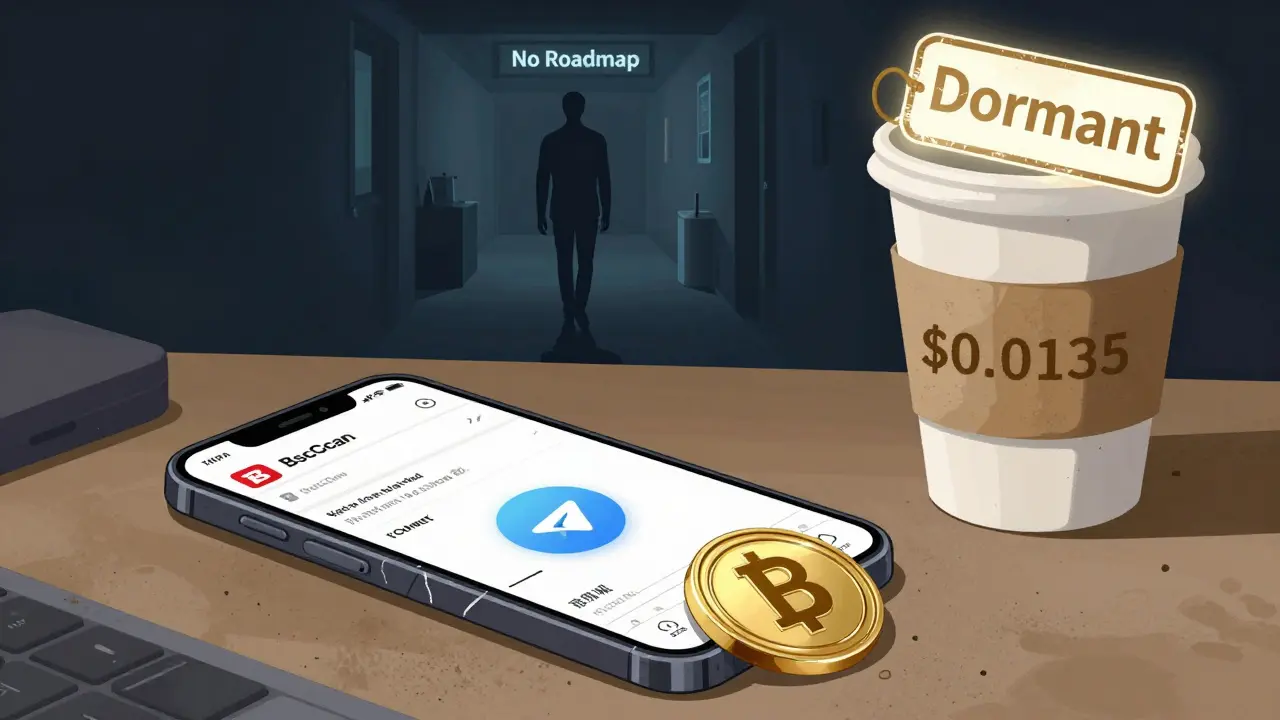
What Can You Learn From This?
If you’re thinking about joining the next airdrop, ask yourself:- Is this team active? Check GitHub. Check Twitter. Check Telegram. Are they posting daily? Or just when they need to promote?
- Does the token have real utility? Or is it just a “governance” token with no voting power?
- Is there any trading volume? If it’s not on at least two major exchanges, that’s a red flag.
- Are they building a product - or just collecting emails and wallets?
Is There Any Future for $BNU?
Technically, yes. The contract still exists. The token still works. If someone revived AvatarArt tomorrow - hired developers, brought in artists, built real marketing - $BNU could come back. But that’s not happening. Not now. Not in 2026. The project is dormant. The team is silent. The market is dead. If you still hold $BNU, treat it like a collectible. Not an investment. A digital souvenir from a project that tried - and faded.Was the ByteNext BNU airdrop legitimate?
Yes, it was legitimate. The campaign ran through CoinMarketCap with clear rules. Participants had to complete verifiable tasks. Tokens were distributed on-chain to BSC wallets. There was no evidence of fraud or stolen funds. But legitimacy doesn’t mean success - the project stopped developing after the airdrop.
Can I still claim BNU tokens from the airdrop?
No. The airdrop ended on July 30, 2024. Only the 1,000 verified winners received tokens. No new claims are being accepted. The campaign is permanently closed.
What is the current price of $BNU?
As of March 2026, $BNU trades at approximately $0.000540. Trading volume is near zero. It is no longer listed on major exchanges like Binance or Coinbase. Prices are only visible on obscure aggregators and may not reflect real trading.
Can I use $BNU on the AvatarArt marketplace?
No. The AvatarArt platform has been inactive since late 2024. The website is live but non-functional. No new NFTs have been listed. No transactions have occurred. The marketplace is effectively shut down.
Is there a chance $BNU will recover?
Unlikely. For $BNU to recover, the entire ByteNext team would need to restart development, relaunch the platform, attract artists and buyers, and get listed on exchanges again. There is no public sign of any of this happening. The project has been inactive for over a year.
Where can I check my BNU tokens?
You can check your $BNU balance using any BSC-compatible wallet like MetaMask or Trust Wallet. Enter your wallet address on BscScan.com and search for the $BNU token contract: 0x7b8a1c9e3e9a4f7b8d9e4c1d5a8b6f3e2d1c0b4a. You’ll see your holdings if you participated in the airdrop.
Why was Binance Smart Chain used for this airdrop?
Binance Smart Chain (BSC) was chosen because it offers low transaction fees and fast confirmations - ideal for an NFT marketplace. It also has a large existing user base of crypto holders. The $BNU token is an ERC-20 style token built on BSC, not Ethereum, making it cheaper and easier for users to interact with the platform.
9 Comments
I still have my 25 BNU tokens in my MetaMask. Honestly didn't expect much but it's kinda neat to have a digital artifact from when crypto still felt like a community experiment. Not worth anything now but I keep it like a museum piece. No regrets. Just a reminder that good intentions don't always mean sustainable outcomes.
Also weird how the contract is still live but no one touches it. Like a ghost town with the lights still on.
This is why you dont trust airdrops. People think its free money but its just a marketing stunt to pump a project that has zero substance. ByteNext didnt scam anyone but they sure as hell wasted peoples time. If you dont have a working product in 3 months after an airdrop you arent building you are just collecting wallets. And now look at it. Dead. Every single one of these projects dies the same way.
There's a quiet tragedy here. Not in the token price. Not in the lost money. But in the silence. The absence of noise is the loudest failure. We live in a world where every project screams for attention - but the ones that matter? They whisper. And if no one leans in? They vanish. This wasn't a scam. It was a poem nobody read. And now the page is blank. No one wrote the next verse. No one showed up to the gallery. The art was real. The hands that made it? They waited. And waited. And waited.
That's the real loss.
LMAO. People still have these tokens? Bro. They're not even on PancakeSwap. You can't swap them. You can't sell them. You can't even burn them because there's no liquidity pool. This isn't a collectible. It's a digital ghost. A blockchain tombstone. And you're keeping it like it's a lucky charm? Get real. If you want to preserve digital history, mint it as an NFT. Don't hoard a token with zero utility. That's not wisdom. That's hoarding trauma.
Also the fact that CoinGecko says trading stopped 15 days before this writing? That's the funeral announcement. They didn't even bother to update the ticker.
I read the whole thing. Took me 12 minutes. Then I just sat there. Didn't say anything. Didn't comment. Didn't even sigh out loud. Just stared at the screen. Wondering if I'm the only one who feels like we're all just collecting digital dust now. Every airdrop feels like a funeral we're forced to attend. We show up. We nod. We say we're sorry. And then we go home and forget the name of the person who died.
Maybe that's the point.
I find it deeply unsettling how we romanticize failure in Web3. We call it 'a learning experience' or 'a community experiment' as if the 1,000 people who spent hours completing tasks were just participants in a sociology study. But they weren't. They were real people. They had wallets. They had time. They had hope. And now? Their wallets hold tokens that can't be moved. That's not a lesson. That's a wound. And we keep bandaging it with buzzwords like 'decentralization' and 'trustless systems' while ignoring the human cost of silence.
They didn't fail because of bad luck. They failed because no one cared enough to say 'I'm still here.'
Honestly? I'm glad I got the tokens. Even if they're worth less than a coffee, I got to be part of something that tried. That's more than most projects give you. Keep your money. Keep your skepticism. But don't forget that sometimes the point isn't the return. It's the spark. And yeah, the fire went out. But maybe someone else will find the ashes one day and build something better from them.
I'm from India and I remember when I first heard about this. I thought, wow, maybe this is how artists here can finally get paid without middlemen. I did all the steps. Got my tokens. Waited. But nothing happened. No updates. No new features. Just silence. It made me sad. Not because I lost money - I didn't expect any - but because I believed, for a second, that this could change things for people like me. Now I just check the contract every now and then. Like a quiet prayer. Hoping. Not for value. But for someone to say: 'We didn't forget.'
From a protocol governance standpoint, this is a textbook case of tokenomics without operational alignment. The utility functions were well-architected - fee capture, royalty enforcement, staking incentives, governance mechanics - all syntactically valid. But the critical failure was the absence of emergent network effects. No liquidity pool formation, no DEX pairing, no on-chain activity beyond initial distribution. The token was a solution in search of a problem that never materialized. The real lesson? Token design alone cannot compensate for product-market fit. Without active user engagement, even the most elegantly constructed economic model becomes a static artifact. This isn't a failure of blockchain. It's a failure of adoption architecture.