
Imagine casting your vote from your phone, knowing it’s recorded on an unbreakable digital ledger. Sounds secure, right? That’s the promise of blockchain voting. But behind the hype lies a growing consensus among cybersecurity experts: blockchain voting is not a solution to election integrity-it’s a new kind of threat.
How Blockchain Voting Actually Works
Blockchain voting systems claim to improve democracy by using distributed ledgers to record votes. Unlike traditional electronic voting, which stores ballots on centralized servers, blockchain distributes vote data across hundreds or thousands of computers. Each vote becomes a transaction, cryptographically signed and permanently added to a chain of records. Supporters say this makes tampering impossible.Here’s how it typically works:
- A voter logs in using a government-issued digital ID or biometric verification.
- Their ballot is encrypted and sent to a blockchain network.
- Nodes on the network validate the vote using public-key cryptography.
- The vote is added to a block, timestamped, and linked to previous blocks.
- After election day, anyone can verify the total count by checking the public ledger.
Companies like Voatz is a mobile voting platform that uses blockchain to record votes from smartphones and Simple Proof is a system that anchors election results to the Bitcoin blockchain for tamper-proof timestamping have tested this in real elections. But here’s the catch: most of these systems don’t actually vote on the blockchain. They use it to log results after votes are counted the old-fashioned way.
The False Promise of Immutability
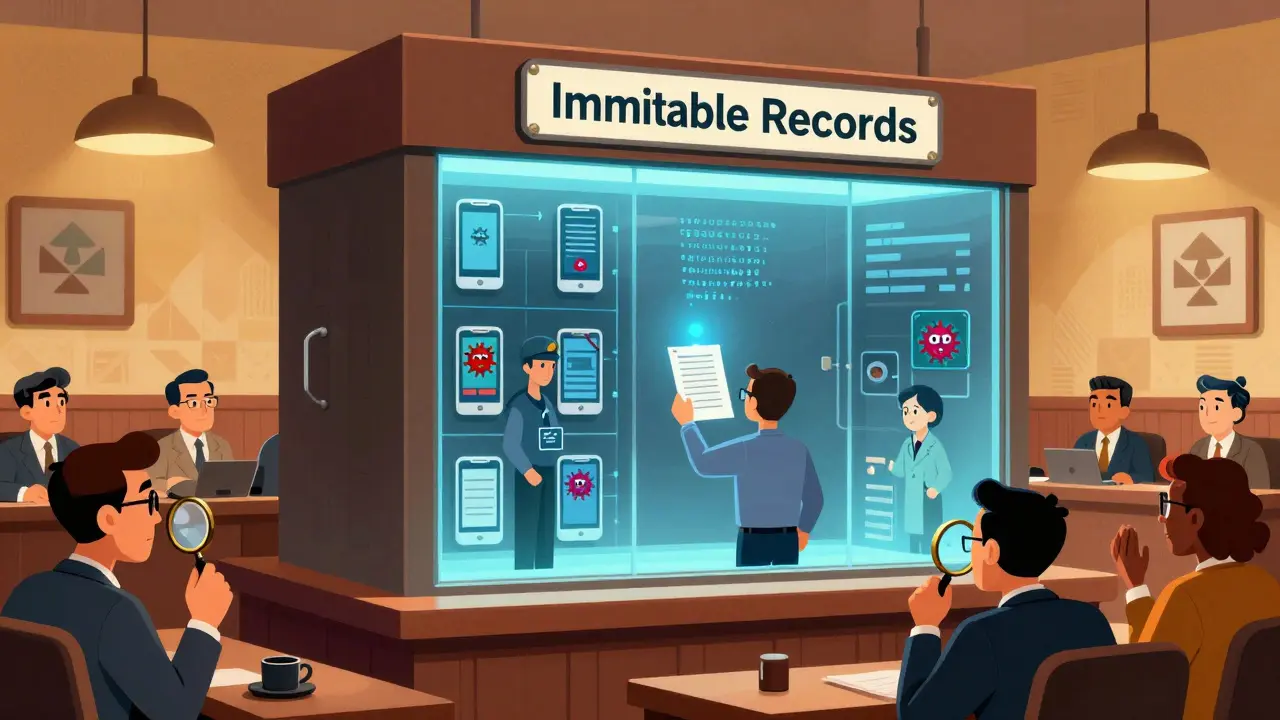
One of the biggest selling points of blockchain is its immutability-once a vote is recorded, it can’t be changed. That sounds perfect for elections. But immutability doesn’t stop a vote from being altered before it’s recorded.Think of it like a bank vault with a glass door. The vault itself is unbreakable, but if someone steals your key or tricks you into handing over your access code, they can walk right in. In blockchain voting, the attack surface isn’t the ledger-it’s the device you’re using to vote.
Here’s what can go wrong:
- A malware-infected phone can change your vote before it’s sent.
- A compromised app can prevent your vote from being submitted at all.
- A hacker can intercept your encrypted ballot and replace it with another.
- Remote voting means no physical oversight-no poll workers, no ballot boxes, no audit trails before submission.
The U.S. Vote Foundation is a nonprofit organization that advocates for secure and accessible voting systems calls this the "silent attack" problem. If your vote is changed or blocked without your knowledge, there’s no way to detect it. No one notices. No recount helps. The damage is permanent.
Privacy Isn’t Protected-It’s Exposed
Blockchain is often marketed as anonymous. But anonymity and privacy are not the same thing.In a blockchain voting system, every vote is publicly visible on a ledger. Even if your name isn’t attached, your vote ID, timestamp, and choice are all recorded. Combine that with other data-your IP address, device fingerprint, voting location-and you can be uniquely identified.
Imagine this: a landlord, employer, or political group checks the blockchain and sees that you voted for a certain candidate. Then they pressure you. Threaten to raise rent. Fire you. Harass your family. This isn’t theoretical. In countries like Russia and Iran, state actors already use digital surveillance to control political behavior. Introducing blockchain voting in the U.S. opens the door to the same tactics.
The Journal of Cybersecurity is a peer-reviewed academic journal that published a 2020 study on internet-based voting risks found that blockchain voting increases the risk of mass voter suppression and coercion. Unlike paper ballots, where your choice is hidden behind a curtain, blockchain makes your vote traceable. And once it’s traceable, it’s vulnerable to coercion.
Who’s Really Behind This?
Blockchain voting isn’t being pushed by election officials. It’s being pushed by tech startups, venture capitalists, and political groups with ties to digital asset markets.Take Screven County, Georgia is the first U.S. county to use the Bitcoin blockchain to timestamp election results in 2024. They didn’t vote on blockchain. They used it to create a public, unchangeable record of their final vote totals. That’s a completely different-and far safer-use case.
Meanwhile, companies like Polyas is a European provider of blockchain-based voting systems compliant with German election law and Luxoft is a firm offering blockchain solutions for corporate and government elections are building systems that meet strict legal standards. But even in Europe, these systems are limited to small-scale elections-university votes, union ballots, corporate shareholder meetings. Not national elections.
Why? Because experts know the risks. The National Association of Secretaries of State is a U.S. organization that advises state election officials on voting procedures warned in a 2025 white paper that blockchain audit portals could expose voter choices if not perfectly secured. One mistake-and your vote becomes public.
The User Trust Gap
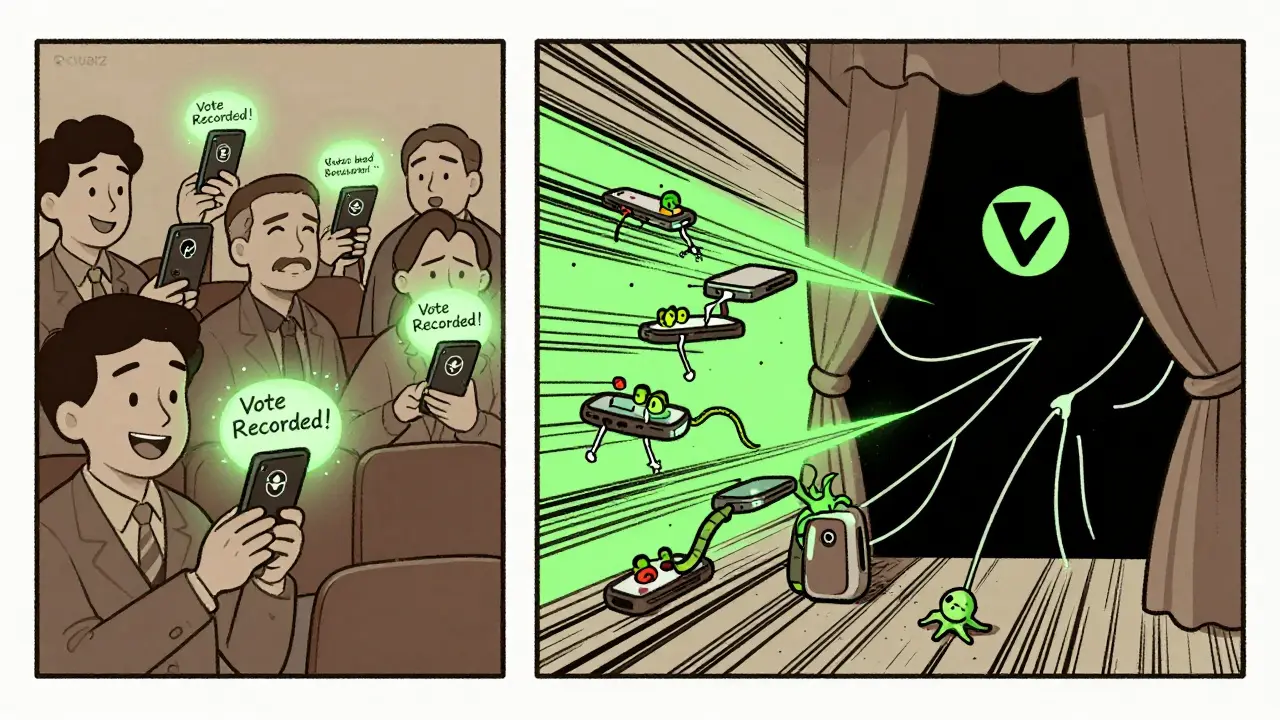
Here’s the twist: voters love blockchain voting.A 2025 Gallup is a global analytics and advisory firm that conducts public opinion surveys poll found that 78% of voters who used blockchain systems felt more confident their vote was counted correctly. 76% said they trusted the system more than traditional e-voting. 91% preferred it over older digital methods.
That’s understandable. When you see your vote appear on a public ledger, it feels transparent. It feels secure. But trust doesn’t equal safety. A child trusts a stranger who gives them candy. That doesn’t mean the stranger is safe.
Experts say this trust is built on misunderstanding. Voters think the blockchain is protecting their vote. In reality, it’s just recording it. The real vulnerabilities happen before the vote even reaches the chain.
The Real Solution Isn’t Blockchain
The best way to protect elections isn’t to reinvent the wheel. It’s to strengthen what already works.- Use paper ballots with optical scanners.
- Require manual audits of a statistically significant sample of ballots.
- Train poll workers to spot tampering.
- Secure voter registration databases with multi-factor authentication.
- Use end-to-end verifiable systems that let voters confirm their vote was counted-without exposing it.
These methods have been proven in dozens of countries. They’re low-tech, high-trust, and audit-ready. They don’t need a blockchain. They don’t need a smartphone. They just need accountability.
Blockchain voting distracts from these real fixes. It makes people think we’re solving security problems when we’re actually creating new ones.
What’s Next?
Some states, like Wyoming, are exploring blockchain as a way to verify election results-not cast votes. That’s smart. It adds transparency without opening the door to attacks.But full blockchain voting? It’s a gamble with democracy. And the stakes are too high.
The technology might work someday-if we solve the device security problem, the privacy problem, and the coercion problem. But right now? We don’t have those solutions. And we shouldn’t risk our elections waiting for them.
Can blockchain voting prevent election fraud?
No. Blockchain doesn’t stop fraud-it just moves it. Most fraud happens before the vote is recorded: through hacked devices, fake identities, or malware that changes votes silently. The blockchain records what’s given to it, whether it’s real or altered. It doesn’t verify the source.
Why do some people trust blockchain voting more than paper ballots?
Because blockchain makes the voting process feel visible and transparent. Voters see their vote appear on a public ledger and assume that means it’s secure. But visibility doesn’t equal safety. Paper ballots are private and verifiable through physical audits, which experts consider more reliable than digital logs.
Has blockchain voting ever been hacked?
There haven’t been public reports of a full-scale hack in a national election-but that’s because it hasn’t been widely used yet. In pilot programs, researchers have demonstrated how easily malware can alter votes on smartphones. In 2023, a team at MIT successfully manipulated votes in a Voatz test by exploiting app vulnerabilities. The system didn’t detect the tampering.
Is blockchain voting legal in the U.S.?
It’s not banned, but most states don’t allow it for general elections. A few counties, like Screven County in Georgia, use blockchain only to timestamp final results-not to collect votes. Federal election laws require paper trails and manual audits, which most blockchain voting systems don’t provide.
What’s the difference between blockchain voting and vote auditing with blockchain?
Blockchain voting records each individual vote on the chain. Blockchain auditing only records the final totals or checksums after votes are counted traditionally. The latter is much safer because it doesn’t expose individual votes or require voters to use vulnerable devices. Simple Proof and similar systems use this approach.
Should I support blockchain voting if I want more accessible elections?
Accessibility matters, but not at the cost of security. Better solutions exist: mail-in ballots, early voting centers, curbside voting, and voter assistance programs. These are proven, secure, and inclusive. Blockchain voting adds risk without solving the real barriers to voting.
5 Comments
i just think about how many people don't have access to smartphones or reliable wifi, and now we're supposed to trust a blockchain system with their vote? 🤔
it's not just about tech-it's about equity. paper ballots don't discriminate. they don't need a password or a firmware update. they just... exist. and if something goes wrong? you can see it. hold it. feel it. that's real democracy.
also, can we talk about how weird it is that people trust a digital ledger more than a human poll worker? like... we're the ones who made the system, right? why do we think code is more honest than people?
also also-emoji time: 🗳️❤️🔒
u guys are so naive its pathetic. blockchain is the future and u wanna go back to paper like its 1890? lol
if u cant handle tech then stay off the internet and let real people run things. u think paper is safe? ever heard of ballot stuffing? gerrymandering? fake registrations? blockchain stops all that. u just dont want to admit u dont understand it. its not complicated. its math. and math dont lie.
also u scared of being tracked? then dont vote for the wrong people. problem solved. simple.
the core issue here is attack surface expansion
blockchain doesn't fix the endpoint vulnerability
it shifts trust from institutional auditability to cryptographic immutability
which is fine if the device is airgapped and zero-day free
but in the real world? your phone is a pwned honeypot
and the blockchain just logs what the malware tells it to
so you get perfect audit trails of false data
which is worse than no audit at all
It's rather telling, isn't it, how the most vocal proponents of blockchain voting are those who stand to monetize the infrastructure? Venture capital doesn't fund democracy-it funds exit strategies.
Meanwhile, the very same people who champion decentralization recoil at the idea of decentralized oversight. How convenient.
The romanticization of immutability ignores the foundational principle of democratic systems: fallibility is a feature, not a bug. A recount isn't a failure-it's a safeguard. A paper trail isn't archaic-it's accountability.
And yet, here we are, outsourcing the soul of civic participation to a ledger maintained by engineers who can't even secure their own crypto wallets.
theyre using blockchain to timestamp results but claiming its for voting? thats a smokescreen.
if you look at the patents filed by voatz and polyas youll see theyre all designed to bypass federal audit requirements.
the real goal? replace human-verified paper trails with opaque digital receipts that cant be independently verified.
and dont get me started on the biometric data collection-this is how they build voter profiles for microtargeting.
its not about efficiency. its about control.
and if you think the government wouldnt use this to suppress votes? youve been watching too many sitcoms.