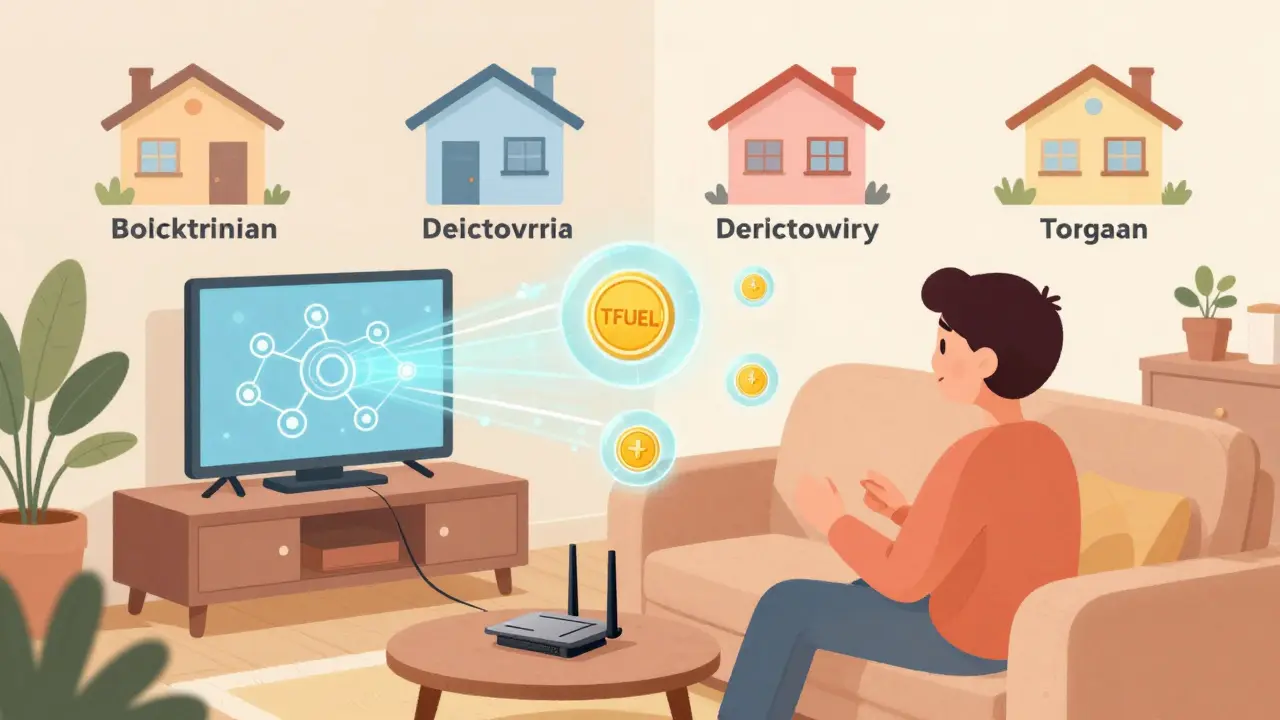
Traditional streaming platforms like YouTube, Twitch, and Spotify take a huge cut of creator earnings-often 30% or more. They control what gets promoted, how much you earn per stream, and even when your content gets taken down. Meanwhile, the cost of delivering video to millions of viewers eats up 20-30% of their revenue, thanks to expensive content delivery networks (CDNs). Blockchain streaming platforms are flipping this model. Instead of relying on big corporations to host and distribute content, they let everyday users share their bandwidth and storage to deliver videos, music, and live streams-and get paid in cryptocurrency for doing it.
How Blockchain Streaming Actually Works
Think of it like a shared Wi-Fi network, but for video. On platforms like Theta Network and Livepeer, your home internet connection and unused hard drive space become part of a global delivery system. When someone watches a stream, the video doesn’t come from a single server in a data center-it comes from other users nearby who are caching it. This cuts down on long-distance data transfers, which are slow and expensive. In return, you earn tokens-Theta’s TFUEL, for example-for helping deliver content.
Unlike traditional platforms, there’s no middleman deciding how much you get paid. On Audius, musicians earn 90-100% of what viewers send them. On DLive, streamers keep every dollar from tips and subscriptions. Compare that to Twitch, where creators typically get 50-70%, or Spotify, where artists make $0.003-$0.005 per stream. On Audius, the same stream pays $0.005-$0.01. That difference adds up fast. Independent artist ‘Cosmic Echo’ made $47,000 in a year on Audius-more than double what they earned across all other platforms combined.
The Big Players: Theta, Livepeer, and Audius
Not all blockchain streaming platforms are the same. Three stand out in 2025:
- Theta Network is the leader in enterprise video. It powers streaming for Sony Pictures, Samsung, and Google Cloud. Its dual-token system (THETA for governance, TFUEL for operations) lets users earn rewards by running edge nodes. As of Q3 2025, it handles over 1 billion video minutes monthly and reduces CDN costs by 30-50%. Its edge caching system is so efficient that delivering 1GB of video costs $0.02-$0.04-less than half what Akamai charges.
- Livepeer is the go-to for developers who need affordable, scalable video processing. It doesn’t run a consumer-facing app. Instead, it provides the backend infrastructure for other apps to build on. It handles over 1 million minutes of video per day across thousands of nodes. Its transcoding service is 90% cheaper than AWS MediaLive, according to Streaming Media Magazine’s 2025 tests. It’s used by indie streamers, educational platforms, and even small TV networks.
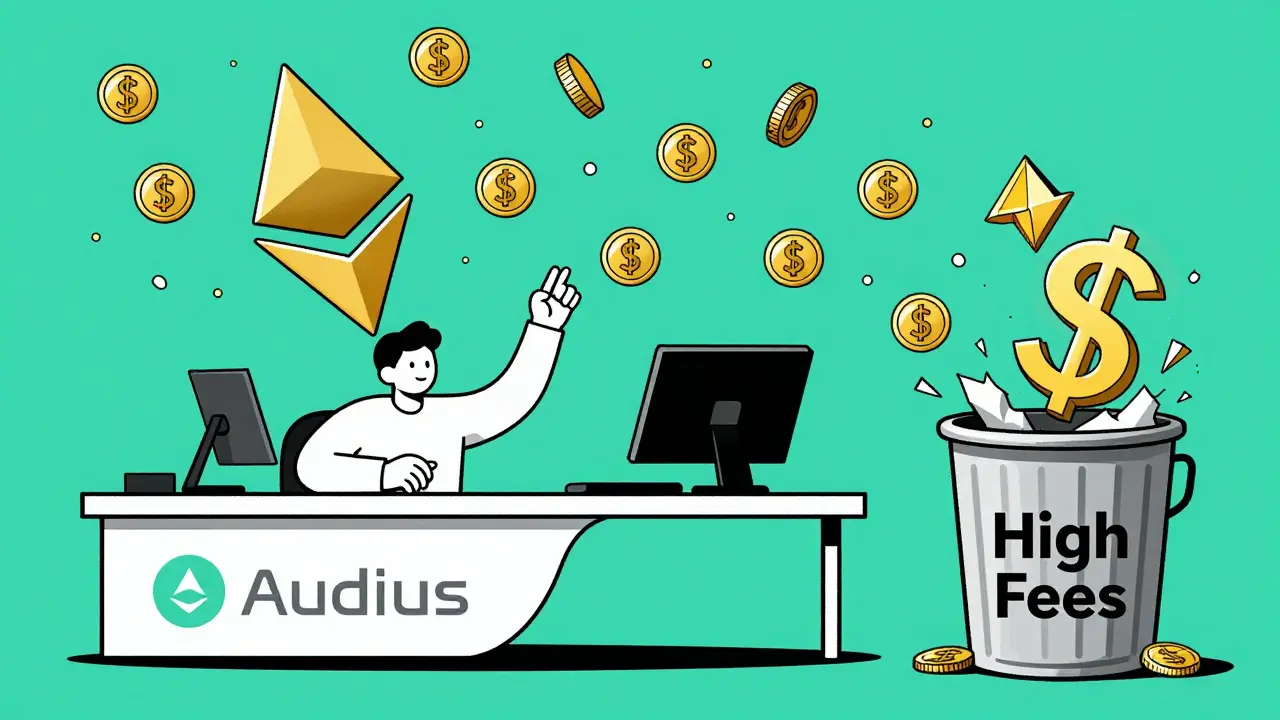
- Audius is the only major platform built for music. After moving from Ethereum to Solana in late 2023, it slashed transaction fees from $0.15 to $0.0003 per stream. It now processes 50,000 transactions per second. Audius has partnerships with Universal Music Group and integrates with TikTok, letting artists share clips while keeping blockchain-based royalties intact.
Why Creators Are Switching
For independent creators, the financial upside is obvious. But it’s not just about money. On blockchain platforms, you own your audience. No one can shadow-ban you for speaking your mind. No algorithm hides your video because it doesn’t fit a trend. On Theta, you can stream live gaming, educational content, or art tutorials-and keep 100% of viewer payments. On Audius, you upload a song and get paid every time it’s played, no matter where it’s shared.
One DLive streamer, u/GameStreamQueen, switched from Twitch because she couldn’t earn enough to cover her streaming gear. After six months on DLive, she was making $800/month in tips and subscriptions-up from $250 on Twitch. She also got to keep her chat history, subscriber list, and past streams. On Twitch, if your account gets suspended, you lose everything. On blockchain platforms, your data lives on the chain-you control it.
The Downsides: It’s Not Perfect Yet
Don’t expect blockchain streaming to replace YouTube tomorrow. There are real hurdles:
- Latency: Streams on Theta or Livepeer can have 5-30 second delays, especially during peak times. That’s fine for recorded videos, but terrible for live gaming or Q&A sessions.
- Setup is complicated: You need a crypto wallet (like MetaMask), you have to buy tokens, and sometimes configure a node. For beginners, it can take 2-8 hours just to get started. UXCam found 68% of users drop off during wallet setup.
- Small audiences: The average blockchain streamer reaches 50-200 viewers. On Twitch, it’s 500-2,000. Discovery tools are primitive. DLive’s recommendation engine has 35% lower engagement than Twitch’s.
- Token volatility: Earnings can swing wildly. DLive creators saw income fluctuate by 30-70% month-to-month in 2024. One day your TFUEL is worth $0.02, the next it’s $0.05.
- Regulation risk: The SEC has 17 active investigations into blockchain streaming tokens. If they classify them as securities, platforms could be forced to shut down or restrict U.S. users.
Who Should Try It?
Blockchain streaming isn’t for everyone. But it’s perfect for:
- Independent musicians who want to keep more of their earnings and own their fan data.
- Game streamers tired of platform rules and low payouts.
- Educators and content creators who want to build a direct relationship with their audience.
- Tech-savvy users with spare bandwidth and storage who want to earn passive income.
If you’re a casual viewer who just wants to watch Netflix or YouTube shorts, stick with the big platforms. But if you’re creating content and feel like you’re being exploited by the current system, blockchain streaming offers a real alternative.

How to Get Started
Here’s how to begin without losing your shirt:
- Choose your platform: Start with Audius if you’re a musician. Try Theta if you want to run an edge node. Use Livepeer only if you’re a developer.
- Set up a wallet: MetaMask works for most. Never share your seed phrase.
- Buy a small amount of tokens: Spend $10-$20 to learn how it works. Don’t go all-in.
- Start small: Upload one video. Stream once a week. Build your audience slowly.
- Use a hardware wallet: 89% of experienced users recommend it for long-term storage.
And don’t expect quick riches. Focus on community first. The money follows the trust.
The Future: Hybrid Models Are Winning
The most promising development in 2025 isn’t a new platform-it’s hybrid systems. Theta Network now uses traditional CDNs during traffic spikes. Livepeer launched ‘Livepeer Studio’ in August 2025, cutting setup time from hours to minutes. Audius now syncs with TikTok, letting creators post clips on mainstream apps while still earning blockchain royalties.
Forrester predicts 60% of blockchain streaming platforms will merge or adopt hybrid models by 2027. The future isn’t about replacing Netflix. It’s about giving creators control, reducing delivery costs, and building fairer systems. Traditional platforms are already copying the best ideas: YouTube’s new ‘Super Stickers’ use blockchain verification, and Twitch is testing NFT integrations.
Blockchain streaming isn’t the end of centralized platforms. It’s the beginning of a new kind of internet-one where users aren’t just consumers, but contributors and owners.
Can I earn money just by watching videos on blockchain streaming platforms?
You don’t earn money just by watching. You earn by helping deliver content-by running an edge node or relaying video to others in your area. Theta Network, for example, rewards users who share their bandwidth and storage. Watching alone doesn’t generate income. But if you have a fast internet connection and spare hard drive space, you can set up a node and earn TFUEL tokens passively-typically $100-$150/month for home users.
Are blockchain streaming platforms safe to use?
They’re safe if you follow basic crypto security. Use a hardware wallet like Ledger or Trezor to store your tokens. Never give out your seed phrase. Avoid platforms that promise guaranteed returns-that’s a red flag. Theta Network and Livepeer have been around since 2018 and have strong developer communities. But newer platforms can be risky. Always research before investing time or money.
Do I need to know how to code to use blockchain streaming platforms?
No. If you’re a creator or viewer, you don’t need to code. Platforms like Audius and DLive have simple web apps-just upload, stream, and get paid. But if you want to run a transcoding node (like on Livepeer) or build your own app on top of the network, then yes-you’ll need technical skills. Most users start without coding and learn as they go.
What’s the difference between Theta and Livepeer?
Theta is a full streaming platform with a consumer app-you can watch and stream videos directly. Livepeer is a backend service for developers. You won’t find a Livepeer app. Instead, apps like DLive or independent video sites use Livepeer’s infrastructure to handle video encoding and delivery. Think of Theta as Netflix with blockchain payments, and Livepeer as the engine behind the scenes.
Why did Audius switch from Ethereum to Solana?
Ethereum’s transaction fees were too high-$0.15 per stream made it impossible for artists to earn anything meaningful. Solana cuts fees to $0.0003 per transaction and processes 50,000 transactions per second. The switch allowed Audius to scale without charging users or creators extra. It also made the platform faster and more reliable for real-time streaming.
Is blockchain streaming legal in the U.S.?
The legality is unclear. The SEC is investigating 17 blockchain streaming platforms over whether their tokens are unregistered securities. While using the platforms to watch or stream isn’t illegal, buying or selling tokens could be risky. Some platforms restrict U.S. users or require KYC verification. Always check the platform’s terms and consult a tax professional if you earn significant income.
Can I use blockchain streaming on my phone?
Yes, but not everywhere. Audius and Theta have full iOS and Android apps. DLive’s mobile app works well for streaming. But node-running apps (like for Livepeer) are mostly desktop-only. Mobile support is improving, but only 60% of platforms offer full parity with desktop. For now, stick to apps that clearly state they support mobile.
6 Comments
Theta’s edge caching is a game-changer for CDNs-reducing latency by 40% while slashing costs. TFUEL rewards incentivize true peer-to-peer distribution, not just passive bandwidth sharing. This isn’t speculation-it’s infrastructure rearchitected.
lol so now we’re all gonna be tiny CDN nodes?? 😂 next they’ll ask us to power the internet with our toaster
you think this is fair wait till the SEC shuts it down and your TFUEL becomes worthless then youll cry about how you lost your rent money because you trusted some blockchain hype train and not your 9 to 5
While the economic incentives are compelling, the technical barriers remain significant. The UX friction during wallet onboarding-particularly for non-technical creators-is not trivial. A 68% drop-off rate suggests that accessibility, not adoption, is the bottleneck. Simplicity must precede scalability.
Look I’ve been following this space since 2021 and honestly the hybrid models are the only realistic path forward-Theta integrating traditional CDNs during peak traffic? Genius. Livepeer Studio cutting setup from hours to minutes? That’s the kind of incremental UX improvement that actually matters. The token volatility? Still a nightmare. I had a friend who earned $120 in TFUEL one month and $40 the next because the price tanked-so yeah, you can’t treat it like salary. But the ownership angle? Absolutely. I’ve had my music on Audius for a year now and every stream is traceable, every listener is mine, no algorithm deciding if my folk song is ‘trending’ or ‘irrelevant.’ That’s worth more than the money sometimes. And the fact that Universal Music Group is on board? That’s not a fluke. They’re hedging. And honestly? I think we’re on the edge of something real here, even if it’s slow.
YESSSSSS!!! 😍🙌 I switched to DLive last year and my income went from $250 to $800/mo and I didn’t lose a single chat log or subscriber-THANK YOU FOR WRITING THIS!!! 🙏🔥 Also, hardware wallet? YES. Got a Ledger Nano X and sleep like a baby now. Don’t be scared-just start small, $10 in TFUEL, try it once, and you’ll see it’s not magic-it’s just fair.