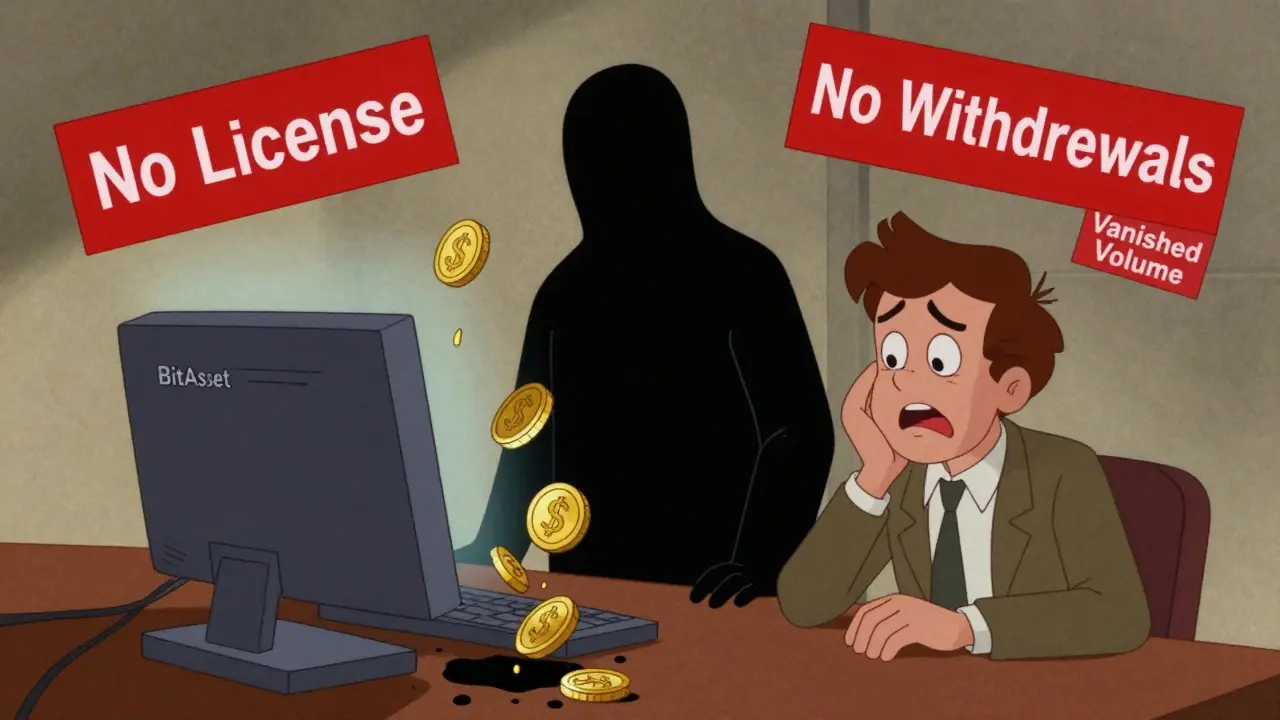
When you hear "BitAsset" in the crypto world, you might think it’s just another exchange offering leverage trades and high returns. But if you dig deeper, the story gets messy fast. As of 2026, BitAsset isn’t just obscure-it’s surrounded by red flags that make it one of the riskiest platforms still accepting users.
What Even Is BitAsset?
BitAsset claims to be a crypto derivatives exchange, meaning it lets you trade contracts based on Bitcoin, Ethereum, and other coins without actually owning them. It says it supports smart contracts, offers 24/7 support, and has traded over a billion dollars in volume back in 2019. Sounds impressive, right? Except none of that holds up today.There’s no clear website, no verifiable team, and no public license number. Even the name gets confused. Some people refer to "BitAsset Exchange" as a Hong Kong-based platform, while others mention a separate derivatives-only site. No one can confirm if they’re the same company-or if either one is even real.
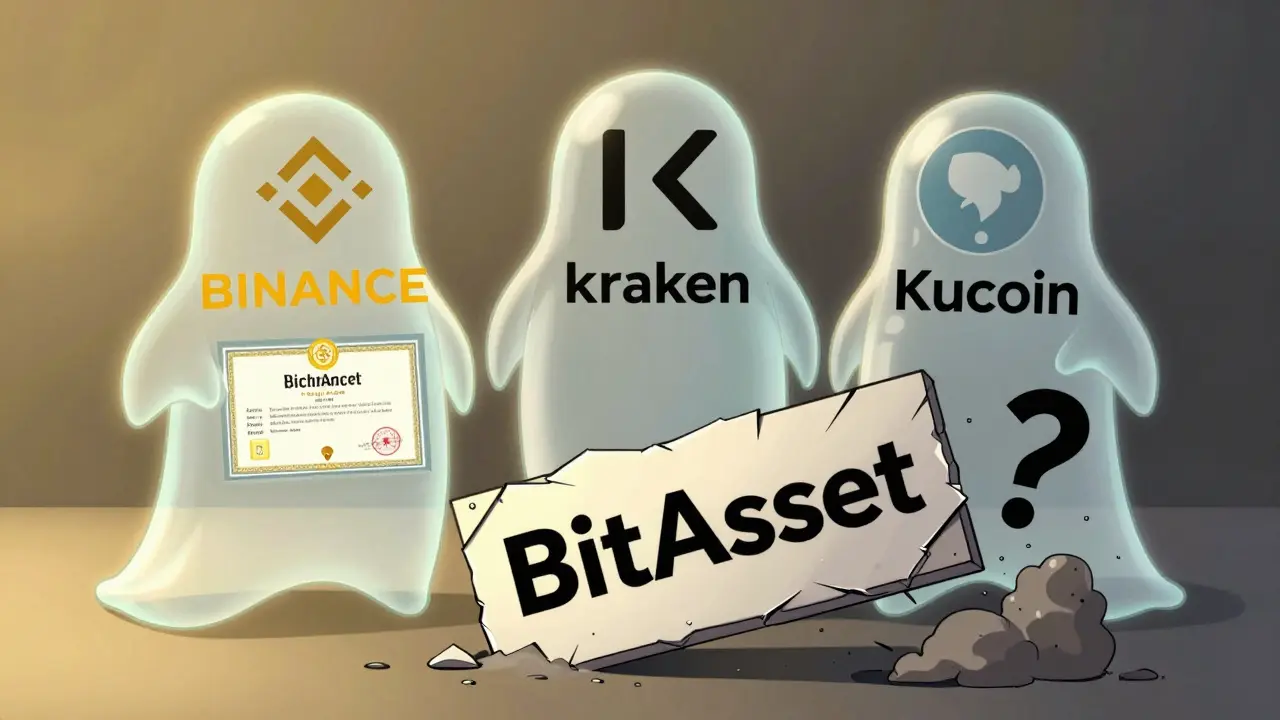
Compare that to Binance, Kraken, or KuCoin. Those platforms list their regulatory licenses, publish audit reports, and have public headquarters. BitAsset? Nothing. Not even a physical address you can Google.
Trading Volume? It’s Been Dead for Years
Back in June 2019, BitAsset claimed $1.08 billion in daily trading volume. CoinMarketCap showed that number. But by March 2020, it had crashed to $290 million-and then vanished from public tracking entirely. Today, no major data provider lists BitAsset’s volume. Not CoinGecko. Not CryptoCompare. Not even a whisper on TradingView.That’s not normal. Legit exchanges grow or shrink gradually. They don’t disappear from the charts like they were never there. If your exchange isn’t being tracked anymore, it’s either dead-or never really existed in the first place.
Regulatory Status? Unknown. That’s a Dealbreaker
In 2026, you can’t trust a crypto platform without a license. It’s that simple. Regulators in the U.S., EU, UK, and even Hong Kong now require exchanges to register, undergo audits, and protect user funds. BitAsset doesn’t list any of that. No FCA, no MAS, no FinCEN registration. Nothing.Some users point out that BitAsset blocks U.S. customers. That’s often a sign of compliance-but here, it’s just a cover. Legit platforms that block U.S. users still publish their licenses and explain why they can’t serve American traders. BitAsset doesn’t explain anything. It just says "not available in your region" and moves on.
That’s not compliance. That’s evasion.
User Reports: Mixed at Best, Scam at Worst
There are a few scattered reviews online saying "I made money on BitAsset." But they’re usually old, vague, and lack proof. No screenshots of withdrawals. No transaction IDs. Just testimonials that could’ve been written by anyone.Meanwhile, the negative reports are detailed and consistent:
- Users couldn’t withdraw funds after making a profit
- Customer support ignored emails for weeks
- Accounts got frozen without warning
- Platform suddenly went offline for days, then came back with no explanation
One Reddit user from Canada posted in early 2025: "I deposited $5,000. Made $1,200. Tried to cash out. They asked for a notarized ID, then disappeared. I never got my money back. I’ve been chasing this for 11 months."
That’s not a glitch. That’s a pattern.
Security? No Transparency, No Trust
Where are the security details? Most exchanges publish:- Multi-signature wallets
- Cold storage percentages
- Insurance funds
- Penetration test results
BitAsset? Zero. Not a single line of information about how they protect your coins. No mention of two-factor authentication beyond a basic prompt. No proof they use cold wallets. No third-party audit reports.
And yet, they ask you to deposit real money.
Imagine leaving your car keys in the ignition with the door unlocked, then asking someone to trust you because you "have a good reputation." That’s BitAsset’s security model.
Why Are People Still Using It?
You might wonder: if it’s so risky, why does anyone still trade here?The answer is simple: greed.
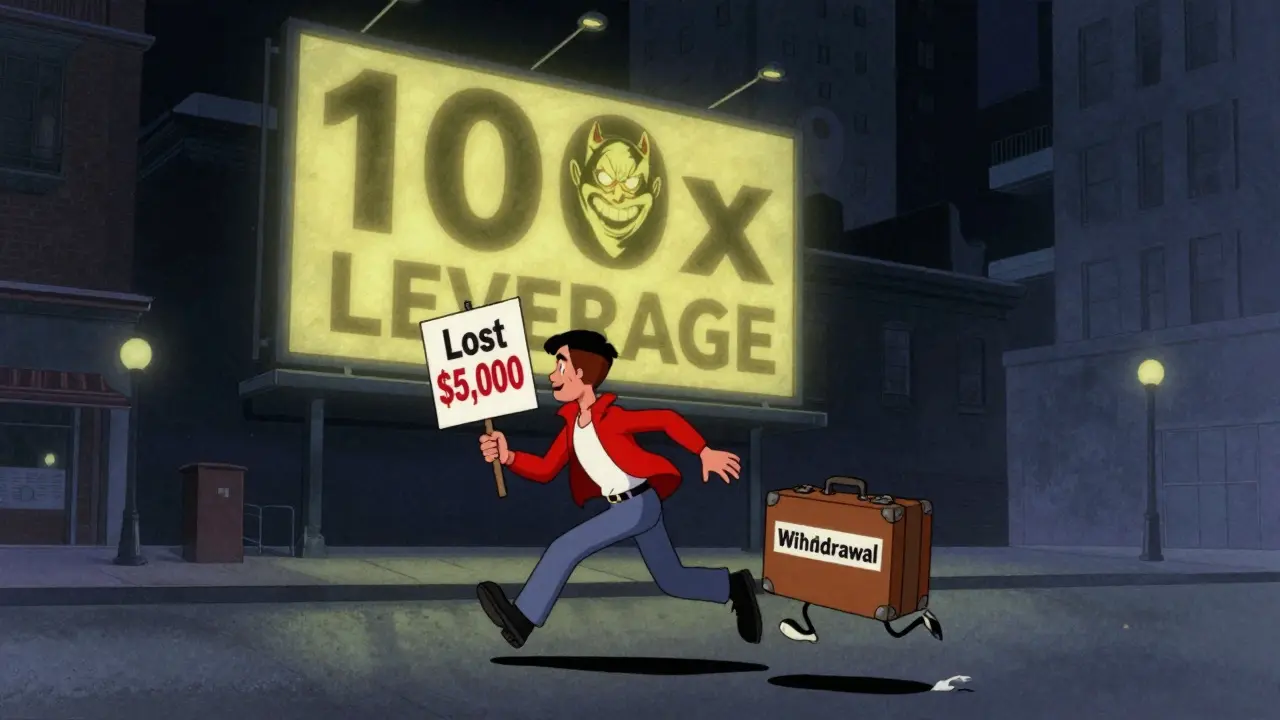
BitAsset promotes high leverage-up to 100x on some pairs. That means a tiny price move can turn $100 into $10,000. For inexperienced traders, that sounds like free money. But high leverage also means you can lose everything in seconds. And when the platform doesn’t have proper risk controls or order book depth, those losses are often manipulated.
It’s a classic pump-and-dump setup. The platform encourages reckless trading, then quietly blocks withdrawals when users win big. It’s not a bug. It’s the business model.
What Should You Do?
If you’re thinking about trying BitAsset, stop. Right now.Here’s what you should do instead:
- Use a regulated exchange like Kraken, Coinbase, or Bybit (which is licensed in multiple jurisdictions)
- Only deposit what you can afford to lose-no exceptions
- Check for real licenses: look up the regulator’s official website and verify the exchange’s registration number
- Never use an exchange that doesn’t show you its security practices
- Walk away if the platform feels shady-even if it promises high returns
There are thousands of legit crypto platforms. You don’t need to gamble with your savings on a ghost operation with no track record, no license, and no accountability.
Alternatives to BitAsset That Actually Work
If you want derivatives trading with real safety, here are three alternatives:| Exchange | Regulatory Status | Max Leverage | Withdrawal Speed | US Users Allowed? |
|---|---|---|---|---|
| Bybit | Licensed in Dubai, Singapore, and Estonia | 125x | Under 10 minutes | No |
| Kraken | Registered with FinCEN and licensed in the U.S. | 50x | Under 30 minutes | Yes |
| OKX | Licensed in Abu Dhabi and Malta | 125x | Under 15 minutes | No |
All three have public audit reports, insurance funds, and verified customer support. None of them vanish from data trackers. None of them ghost users after they win.
Final Verdict
BitAsset isn’t just risky. It’s dangerous.There’s no evidence it’s a real company. No licenses. No security details. No transparency. And plenty of user complaints about stolen funds.
Don’t be fooled by old volume numbers or flashy marketing. In crypto, the safest platform is the one you can verify. BitAsset can’t be verified.
If you want to trade crypto derivatives, go somewhere with a name, a license, and a track record. Your money-and your peace of mind-will thank you.
Is BitAsset a scam?
Yes, based on available evidence, BitAsset exhibits multiple red flags of a scam: no regulatory license, no verifiable team, disappearing trading volume, user reports of frozen withdrawals, and zero transparency about security. While not every user has lost money, the pattern of behavior matches known crypto scams. Avoid it entirely.
Can I withdraw money from BitAsset?
Many users report being unable to withdraw funds, especially after making profits. Withdrawals are often delayed indefinitely, require excessive documentation, or are blocked with vague reasons like "security review." There are no verified cases of consistent, timely withdrawals. Treat any deposit as potentially lost.
Does BitAsset have a mobile app?
There is no official BitAsset mobile app available on Google Play or the Apple App Store. Any app claiming to be BitAsset is fake and likely contains malware. The platform’s website is also unstable and often inaccessible. Legit exchanges always have verified apps-BitAsset does not.
Why does BitAsset block U.S. users?
BitAsset blocks U.S. users, but doesn’t explain why. Legitimate platforms that restrict U.S. users clearly state they lack a U.S. license. BitAsset offers no such explanation. This isn’t compliance-it’s avoidance. It’s a tactic used by unlicensed platforms to evade scrutiny while still targeting global traders.
Are there any positive reviews of BitAsset?
A few positive reviews exist, but they’re outdated, vague, and lack proof. None include transaction IDs, withdrawal receipts, or verifiable user profiles. Most appear on low-quality forums or are written in broken English. Real users with legitimate experiences don’t leave vague testimonials-they post screenshots, dates, and details. BitAsset’s positive reviews don’t meet that standard.
What should I do if I already deposited money on BitAsset?
Stop trading immediately. Do not deposit more. Try to withdraw everything-even small amounts-as soon as possible. Document every transaction, email, and message. Report the platform to your local financial regulator and to the FTC’s ReportFraud website. Unfortunately, recovering funds from platforms like this is extremely rare. Your best bet is to cut your losses and move to a regulated exchange.
8 Comments
It is imperative to underscore that the absence of regulatory compliance in this so-called "exchange" constitutes a flagrant violation of fiduciary standards in financial services. The fact that no licensing documentation is publicly accessible, nor any audit trail available, renders any participation therein not merely inadvisable-but ethically indefensible. One does not gamble with capital on entities that operate in the shadows of legal accountability.
Are you SERIOUS?! This is why America’s financial dominance is crumbling-people like you treat every unregulated platform like it’s a crime scene! BitAsset might be sketchy-but so was Bitcoin in 2011! If you’re too scared to risk your cash on something that doesn’t have a SEC stamp, you shouldn’t be in crypto-you should be buying T-bills and crying into your oat milk latte.
The premise assumes that regulation equals safety. This is a fallacy. Many regulated entities have collapsed while unregulated ones thrived. The absence of a license does not equate to fraud-it merely indicates non-compliance with arbitrary jurisdictional mandates. What matters is liquidity, user experience, and operational consistency. BitAsset had those in 2018. The rest is noise.
bro why are you so mad its just crypto lol i made 3k on it last year then i cashed out no problem maybe u just bad at trading or got scammed by ur own fear
Oh wow. A 3,000-word essay on a platform that’s been dead since 2021. Did you write this for your grad thesis? Or just kill time before your 9-to-5?
I appreciate the depth of this breakdown-and I also want to say: if you’ve ever lost money on something shady, you’re not alone. Please don’t blame yourself. Crypto is overwhelming, and predatory platforms prey on hope. Thank you for documenting this so clearly. It helps people like me who are trying to learn without getting burned.
Yesss!! This is exactly what newbies need to hear. Don’t chase 100x returns on ghost platforms. Real wealth is built slowly, safely, and with transparency. If you’re reading this and thinking "but what if I get lucky?"-stop. Your future self will thank you. Go to Kraken. Start small. Learn. Grow. You got this 💪
Big props to the author for calling out the leverage trap. 100x is basically a casino with blockchain branding. I’ve seen so many people blow up accounts thinking they’re "edge hunters"-they’re just feeding the platform’s liquidity pool. If you’re not using cold storage and a regulated exchange, you’re not trading-you’re donating.