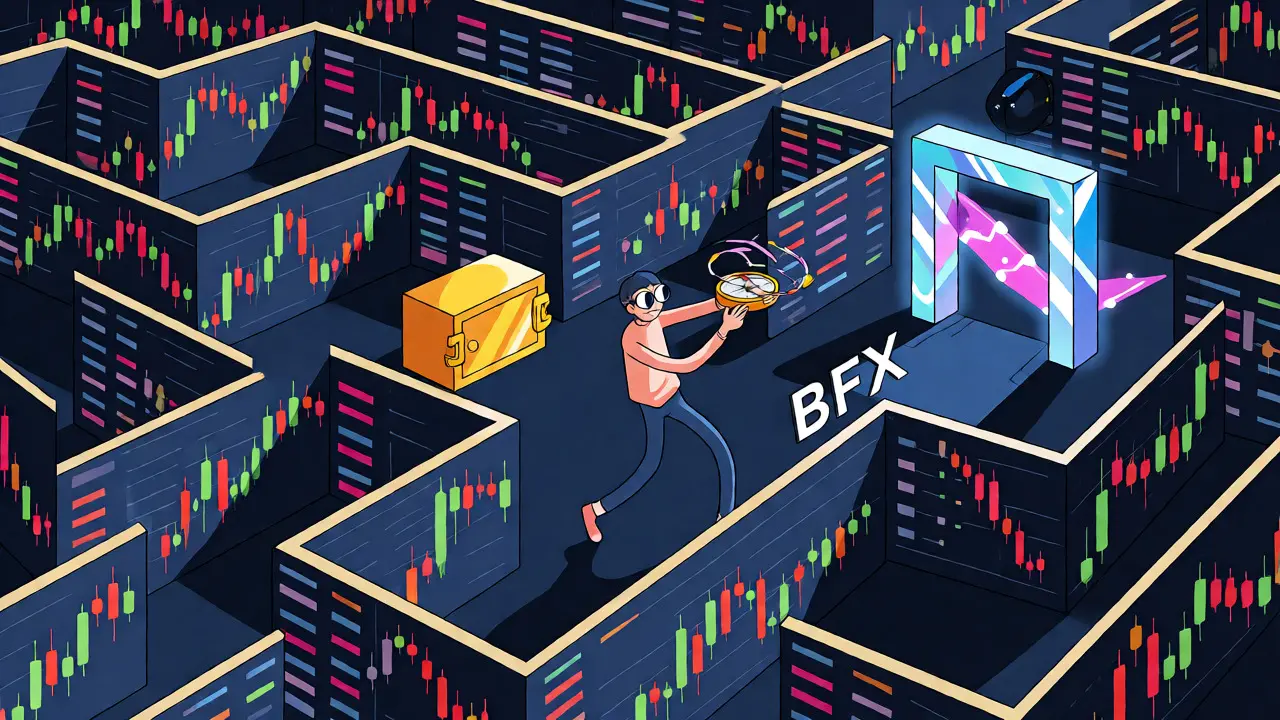
You search for a BFX crypto exchange review, expecting to find the next big trading platform with low fees and high liquidity. Instead, you hit a wall of confusion. Is it a new startup? A forgotten relic? Or a typo for something else?
Here is the truth that most quick-glance reviews miss: there is no single, dominant "BFX Exchange" operating today as a standalone major player like Binance or Coinbase. The term "BFX" acts as a historical marker tied to Bitfinex, one of the oldest and largest crypto exchanges, specifically linked to its infamous 2016 hack compensation tokens. It also refers to newer, less established projects like BlockchainFX that are trying to capitalize on the name recognition.
If you are looking to trade, you need to know which BFX you are dealing with. This guide breaks down the history, the risks, and the reality of the platforms associated with this ticker symbol.
The Origin Story: Bitfinex and the 2016 Hack
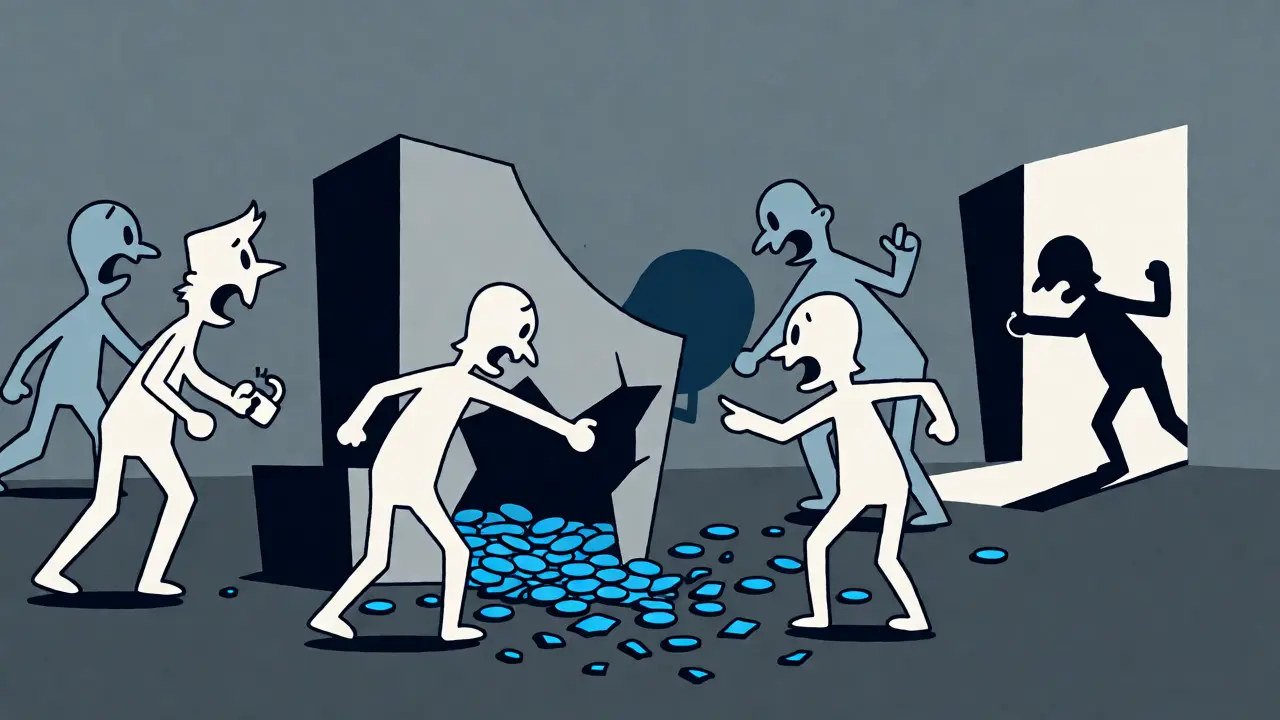
To understand why anyone searches for "BFX," you have to look back at August 2016. Bitfinex, founded in 2014 and based in Hong Kong, was already a heavyweight in the Bitcoin and Ethereum markets. Then, disaster struck. Hackers breached the exchange’s hot wallets, stealing approximately 120,000 Bitcoin. At current prices, that theft would be worth billions, but back then, it amounted to about $72 million.
Most exchanges would have folded. Bitfinex did something radical. They socialized the loss. Every user account was slashed by 36% to cover the deficit. If you had $100, you woke up with $64. To compensate users who lost more than their share, Bitfinex issued BFX tokens. Each BFX token represented one dollar of your loss.
This wasn’t just a gimmick; it was a financial instrument. Users could:
- Redeem for cash: Wait for Bitfinex to recover funds and pay out.
- Trade them: Sell BFX tokens on the open market immediately.
- Convert to equity: Turn BFX into shares of iFinex, Bitfinex’s parent company.
Within eight months, Bitfinex redeemed all BFX tokens. Those who chose equity received Recovery Right Tokens (RRTs), giving them a claim on any future recovered stolen coins. This event cemented BFX in crypto lore not as a new exchange, but as a symbol of resilience-and risk.
Is There a Current "BFX" Trading Platform?
Today, if you type "BFX" into CoinMarketCap or CoinGecko, you might see two distinct things:
- The Historical BFX Token: Now largely defunct or traded only as a collector’s item/historical asset. It does not represent a live, independent exchange with deep order books.
- BlockchainFX (BFX): A newer project marketing itself as an "all-in-one super app." This is likely what modern searchers are finding when they look for a "new" BFX exchange.
Let’s focus on BlockchainFX. This project claims to offer a unified ecosystem for crypto and global markets, positioning itself against giants like Binance. They tout features like multiple third-party audits, full KYC (Know Your Customer) processes, and verified smart contracts.
However, here is where you need to be skeptical. Detailed technical specifications, founding team credentials, and real-world trading volume data for BlockchainFX are sparse. Most information comes from promotional materials rather than independent performance metrics. The project appears to be in a presale or early adoption phase, meaning you are buying into a promise, not a proven track record.
Security Analysis: What Matters for Any Exchange
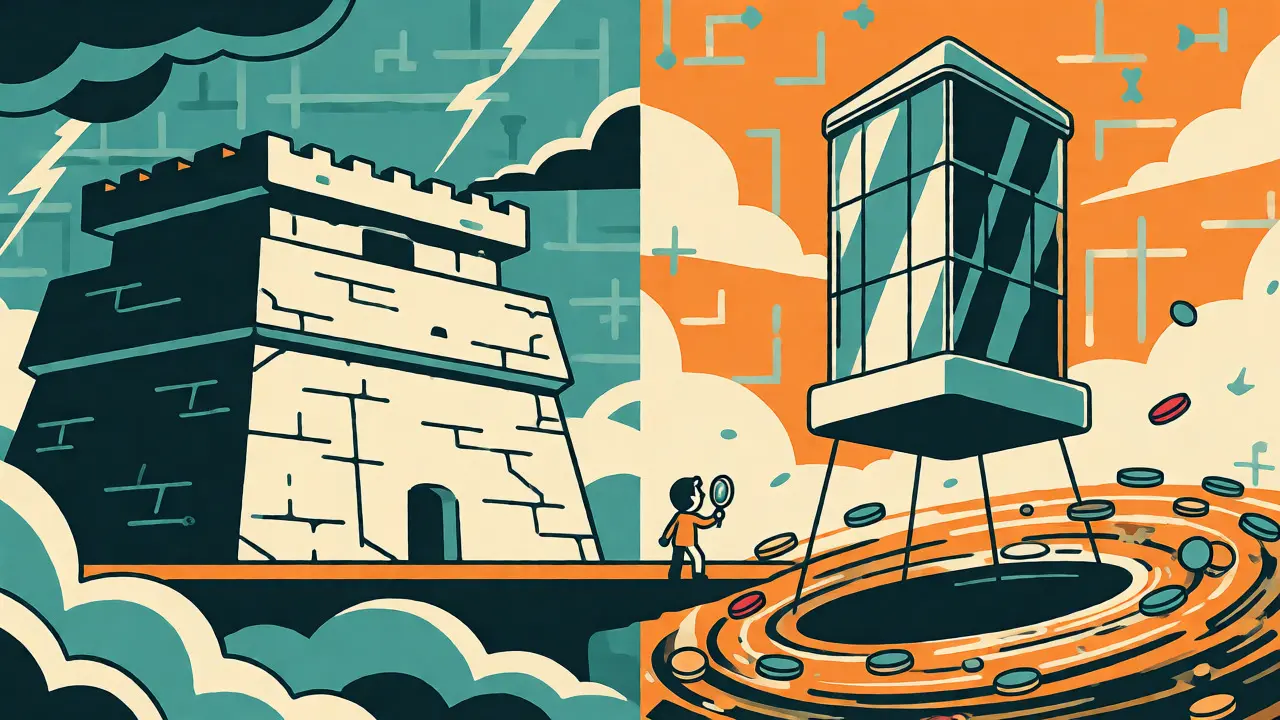
Whether you are using Bitfinex (the legacy giant) or BlockchainFX (the new challenger), security is non-negotiable. The 2016 Bitfinex hack proved that even multisignature wallets can fail if configured poorly. Today, reputable exchanges use a layered approach.
| Feature | Bitfinex (Established) | New Projects (e.g., BlockchainFX) |
|---|---|---|
| Cold Storage Ratio | ~99.5% of assets offline | Varies; often unverified publicly |
| Audit History | Multiple independent audits post-2016 | Promised audits; results pending |
| Insurance Fund | User-funded insurance pool exists | Rarely detailed in whitepapers |
| Regulatory Status | Complex; operates under various jurisdictions | Often unclear or offshore-based |
Bitfinex keeps about 99.5% of user assets in cold storage-offline wallets inaccessible to online hackers. Only 0.5% sits in hot wallets for daily trades. They require two-factor authentication (2FA) via Google Authenticator or hardware keys like YubiKey. Withdrawal whitelists ensure you can only send funds to pre-approved addresses, adding a crucial layer of protection against phishing.
Newer platforms claiming to be the "next BFX" must prove they match these standards. Don’t take their word for it. Look for proof-of-reserves reports and third-party audit certificates before depositing significant capital.
Trading Experience and Fees
If you end up using Bitfinex because you confused it with BFX, here is what to expect. It is a pro-trader’s paradise. The interface is dense, packed with advanced charting tools, margin trading options, and lending services. Liquidity is high for major pairs like BTC/USD and ETH/USD.
Fees follow a maker-taker model. Makers (those placing limit orders that sit on the book) pay lower fees than takers (those executing market orders). As of late 2026, standard fees hover around 0.1%-0.2%, dropping significantly for high-volume traders. You can reduce fees further by holding LEO tokens, Bitfinex’s native utility token, which offers discounts similar to BNB on Binance.
For BlockchainFX, fee structures are harder to pin down due to limited public data. Presale phases often incentivize early adopters with reduced fees or bonus tokens, but long-term sustainability depends on whether they can attract enough volume to cover operational costs without hiking fees later.
The Decentralized Alternative
Some users avoid centralized exchanges (CEXs) like Bitfinex entirely due to custody risks. If you want to hold your own keys, decentralized exchanges (DEXs) are the answer. Platforms like Uniswap or dYdX let you trade directly from your wallet.
However, DEXs aren’t immune to hacks. In April 2020, Bisq, a decentralized exchange, suffered a breach where $250,000 worth of Bitcoin was stolen due to coding flaws. While DEXs eliminate the risk of exchange insolvency, they introduce smart contract vulnerabilities. For most retail investors, the convenience of a CEX outweighs the control of a DEX, provided the CEX has a strong security track record.
Verdict: Should You Trust "BFX"?
So, should you invest time or money in a "BFX" platform?
If you mean Bitfinex: Yes, it is a legitimate, high-volume exchange suitable for active traders. Just be aware of its complex corporate structure and past regulatory scrutiny. It survived the biggest hack in crypto history, which speaks to its resilience, but always keep some funds in self-custody.
If you mean BlockchainFX: Proceed with extreme caution. It is a speculative venture. Without extensive user reviews, verified transaction volumes, and transparent team identities, it carries higher risk. Treat it as a high-risk/high-reward play, not a safe haven for your life savings.
If you mean the old BFX token: It is a historical artifact. Unless you are a crypto historian or speculating on niche collectibles, it has little practical use for trading.
Always verify the URL. Phishing sites love to mimic popular tickers. Ensure you are on the official domain before connecting your wallet or entering your password.
Is BFX the same as Bitfinex?
Not exactly. Bitfinex is the exchange. BFX was a temporary token issued by Bitfinex to compensate users after the 2016 hack. Today, "BFX" may refer to newer projects like BlockchainFX, which are separate entities.
Is Bitfinex safe to use in 2026?
Yes, Bitfinex is considered one of the safest major exchanges. It stores ~99.5% of assets in cold storage and uses multi-signature security. However, no exchange is 100% risk-free, so diversifying holdings across platforms and cold wallets is recommended.
What happened to the original BFX tokens?
All original BFX tokens were redeemed and destroyed within eight months of the 2016 hack. Users either took cash, converted to equity in iFinex, or sold them on the market. They are no longer a primary currency for trading on Bitfinex.
Does BlockchainFX have a good reputation?
Reputation data is limited because BlockchainFX is a newer project, possibly still in presale or early launch. Independent reviews are scarce compared to established exchanges. Exercise due diligence regarding team transparency and audit reports.
Can I buy Bitcoin directly with BFX tokens?
Historically, yes, BFX could be used as collateral or traded. Currently, the original BFX token has minimal liquidity. Newer BFX-branded tokens depend on the specific project's listing status on major exchanges.