You want to put your crypto to work. You don’t just want to hold it; you want it earning. That’s where liquidity mining comes in. It sounds fancy, but the core idea is simple: you lend your assets to a decentralized exchange or lending protocol, and in return, you get paid.
In 2026, this isn't a new trick. The hype cycle of "DeFi Summer" is long gone. What remains is a mature ecosystem where rewards are lower than the triple-digit days of 2021, but the risks are better understood. The question isn't "can I make money?" It's "where can I make money without losing my shirt to smart contract bugs or market swings?"
How Liquidity Mining Actually Works
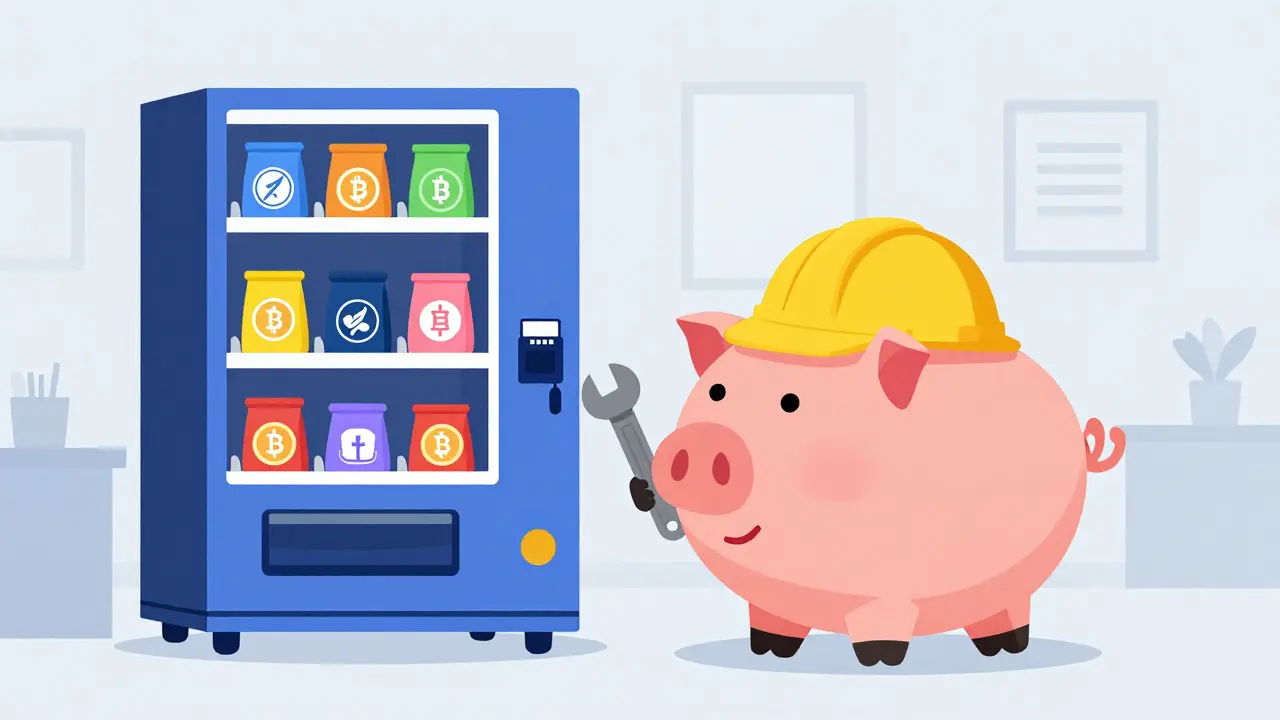
Before you deposit a single dollar, you need to understand the mechanism. Think of a decentralized exchange (DEX) like a giant vending machine. To keep it stocked, someone needs to provide the snacks. In crypto, those snacks are token pairs.
When you provide liquidity, you deposit two tokens of equal value into a pool. For example, if you put in $1,000 worth of Ethereum (ETH), you also put in $1,000 worth of a stablecoin like USDC. This pair helps traders swap between ETH and USDC.
In return, you get two things:
- Trading Fees: Every time someone swaps tokens in that pool, they pay a small fee (usually 0.3%). You get a slice of that pie based on how much of the pool you own.
- Protocol Rewards: Many platforms give you extra tokens (like UNI or CRV) to incentivize you to stay. This is the "mining" part.
It seems risk-free, right? Not quite. There is a hidden cost called impermanent loss. If the price of one token in your pair changes drastically compared to the other, you might end up with less value than if you had just held the tokens in your wallet. Understanding this risk is the difference between a pro and a gambler.
The Heavy Hitters: Where to Mine in 2026
Not all pools are created equal. Some are safe havens for steady income; others are high-stakes arenas for aggressive yield hunters. Here are the best opportunities broken down by strategy.
1. Curve Finance: The Stablecoin King
If you hate volatility, start here. Curve Finance is a decentralized exchange optimized for swapping assets of similar value, such as different stablecoins. Because these assets trade at roughly the same price ($1), impermanent loss is minimal.
Why it works:
- Predictable Yields: You earn trading fees plus CRV token rewards.
- veCRV Boost: If you lock your CRV tokens, you can boost your share of trading fees significantly.
- Low Risk: Since you're mostly dealing with stablecoins (USDC, DAI, USDT), the price divergence risk is near zero.
This is the go-to for conservative investors who want better returns than a savings account without the heart attack of watching their portfolio drop 20% overnight.
2. Uniswap V3: Precision for the Pros
Uniswap is the largest decentralized exchange by volume, allowing users to trade tokens directly from their wallets. While Uniswap V2 was simple, V3 changed the game with "concentrated liquidity."
In older versions, your capital worked across the entire price range of a token. In V3, you pick a specific price range. If ETH stays within that range, your capital efficiency skyrockets, meaning higher fees. But if ETH moves out of that range, you stop earning fees entirely and may face significant impermanent loss.
Who is this for?
- Active managers who watch charts daily.
- Traders confident in their price predictions.
If you set it and forget it, stick to V2 or another platform. V3 requires attention.
3. Balancer: Custom Portfolios
Balancer lets you create pools with more than two tokens and custom weights. Want a pool that is 80% ETH and 20% USDC? You can do that. This acts as a self-rebalancing portfolio manager.
The benefit? You can tailor your exposure. If you believe ETH will outperform, you weight the pool accordingly. You still earn BAL tokens and trading fees, but you maintain a specific asset allocation preference. It’s complex, but powerful for advanced users.
4. Compound & Aave: Lending Protocols
Sometimes, the best liquidity mining opportunity is just lending. Platforms like Compound is a decentralized lending protocol where users supply assets to earn interest while borrowers take loans against collateral. and Aave allow you to deposit assets and earn interest rates determined by supply and demand.
Unlike AMMs, there is no impermanent loss because you aren't pairing volatile assets. You simply lend your USDC or ETH and earn a yield. During tight credit markets, these yields can be surprisingly competitive, especially when combined with governance token rewards (COMP or AAVE).
| Platform | Best For | Risk Level | Key Reward Mechanism |
|---|---|---|---|
| Curve Finance | Stablecoin pairs | Low | Trading fees + CRV tokens |
| Uniswap V3 | High-efficiency trading pairs | High | Concentrated liquidity fees |
| Balancer | Custom portfolio weighting | Medium | Trading fees + BAL tokens |
| Compound | Lending single assets | Low-Medium | Interest + COMP tokens |
Avoiding the Pitfalls: Impermanent Loss Explained
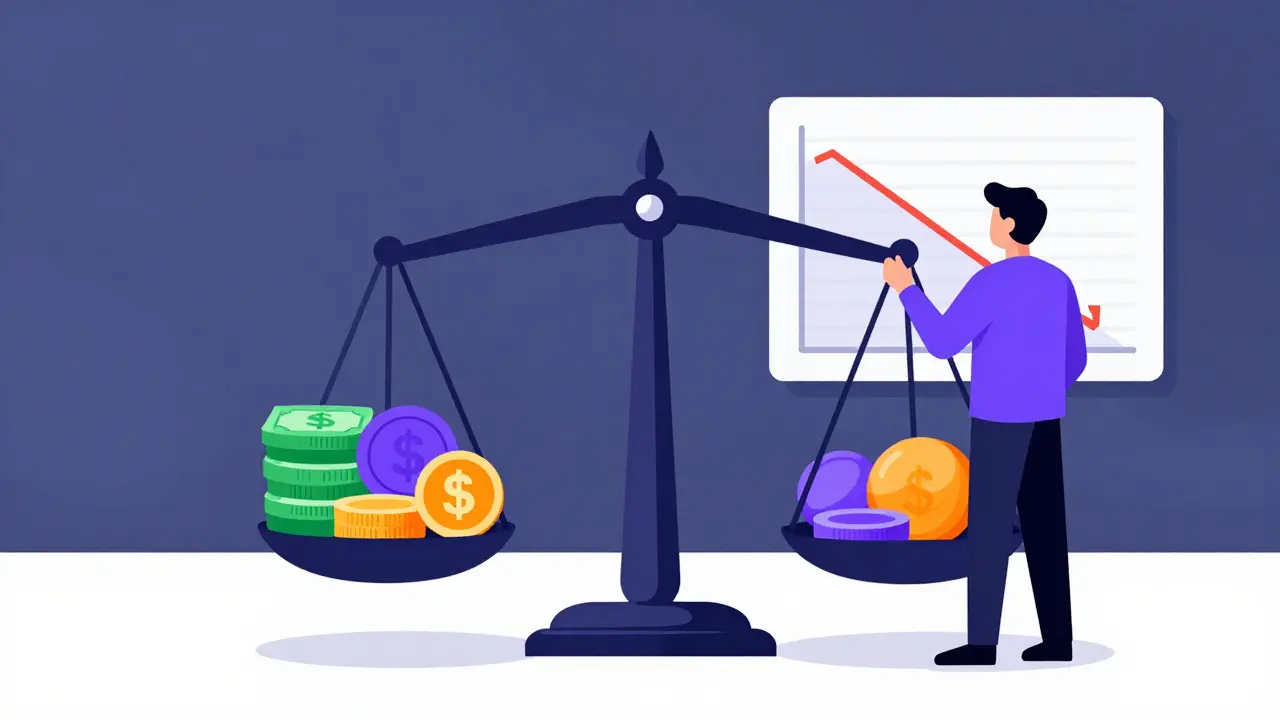
Let’s talk about the elephant in the room. Impermanent loss (IL) happens when the price ratio of your deposited tokens changes. Imagine you deposit ETH and USDC when ETH is $3,000. If ETH drops to $1,500, the automated market maker sells some of your ETH to keep the pool balanced. When you withdraw, you have more ETH than before, but less total USD value than if you had just held the original amount.
Is it permanent? Only if you withdraw. If the price recovers, the loss disappears. However, in 2026, with many altcoins facing long bear markets, "impermanent" can feel very permanent.
To mitigate this:
- Stick to correlated assets: Pairs like ETH/stETH (Liquid Staked Ether) move together, minimizing IL.
- Use stablecoins: As mentioned with Curve, stable pairs have negligible IL.
- Calculate break-even points: Use online calculators to see how much price divergence is needed for your trading fees to cover the potential IL.
Layer 2s: The Cost Saver
Ethereum gas fees used to eat up all profits for small investors. In 2026, Layer 2 solutions like Arbitrum, Optimism, and Polygon are standard. Most major protocols now operate on these chains.
Why does this matter? You can provide liquidity with smaller amounts of capital. On mainnet Ethereum, providing $500 in liquidity might cost $20 in gas fees, instantly putting you in the red. On Arbitrum, that same transaction costs pennies. Always check which chain the pool is on before committing funds.
Security First: Smart Contract Risks
DeFi is permissionless, which means anyone can deploy a contract. It also means bugs happen. Before locking up years of savings, ask yourself:
- Has the protocol been audited? Look for audits from reputable firms like OpenZeppelin or Trail of Bits.
- What is the Total Value Locked (TVL)? High TVL often indicates community trust and deeper security scrutiny.
- Is there insurance? Some protocols offer coverage through Nexus Mutual or similar services.
Don’t chase the highest APY blindly. A 500% APY usually signals a scam or an unsustainable model. Stick to established protocols with proven track records.
Tax Implications You Can’t Ignore
In the US and many other jurisdictions, liquidity mining rewards are taxable income at the fair market value when received. Furthermore, selling those rewards later triggers capital gains tax. Keep detailed records of every deposit, withdrawal, and reward claim. Tools like Koinly or CoinTracker can help automate this, but manual verification is essential.
What is the safest liquidity mining strategy?
The safest strategy involves providing liquidity to stablecoin pairs on established platforms like Curve Finance or lending stablecoins on Compound/Aave. These methods minimize impermanent loss because the asset values remain constant relative to each other.
How much capital do I need to start?
On Layer 2 networks like Arbitrum or Polygon, you can start with as little as $50-$100 due to low gas fees. On Ethereum mainnet, it is recommended to start with at least $1,000-$2,000 to ensure transaction costs don't eat into your profits.
Can I lose all my money in liquidity mining?
Yes. While impermanent loss reduces value, smart contract hacks or rug pulls can result in total loss. Always use audited protocols and diversify your exposure across multiple platforms to mitigate this risk.
Are liquidity mining rewards taxed immediately?
In most jurisdictions, including the US, rewards are considered ordinary income at the time of receipt. You must report the fair market value of the tokens when you claim them. Selling them later incurs capital gains tax.
What is impermanent loss?
Impermanent loss occurs when the price of deposited tokens diverges. The automated market maker rebalances the pool, potentially leaving you with less value than if you had simply held the tokens. It becomes permanent only if you withdraw during the divergence.
10 Comments
look, i've been in this game since the early days of ethereum and let me tell ya, curve is still the king for a reason. nobody talks about how much easier it is to manage your risk when you're just swapping stablecoins. sure, the apy isn't gonna make you rich overnight like those crazy 2021 numbers, but it keeps your sanity intact. i lost my shirt trying to chase yields on some random altcoin pair on uniswap v3 back in '23 and haven't looked back since. stick to the basics, folks.
also, dont forget about the tax implications. people always forget that every time you claim rewards, its taxable income. keep your records straight or the irs will come knocking with a smile.
Impermanent Loss (IL) is not merely a theoretical construct; it is an existential threat to capital preservation. One must calculate the break-even point meticulously before deploying liquidity into any volatile pair. The mathematics do not lie. If the price divergence exceeds the accumulated trading fees, one is effectively donating capital to the protocol's arbitrageurs. Use calculators. Verify audits. Trust no one. 📉📊
i mean, its pretty cool how layer 2s have changed the game for us small potatoes. used to be you needed like 2k just to cover gas fees on mainnet, now you can start with 50 bucks on arbitrum. makes it way more accessible for regular joes who just wanna earn a little extra without going broke on transactions. thanks for breaking down the options man.
Oh, look at us all pretending we understand smart contract risks! 😂 Let me guess, you read one article and now you're a DeFi expert? I've seen too many "pros" get rekt by a simple oracle manipulation. It’s absolutely hilarious watching everyone rush into Uniswap V3 thinking they can predict ETH prices better than the market. Spoiler alert: You can’t. 🤡 But hey, good luck with that! Maybe you’ll be the one who finally cracks the code while the rest of us are still here laughing at our impermanent losses!
the real question is whether we are truly investing or just gambling with different terminology. liquidity mining feels like a sophisticated form of casino where the house always wins eventually through slippage and fees. yet here we are chasing yields like moths to a flame. perhaps there is wisdom in simply holding. silence often speaks louder than complex strategies.
yo guys just started putting some eth/steth on curve last week and its actually pretty chill. no stress watching charts every hour. just set it and forget it mostly. defintiely recommend if u want low headache returns. also the veCRV boost is insane if u lock up enough tokens. worth the effort imo.
why does everyone ignore the fact that most of these protocols are run by anonymous devs who could rug pull anytime? i feel so tired reading all this optimism. its just fear mongering really. but yeah maybe check out balancer if u have time. i tried it once but got bored waiting for yields. life is short why waste it on crypto?
Absolutely pathetic! The American investor is being led astray by foreign scams!!! We need regulation NOW! Why are we trusting these Indian and Asian platforms with OUR money?! Compound and Aave might be okay but Curve? Sounds suspicious! Wake up people!!! Protect your assets from globalists!!! #AmericaFirst #CryptoScam
hey don't listen to the hate. just take it slow and steady. learning curve is steep but rewarding. i suggest starting small on polygon to get used to the interface. good luck to everyone out there trying to build wealth in this space. you got this! keep pushing forward despite the noise.
It is morally bankrupt to encourage people to lend their money to anonymous entities without proper oversight. Where is the accountability? Where is the transparency? You are essentially enabling a shadow banking system that preys on the uninformed. Until there is true ethical governance in DeFi, I consider anyone participating complicit in financial exploitation. Shameful.