
You see the headline numbers and think you've found a hidden gem. BCEX claims to be a heavyweight player with billions in daily volume and millions of users. But when you actually log in or check independent trackers like CoinGecko, the picture looks very different. If you are hunting for a new place to trade digital assets, especially if you have an eye on the Asian market, this gap between marketing hype and operational reality is exactly what you need to understand before moving your money.
This isn't just about picking a platform; it's about spotting red flags that could cost you access to your funds. In this review, we cut through the noise to look at what BCEX actually offers today versus what it promises. We'll look at the confusing location data, the stark volume discrepancies, and whether this exchange makes any sense for a modern trader in 2026.
The Identity Crisis: Where Is BCEX Actually Based?
One of the first things that trips people up with BCEX is its physical footprint. The exchange has been around since 2017, which gives it some longevity points compared to fly-by-night platforms that pop up and vanish in six months. However, there is a persistent conflict regarding its headquarters. Some official documents point to Malta, a common haven for crypto firms seeking EU-adjacent regulatory clarity. Other sources insist it operates out of Hong Kong.
Why does this matter? Because jurisdiction dictates who protects you. If something goes wrong-say, a hack or a withdrawal freeze-knowing which government has oversight over the company is crucial. A Malta-based entity falls under different compliance rules than a Hong Kong-based one. This ambiguity suggests that BCEX might be operating as a global shell without a single, strong regulatory anchor. For a user in South Korea or elsewhere, this lack of clear legal standing is a significant risk factor.
Volumetric Discrepancies: The $12 Billion Myth
Here is where things get weird. BCEX’s own marketing materials have historically claimed daily trading volumes exceeding $12 billion. That number would put them in the top tier of global exchanges, right alongside giants like Binance or Coinbase. It implies massive liquidity, meaning you could buy or sell large amounts of Bitcoin without moving the price.
But let's look at the hard data from independent tracking sites like CoinGecko. As of late 2025 and early 2026, the actual reported 24-hour trading volume hovers around $3 million. That is not a rounding error; it is a difference of three orders of magnitude. When a platform claims $12 billion but shows $3 million, two things are likely happening: either the volume is heavily inflated by wash trading (where users trade with themselves to create fake activity), or the marketing numbers are simply outdated and no longer reflect current operations.
| Metric | Claimed by Exchange | Reported by Trackers (CoinGecko) | Reality Check |
|---|---|---|---|
| Daily Volume | $12 Billion+ | ~$3 Million | Huge discrepancy suggests low real activity. |
| Cryptocurrencies | 500+ | 7 Active Pairs | Most listed coins may be dead or untradeable. |
| User Base | 10 Million+ | N/A (Hard to verify) | Likely includes inactive or duplicate accounts. |
Asset Selection: Quality Over Quantity?
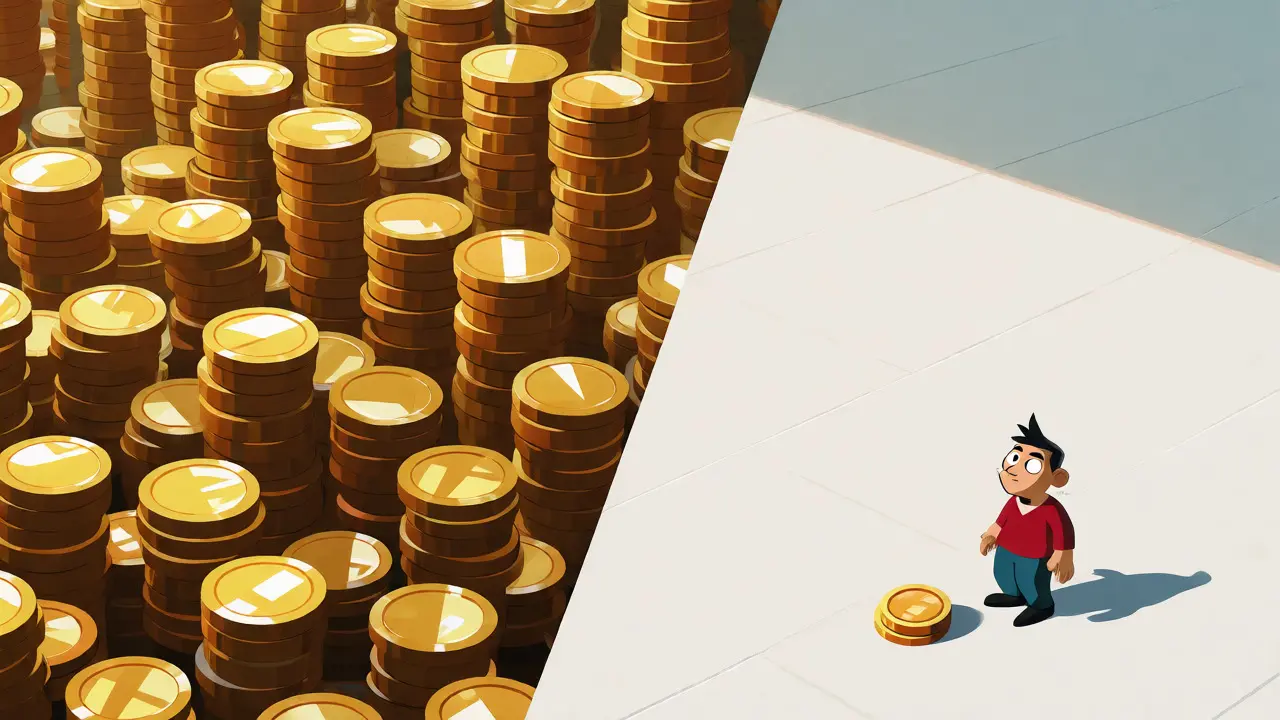
BCEX advertises access to more than 500 cryptocurrencies. On paper, that sounds great. You want options, right? But when you dig into the active markets, you find only about 7 trading pairs are generating meaningful volume. This is a classic tactic among smaller exchanges: list hundreds of obscure tokens to look big, but keep the liquidity concentrated in just a few major names like BTC and ETH.
For a trader, this means slippage. If you try to buy a mid-cap altcoin on BCEX, you might find the order book is thin. You could end up paying significantly more than the market price because there aren't enough sellers. Compare this to established Korean exchanges like Upbit or Bithumb, which typically offer 200-400 cryptocurrencies with deep liquidity across many of them. BCEX’s selection feels hollow, offering breadth without depth.
Fees and Trading Features
If you do decide to trade here, what will it cost you? BCEX positions itself as having competitive fees, often lower than the standard 0.2% to 0.8% range seen in South Korea. They support spot trading, margin trading, and futures. Having margin and futures available is a plus for advanced traders who want leverage, but again, these features are only useful if there is someone on the other side of the trade.
The interface itself is functional. You get the standard order books, candlestick charts, and buy/sell boxes. It doesn’t reinvent the wheel, nor does it offer the sleek, app-first experience that newer competitors provide. It feels like a legacy platform trying to catch up. For beginners, the lack of educational resources or guided tours can make the learning curve steeper than necessary.
Regulatory Context and User Restrictions
A critical detail for American readers: BCEX prohibits United States investors. If you live in the US, you cannot legally use this platform due to strict SEC regulations. This restriction also hints at how they handle KYC (Know Your Customer) processes globally-they are likely filtering out jurisdictions with heavy compliance burdens to reduce overhead.
For those in South Korea, the context is different. Crypto trading is legal, and the country is actively exploring stablecoin legislation pegged to the Korean Won. However, local banks are notoriously cautious. Most Korean exchanges pair with a single bank for fiat deposits. BCEX’s ability to integrate smoothly with local Korean banking infrastructure is unclear given its ambiguous headquarters status. If you are trying to move KRW (Korean Won) in and out, friction with banks could turn a simple deposit into a multi-day headache.
Who Should Use BCEX?
So, is BCEX worth your time? Honestly, for most people, probably not. The massive gap between claimed and actual volume is a major trust issue. Low volume means higher spreads and potential difficulty exiting positions during volatile markets.
You might consider it only if:
- You are looking for a specific, obscure token that is uniquely listed here (and you’ve verified it has real volume).
- You are testing a small amount of capital to understand their fee structure firsthand.
- You have already exhausted all major, regulated alternatives in your region.
For the average trader, sticking to exchanges with transparent, verifiable high-volume data is safer. The "Trust Score" of 10/10 sometimes cited for BCEX needs to be viewed with skepticism. Trust scores on aggregators can lag behind reality, especially when a platform stops updating its true metrics.
Final Verdict: Proceed with Caution
BCEX is a puzzle box. It has the history (since 2017) and the technical features (margin/futures), but it lacks the transparency and liquidity that define a healthy exchange in 2026. The conflicting headquarters information and the enormous disparity between claimed and real trading volumes suggest a platform that is struggling to maintain relevance or is masking its true size.
If you value security and ease of exit, you should look elsewhere. The crypto market is too competitive to settle for a platform where you have to guess if your trades are actually moving the market or just echoing in an empty room. Do your due diligence, check the live order books yourself, and never assume that a big number on a website equals a big opportunity.
Is BCEX safe to use?
Safety is relative. While BCEX has operated since 2017, its unclear regulatory jurisdiction (Malta vs. Hong Kong) and low actual trading volume present risks. Always test with small amounts first and ensure you can withdraw funds easily.
Can US citizens use BCEX?
No. BCEX explicitly prohibits United States investors from trading on its platform due to regulatory restrictions.
How many cryptocurrencies does BCEX really support?
While they claim to support over 500 cryptocurrencies, independent trackers show only about 7 active trading pairs with significant volume. Many listed coins may have little to no liquidity.
What are the trading fees on BCEX?
Fees are generally competitive and often lower than the regional average of 0.2%-0.8%, but you must check the specific maker/taker rates for each pair, as they can vary based on volume tiers.
Does BCEX have good liquidity?
Current data suggests poor liquidity. With a daily volume of approximately $3 million, large orders may suffer from slippage. This contrasts sharply with their claimed $12 billion volume.